Pottery & Ceramics
Bankura Terracotta — The Horse That Became a Craft Icon
The story
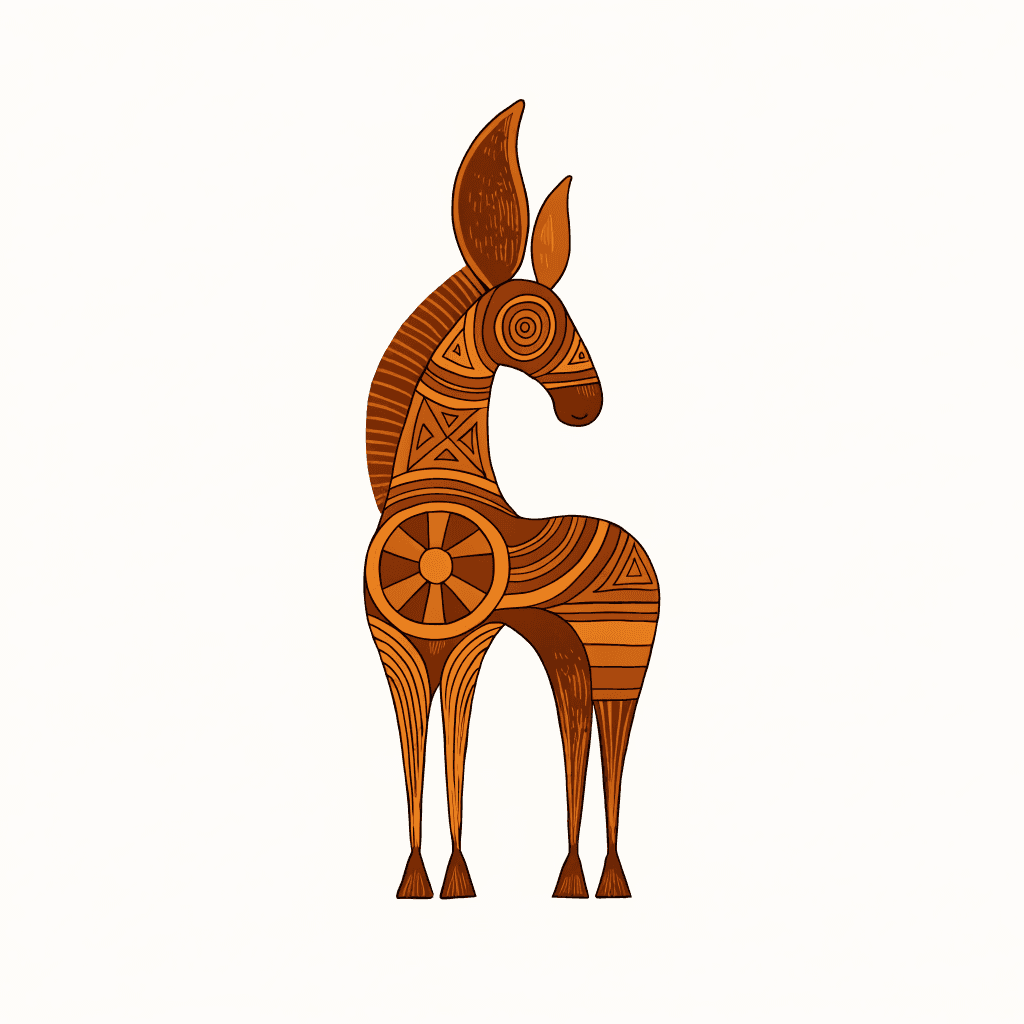
The Bankura horse may be the most recognised object in Indian craft — a long-necked, upright-eared terracotta figure so distilled in form that the All India Handicrafts Board adopted it as its emblem. It comes from Panchmura, a village of hereditary kumbhar potters in West Bengal's Bankura district, a region whose love of fired clay also produced the famous terracotta temples of nearby Bishnupur. The horses began, and continue, as votive offerings: devotees present them at shrines of Dharmaraj and other village deities, where rows of horses stand in the open air as mounts for the gods and vessels for vows. The stylisation — a neck stretched improbably high, ears pricked like flames, the body reduced to essentials — grew out of generations of repetition, refined until nothing inessential remained. Alongside the horses, Panchmura's potters model elephants, panels for the snake goddess Manasa, and temple plaques. In the decades since independence, the horse crossed over from shrine to shelf, becoming a fixture of modern Indian interiors without ever leaving its ritual role at home. The craft is protected by a Geographical Indication as Bankura Panchmura Terracotta Craft.
How it is made
A Bankura horse is not carved or moulded but assembled from wheel-thrown parts. The potter throws the legs, body, neck and face as separate hollow forms, then joins them while the clay is leather-hard, refining the joints by hand. Ears, the mane and harness ornaments are shaped separately and applied. The assembled figure dries slowly for days to prevent cracking, then goes to the kiln. Firing decides the colour: an open, oxygen-rich firing yields the classic warm red, while a sealed, smoke-filled firing turns the clay a deep lustrous black. No paint is involved — the finish is entirely clay and fire. Large horses demand perfectly balanced construction to survive the kiln.
Buying guide
An authentic Bankura horse is hollow and wheel-built — tap it gently and it rings; look inside the base and you will see throwing marks, not mould seams. Colour should come from firing (red or smoke-black), not paint. Prices typically range ₹500–₹18,000: palm-sized horses at the entry level, statement pieces two feet and taller at the top. Check ears and legs, the most vulnerable points, for repairs before buying.
Care
Display Bankura terracotta indoors, away from ledges where it can be knocked — the slender ears and legs are the fragile points. Dust with a soft brush or dry cloth; unpainted pieces tolerate a barely damp wipe. Avoid outdoor placement, where rain and frost degrade fired clay. When moving a horse, lift it by the body, never the neck.
Good questions, honest answers
What is the difference between red and black Bankura horses?
Both come from the same clay and the same village — the difference is the firing. An open firing with plenty of oxygen produces the warm terracotta red, while a sealed kiln filled with smoke turns the surface a deep black. Neither is painted, and neither outranks the other; it is purely an aesthetic choice.
What does the Bankura horse symbolise?
It is a votive offering — presented at shrines of Dharmaraj and other village deities as a mount for the god and a token of a vow. Its exaggerated neck and flame-like ears are the result of generations of stylisation, paring the animal down to pure gesture. That distilled form is why it became a national craft emblem.
Can large horses be shipped safely?
Yes, with proper packing. The horses are hollow, which makes them lighter than they look, but ears, legs and neck need rigid boxing with generous foam. Established sellers ship them routinely, including overseas. On arrival, unpack from the base upward and check the joints before display.
Explore the living traditions
We are onboarding Bankura Terracotta (Horse) artisans. Meanwhile, explore every craft available on VedikCraft today.
Explore all crafts →
At a glance
- Region
- Panchmura, Bankura, West Bengal
- Community
- Panchmura kumbhars
- Materials
- terracotta
- Techniques
- wheel & hand modelling
- Typical price band
- ₹500 – ₹18,000