Textiles & Handloom
Muga Silk — Assam's Golden Thread
Also known as Assam Muga
The story
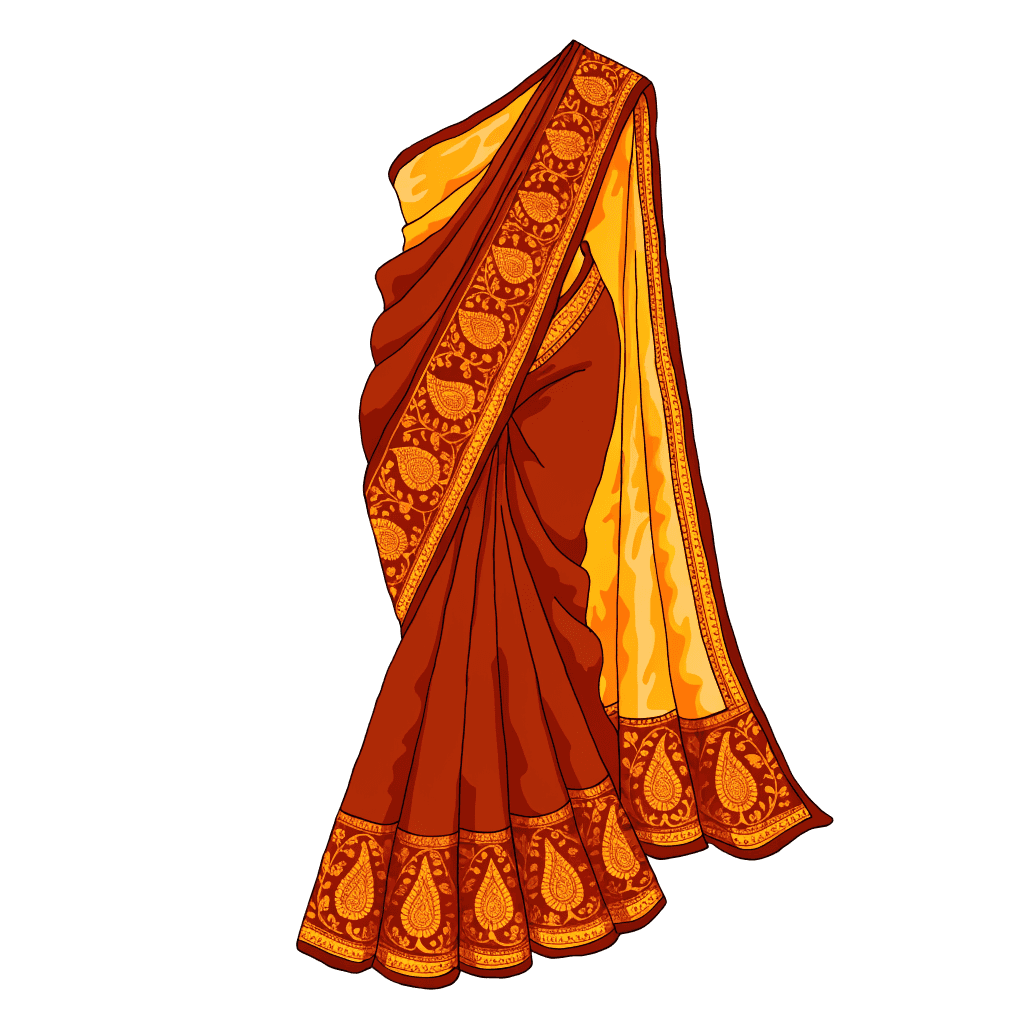
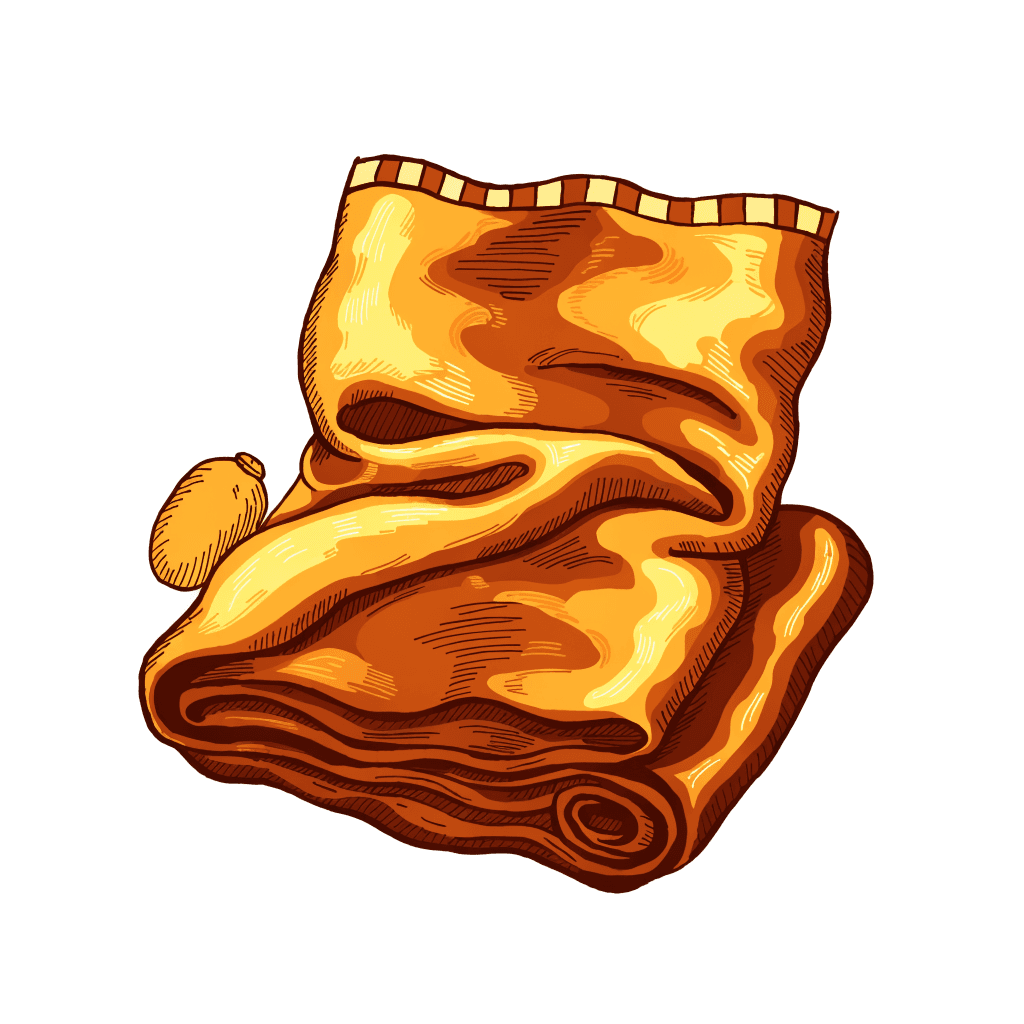
Muga is one of the rarest silks in the world, and it belongs to Assam alone. It comes from Antheraea assamensis, a semi-wild silkmoth reared outdoors on som and soalu trees in the Brahmaputra valley — the only place the species thrives. The cocoons emerge naturally golden, and the reeled yarn keeps that colour without any dye. Muga's most famous property borders on the improbable but is entirely real: its lustre deepens with every wash, which is why muga garments are passed down as heirlooms that look better at fifty than at five. Under the Ahom dynasty, which ruled Assam for six centuries, muga was reserved for royalty and nobility, woven into ceremonial dress. That prestige survives in the mekhela chador, the two-piece Assamese drape that remains muga's signature garment, worn at weddings and Bihu festivals. Much of the weaving is concentrated in Sualkuchi, a town on the Brahmaputra where the clack of looms carries down every lane. Muga Silk of Assam was the first product from the state to receive a Geographical Indication — fitting protection for a fibre that cannot, by nature, come from anywhere else.
How it is made
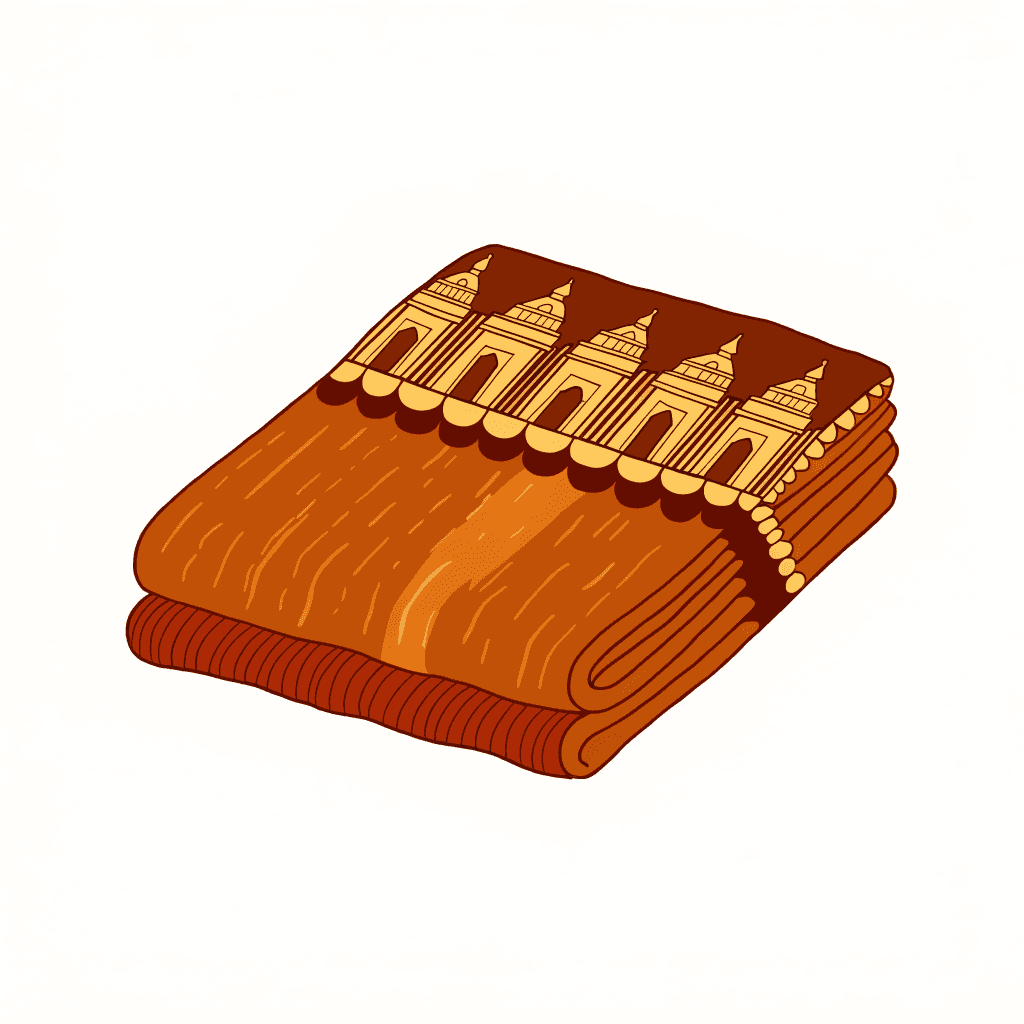
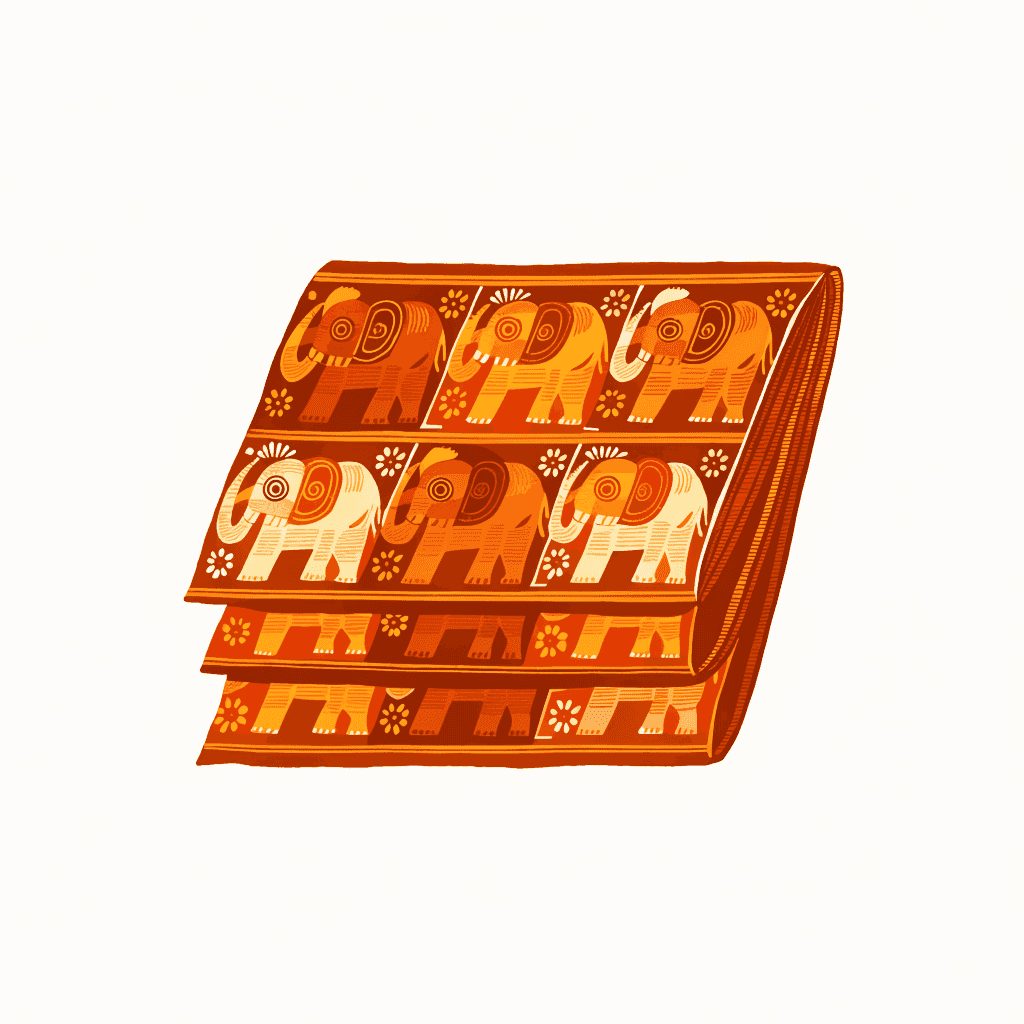
Muga rearing is closer to forestry than farming. The silkworms feed in open plantations of som and soalu trees, tended through the season and vulnerable to weather and predators — one reason yields stay low and the fibre stays precious. The golden cocoons are collected and reeled into a strong, naturally lustrous yarn. Weaving happens on handlooms, most famously in Sualkuchi, where weavers produce mekhela chadors, sarees and stoles, often lifting traditional motifs — paisleys, flowers, geometric borders — in supplementary weft against the glowing ground. Because the yarn is left undyed, the finished cloth is essentially the colour of the cocoon itself, deepening to a richer gold as the fabric ages and is washed.
Buying guide
Real muga has a warm, unmistakable golden glow with a slightly crisp, dry hand — dyed tussar imitations look flatter and more uniform. The colour should come from the fibre, not a dye bath, so ask explicitly whether the yarn is pure muga or a blend. Prices typically run ₹4,000–₹15,000 for stoles and lighter weaves, with fine mekhela chador sets and heirloom sarees reaching ₹1,00,000–₹1,50,000. Look for the GI tag and buy from Assam-based weaver cooperatives where possible.
Care
Muga rewards gentle washing — its lustre genuinely improves over time. Hand-wash in cold water with a mild shampoo or silk detergent, without wringing, and dry in shade. Iron on low while faintly damp. Store in breathable muslin away from damp, and air the garment occasionally; well-kept muga outlasts its owner.
Good questions, honest answers
Why is muga silk golden?
The colour is natural. The Antheraea assamensis silkworm, found only in Assam, spins cocoons with a built-in golden tint, and the reeled yarn keeps it without any dyeing. No other commercial silk carries this colour naturally, which is why the glow is muga's best authenticity test.
Does muga really get shinier with washing?
Yes — it's the fibre's most celebrated trait. Gentle washing gradually smooths the yarn surface, so the golden lustre deepens rather than fades over years of use. That's why mekhela chadors are handed down through generations and why old muga is often more beautiful than new.
How does muga differ from Assam's other silks?
Assam weaves three: pat (white mulberry silk), eri (the soft, matte 'ahimsa' silk) and muga. Muga is the rarest and most expensive — semi-wild, naturally golden, exceptionally durable. Pat is brighter white and softer to drape; eri is warm and cottony. Muga is the ceremonial fibre of the three.
Explore the living traditions
We are onboarding Muga Silk artisans. Meanwhile, explore every craft available on VedikCraft today.
Explore all crafts →
At a glance
- Region
- Assam
- Community
- Assamese weavers (Sualkuchi)
- Materials
- muga-silk (wild golden silk)
- Techniques
- handloom weaving
- Typical price band
- ₹4,000 – ₹1,50,000