Paintings & Folk Art
Mysore Painting, the Quieter Cousin of Tanjore Art
The story
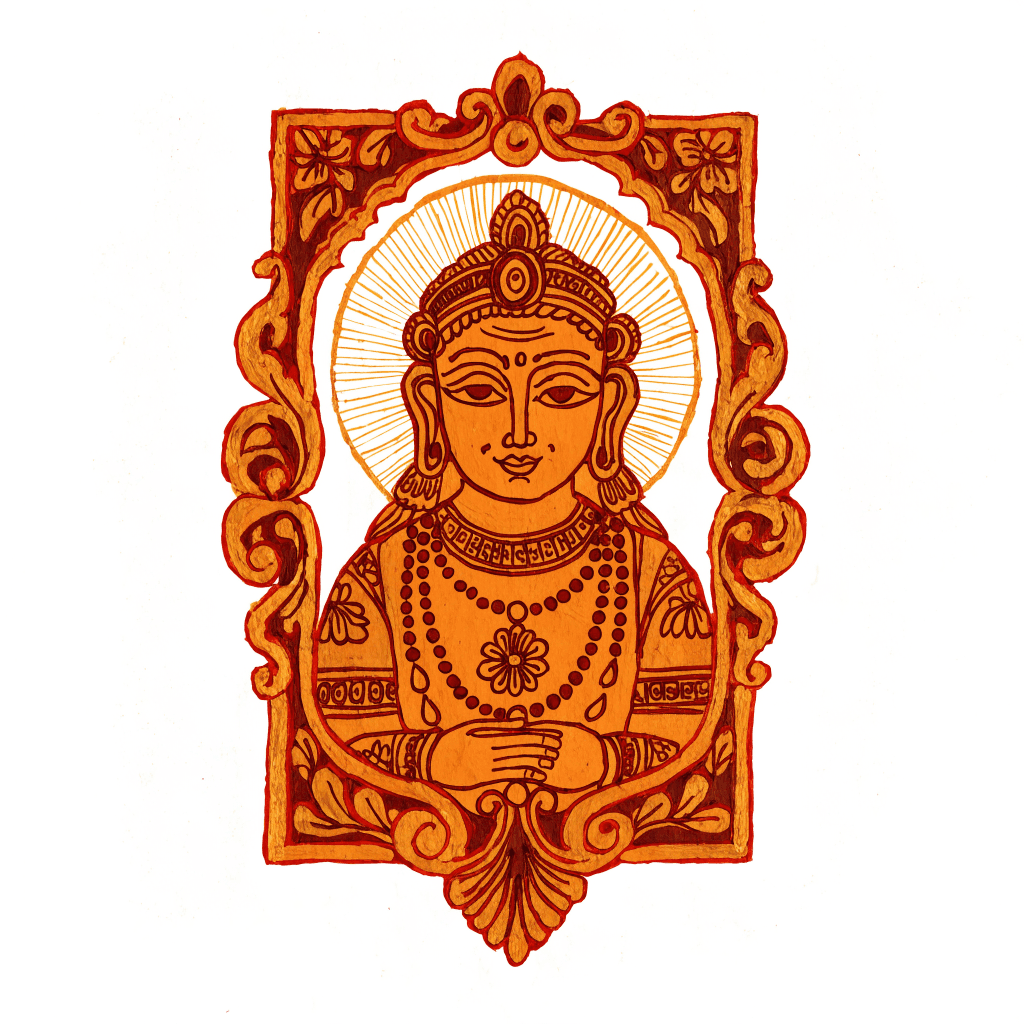
Mysore painting descends from the great Vijayanagara school: when that empire declined in the sixteenth century, its painter families dispersed in search of patronage, and one stream settled in Mysore under the protection of the Wodeyar kings. There the style refined itself over generations of courtly commissions. In the nineteenth century, Mummadi Krishnaraja Wodeyar gave the tradition its scripture — the Sritattvanidhi, an illustrated compendium that codified the iconography of hundreds of deities — and workshops flourished around the palace. Mysore painting is often called the quieter cousin of Tanjore art, and the comparison is fair: where Thanjavur builds thick gesso relief and blazes with foil and gems, Mysore keeps its gold work thin, low and precise, its palette muted — soft greens, greys, ivories and vegetable reds — and its figures graceful and elongated, drawn with a miniaturist's line. The subjects are gods, goddesses, saints and scenes of court, composed with an unhurried elegance. Old pieces still hang in the palace and in the puja rooms of Karnataka families, prized precisely for their restraint. The tradition survives in Mysore's workshops today and is protected by the 'Mysore Traditional Paintings' Geographical Indication.
How it is made
The traditional base is paper pasted onto board or cloth, ground smooth. After a careful sketch, the painter prepares the hallmark gesso: a fine paste of white pigment and gum, applied in thin, low relief only where ornament demands it — crowns, jewellery, architectural borders. Pure gold foil is laid over the raised work while the gesso is still tacky. Colours were traditionally vegetable and mineral, applied in thin, watercolour-like layers that let the drawing breathe; faces are modelled with delicate shading and finished with fine line. Finally the painting is burnished — covered with thin paper and rubbed gently with a smooth stone — so the gold takes on its soft, unmistakable lustre.
Buying guide
Mysore painting rewards a close look: the gold should be genuine foil over gesso — thin, low and precisely placed on crowns and jewellery — not broad painted gold. The palette is the tell: muted greens, ivories and soft reds, with graceful, elongated figures and fine line-work in the faces. Heavy relief and glass stones suggest Tanjore work instead. Small panels typically start around ₹3,000; large traditional pieces by senior artists can reach ₹1,80,000.
Care
Hang away from direct sun and humidity; the paper-on-board base is more moisture-sensitive than Tanjore's wooden panel, so avoid exterior and bathroom walls entirely. Keep the work framed behind glass, dust only the frame, and never touch the gilded areas — skin oils dull burnished gold foil. Repairs belong with a professional restorer.
Good questions, honest answers
How do I tell a Mysore painting from a Tanjore painting?
Feel and restraint. Tanjore panels are built on wood with thick raised gesso, heavy 22-carat foil and inset glass stones — they sparkle. Mysore works sit flatter: thin, low-relief gold confined to ornament, a muted palette of greens and ivories, and finer, more elongated figures. Same ancestry, opposite temperaments.
Is real gold used in Mysore paintings?
Yes — traditional Mysore work uses pure gold foil laid over fine gesso relief and burnished to a soft lustre. Because the relief is thin, the gold reads as a quiet gleam rather than Tanjore's blaze. Ask the workshop to confirm foil rather than gold-coloured paint, and expect the price to reflect it.
What subjects do Mysore paintings depict?
Predominantly Hindu deities and saints — Saraswati, Lakshmi, Rama's court, Krishna — rendered with serene faces and delicate ornament, often following iconography codified in the nineteenth-century Sritattvanidhi compendium. Court scenes and portraits from the Wodeyar era also belong to the tradition, though devotional panels dominate what is made today.
Explore the living traditions
We are onboarding Mysore Painting artisans. Meanwhile, explore every craft available on VedikCraft today.
Explore all crafts →
At a glance
- Region
- Mysore, Karnataka
- Community
- Mysore painters
- Materials
- paper-board, gold-foil, natural-pigment
- Techniques
- gesso gold work, fine line
- Typical price band
- ₹3,000 – ₹1,80,000