Jewellery & Adornment
The Punjabi Parandi — Patiala's Silk Hair Tassel
Also known as Paranda
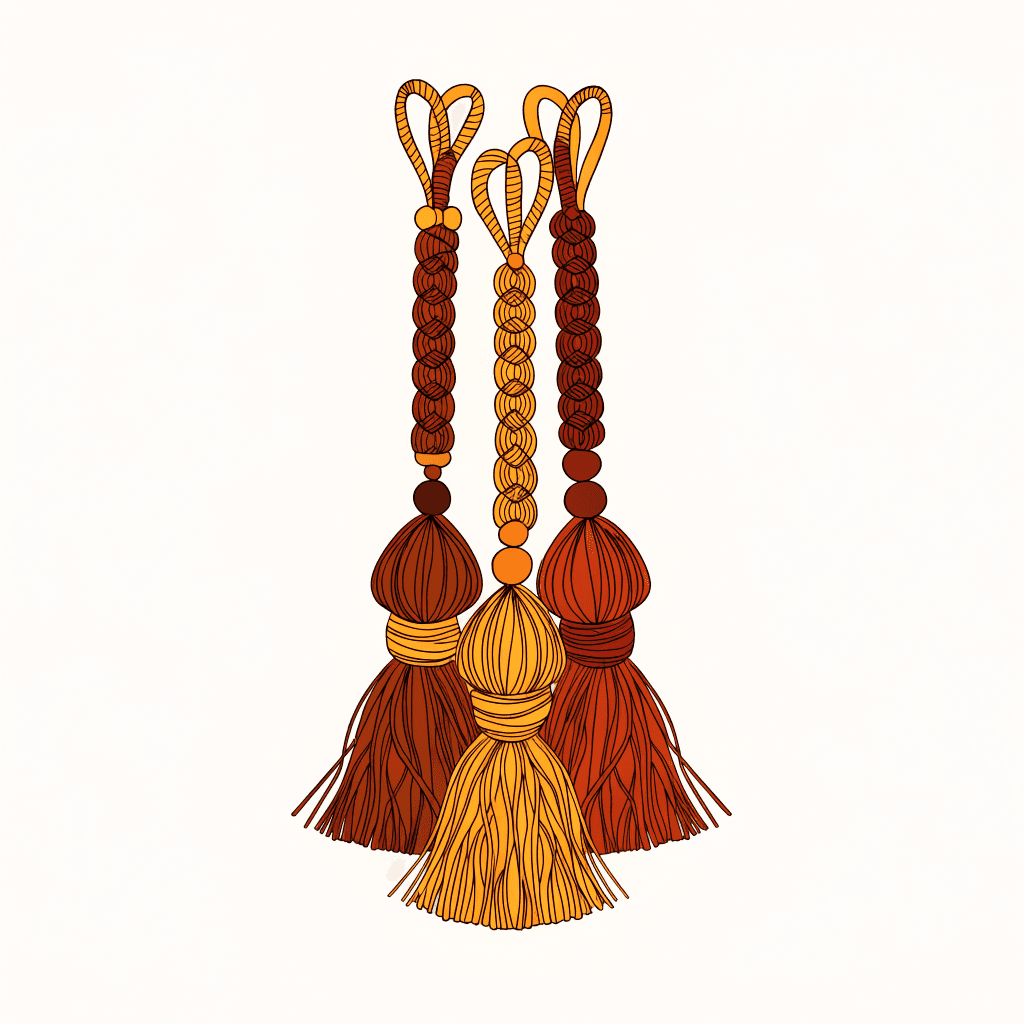
The story
The parandi (or paranda) is Punjab's most beloved hair ornament: a bundle of silk threads braided into a woman's plait so that its tasselled ends swing at the small of her back. It appears everywhere in Punjabi folk culture — sung about in boliyan, flicked in the swirl of giddha, gifted to brides by in-laws as part of the wedding trousseau. For generations the craft has been sustained by women artisans, and its finest expression belongs to Patiala. The city's bazaars, long attached to a royal court that prized adornment, remain the place to buy a parandi, their shops hung with cascades of colour-matched tassels. A parandi is chosen the way jewellery is: matched to a suit, to a dupatta, to an occasion. Red and gold for the wedding day; parrot green and magenta for Teeyan, the monsoon festival when women return to their parental homes to swing and dance. In an age of short haircuts, the parandi persists — brides wear it over extensions, dancers braid it in for performances, and designers keep re-issuing it as a statement accessory.
How it is made
A parandi begins as hanks of silk thread — traditionally pure silk, now often blended — sorted by colour and gathered into three thick strands. The maker knots them firmly at the crown end, then hand-braids the strands into a tight, even plait long enough to intertwine with the wearer's own hair. The art is in the finishing: each strand ends in a tassel, or phuman, a full pom-pom built by binding and shearing dozens of thread loops. Around these the craftswoman adds her flourishes — glass beads, mirrors, gota ribbon, zari-wrapped balls, sometimes tiny shells. A bridal parandi may carry layered tassels and metallic accents; an everyday one stays light so it moves freely. Everything is knotted and bound by hand; nothing is machine-stitched.
Buying guide
Match length first: a parandi should run the length of your braid with tassels to spare, so ask for the measurement before choosing. Pure silk thread has a soft, heavy drape and gentle sheen; shiny, springy thread is synthetic and sits stiffer. Look for dense, evenly sheared tassels and firm knots that will not shed. Simple everyday parandis typically cost ₹150–₹500; beaded and mirrored pieces sit mid-range; elaborate bridal parandis with layered phumans reach ₹2,000–₹2,500.
Care
Store a parandi flat or loosely coiled in a cloth pouch, away from moisture and direct sun, which fades silk. After wear, finger-comb the tassels straight; never drag a brush through the braided section. Spot-clean only — dabbing with a barely damp cloth — since soaking loosens knots and bleeds dye. Keep perfume off the threads, and let the piece air before storing.
Good questions, honest answers
How do you wear a parandi?
Divide your hair into three sections at the nape and pick up one strand of the parandi with each section, then braid hair and silk together to the ends, letting the tassels hang below. The knotted top should sit hidden where the plait begins. Women with shorter hair often braid it into a clip-on plait or extension for the same effect.
Is a parandi only for brides and weddings?
No. Bridal parandis are the heaviest and most ornamented, but lighter everyday versions are worn simply because they are lovely — with a plain suit, to college, to a gathering. Festive occasions such as Teeyan and any giddha performance practically demand one, since the swinging tassels are part of the dance's visual rhythm.
What makes a Patiala parandi special?
Patiala has long been the craft's acknowledged capital, its reputation rooted in the ornament-loving culture of the former princely state. Patiala parandis are known for fine silk thread, full, densely sheared tassels and generous embellishment of beads, mirrors and gota. When Punjabis speak of the most prized parandi, Patiala is usually the word that follows.
Explore the living traditions
We are onboarding Punjabi Parandi artisans. Meanwhile, explore every craft available on VedikCraft today.
Explore all crafts →
At a glance
- Region
- Patiala, Punjab
- Community
- Punjabi craftswomen
- Materials
- silk-thread, tassels, beads
- Techniques
- hand-knotted silk braiding
- Typical price band
- ₹150 – ₹2,500