Home Décor & Furnishings
Kashmir Papier-Mache and the Painter's Art of Naqashi
Also known as Kar-i-qalamdani
The story
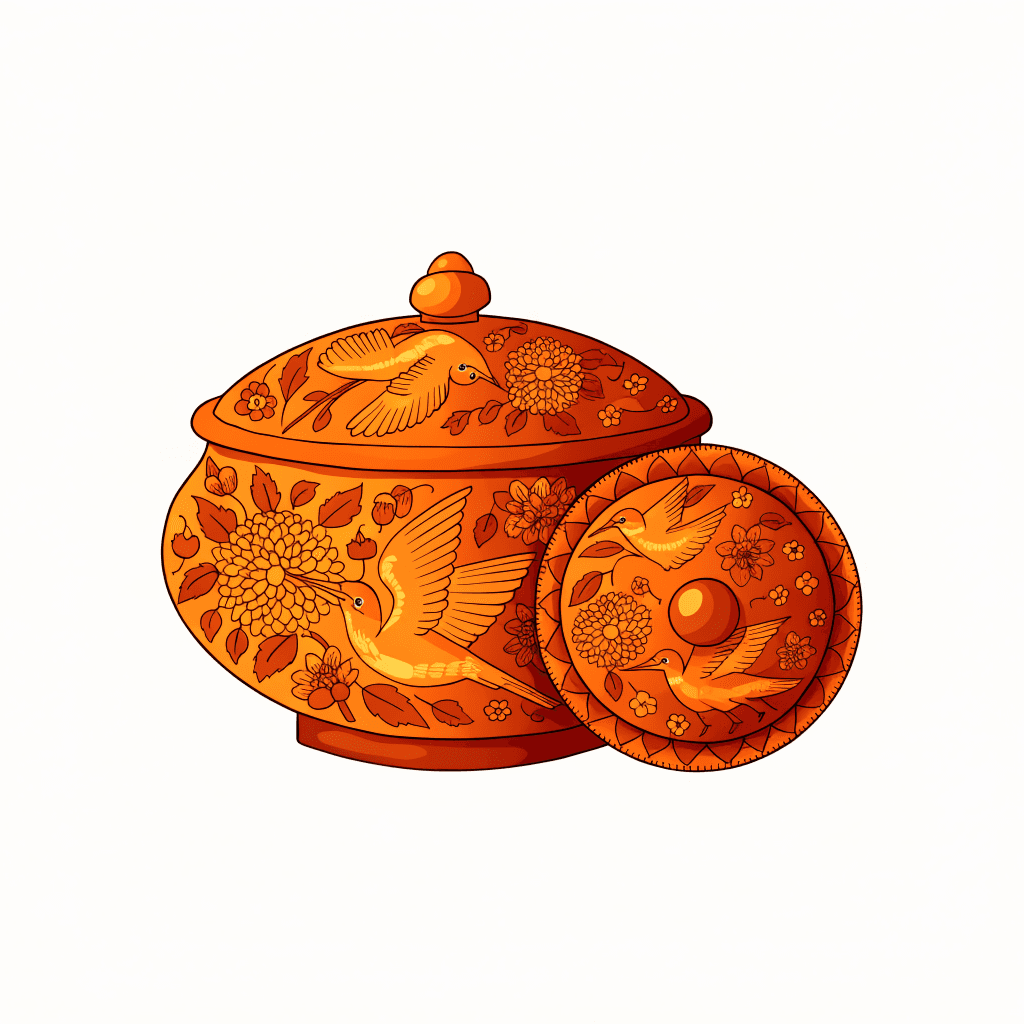
Kashmiri papier-mache begins with a paradox: some of India's most precious decorative objects are made from waste paper. The craft arrived in the Valley from Persia — tradition ties it to the Sufi missionaries and craftsmen who came in the fourteenth and fifteenth centuries, and to the patronage of Sultan Zain-ul-Abidin, under whom Srinagar's workshops flourished. Its older name, kar-i-qalamdani, means 'pen-case work', after the lacquered qalamdans on which the art was first perfected before spreading to boxes, bowls, ornaments and ceiling panels. The work divides between two hereditary specialisms: the sakhta-maker, who moulds and prepares the pulp form, and the naqash, the painter, whose fine brush — sometimes of just a few hairs — lays down the Valley's signature vocabulary: chinar leaves, irises and roses, kingfishers, almond paisleys, and the hazara or 'thousand flowers' pattern that carpets a surface in miniature blooms, frequently heightened with real gold. Layers of lacquer seal and deepen the colour. For centuries these objects travelled the world as diplomatic gifts and luxury exports, and the naqash families of Srinagar continue the art today under the protection of a Geographical Indication.
How it is made
Waste paper is soaked for days, pounded to pulp, mixed with rice water and natural glue, and pressed in layers over wooden or clay moulds. Once dry, the form is cut free, rejoined, and coated with a fine gypsum-and-glue ground that is rubbed to perfect smoothness with a polishing stone. Then the naqash takes over: freehand underdrawing, base colours in natural and mineral pigments, and painstaking detail work with brushes tapering to a few hairs — a hazara box may carry hundreds of individually painted flowers. Gold work, whether real leaf or paint, is added for highlights. Finally several coats of lacquer are applied and burnished, giving the surface its glassy depth and protecting the painting for decades.
Buying guide
Genuine papier-mache is feather-light for its size and slightly warm to the touch — heavier, cold pieces may be moulded resin. Study the painting under bright light: hand-worked naqashi shows tiny variations between repeated flowers, visible brush direction and fine raised gold, while printed decoration is perfectly uniform. Small painted ornaments and boxes start around ₹300–₹1,000; museum-grade hazara and gold-worked pieces climb to ₹50,000. Ask whether the gold is real leaf or paint — the price should reflect the answer.
Care
Dust with a soft dry cloth or brush; never wash or wet-wipe, as water is papier-mache's one enemy. Keep pieces away from direct sunlight, radiators and damp bathrooms or kitchens. Handle with dry hands, and don't stack objects on painted surfaces. Cared for this way, the lacquered finish keeps its gleam for generations.
Good questions, honest answers
Is papier-mache durable enough for everyday use?
More than you would expect. The layered pulp is rigid, the gypsum ground hard, and the lacquer coats seal the painting against handling — antique Kashmiri pieces survive in fine condition after a century or more. The material's only real weaknesses are water and prolonged damp, so treat it like fine lacquerware, not like a paper object.
What is naqashi?
Naqashi is the fine painting stage of the craft, and the naqash is its painter — traditionally a hereditary specialist distinct from the person who moulds the form. It covers the whole ornamental vocabulary of Kashmir: chinar leaves, blossoms, birds and paisleys, and dense patterns like hazara, the 'thousand flowers', all worked freehand with extremely fine brushes.
Is real gold used on these pieces?
On the finer ones, yes — genuine gold leaf or gold paint is used for outlines, borders and highlights, and it is a major driver of price. Everyday pieces use bronze or golden-toned paints instead. A reputable seller will state plainly which you are getting; certified GI pieces from Srinagar workshops document their materials.
Explore the living traditions
We are onboarding Kashmir Papier-Mache artisans. Meanwhile, explore every craft available on VedikCraft today.
Explore all crafts →
At a glance
- Region
- Srinagar, Kashmir
- Community
- Srinagar naqash painters
- Materials
- paper-pulp, natural-pigment, gold
- Techniques
- moulding, naqashi fine painting, lacquer
- Typical price band
- ₹300 – ₹50,000