Glass, Paper & More
Mon Shugu: The Monpa Handmade Paper of Tawang
The story
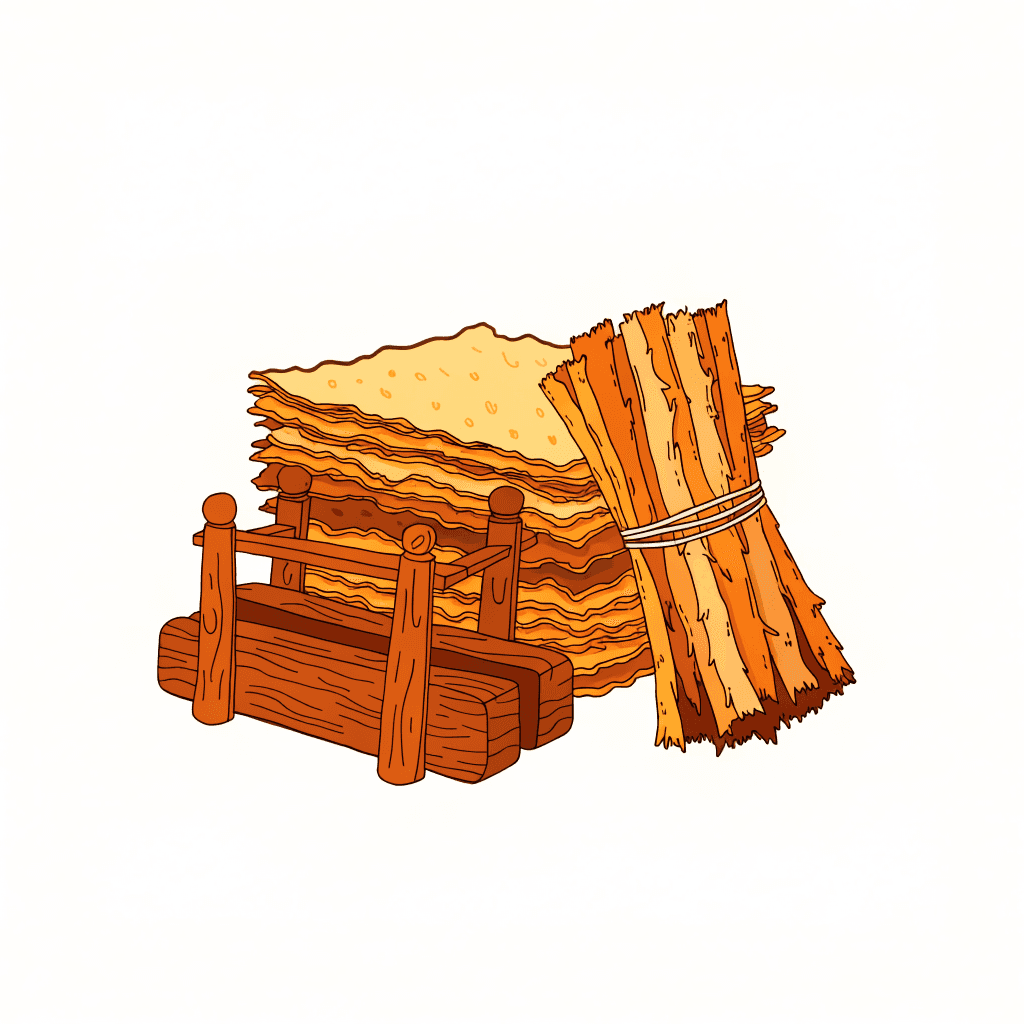
In Tawang, high in Arunachal Pradesh, the Monpa people have made paper for over a thousand years — not from pulp mills or cotton rag, but from the bark of a local shrub they call shugu sheng, the paper plant. The sheets, known as mon shugu, once travelled across the eastern Himalaya to Buddhist monasteries, where their strength and longevity made them the chosen surface for scriptures and prayer texts. In a manuscript culture where a text might be read, handled and stored for centuries, Monpa paper was infrastructure for the faith. Papermaking was once a common household skill among the Monpa, woven into monastic and village life. But cheap mill paper did to mon shugu what it did to handmade papers everywhere, and in recent decades the craft had nearly vanished, surviving with only a handful of practitioners. It is now the focus of revival efforts that are bringing production back to Tawang — reconnecting a living community with a thousand-year skill. Each sheet is still made one at a time: bark, water, fire and hands, exactly as the monasteries always received it, which is precisely what makes a sheet of mon shugu worth owning today.
How it is made
Bark is harvested from the shugu sheng shrub and stripped of its dark outer layer, keeping the pale, fibrous inner bark. This is soaked and boiled until soft, then beaten — traditionally with mallets on a flat stone — into a wet, stringy pulp. The pulp is dispersed in water and spread evenly across a cloth-covered frame; as the water drains, the long bark fibres settle into an interlocked mat. Frames are set out to dry in the sun, and each sheet is peeled away whole. The result is unmistakable: a strong, textured paper with visible fibre, soft deckled edges and remarkable resilience — sheets that fold without cracking and take ink beautifully, which is exactly why scribes prized them.
Buying guide
Genuine mon shugu shows its making: visible long fibres, slight variation in thickness across the sheet, and soft, uncut deckle edges. It should feel strong for its weight — tug gently and it resists like cloth, not tissue. Plain sheets and stationery typically start around ₹300, with larger bundles, speciality sheets and finished paper goods reaching ₹6,000. Because production is small and still reviving, supply is genuinely limited; that scarcity is real, not marketing.
Care
Store sheets flat or loosely rolled, wrapped in cloth or acid-free tissue, in a dry place — damp is the main risk. Keep finished paper goods out of prolonged direct sunlight to prevent yellowing. The paper is strong, but treat fold lines deliberately: crease once, cleanly. Dust framed or displayed sheets with a dry, soft brush.
Good questions, honest answers
What makes Monpa paper different from other handmade papers?
The raw material and the fibre. Mon shugu is made from the inner bark of the shugu sheng shrub, whose long fibres interlock into sheets that are exceptionally strong, flexible and long-lasting for their weight. Most handmade papers use cotton rag or wood pulp with shorter fibres. The bark gives Monpa paper its visible texture and near-cloth resilience.
What is mon shugu paper used for today?
Its historic role — sheets for Buddhist scriptures and religious use — continues, and the same qualities now serve calligraphers, printmakers and artists who want a strong, textured surface. It also makes distinctive stationery, journals and wrapping for objects that deserve better than tissue. Small-batch production means most pieces are bought as much for the story as the function.
Why did Himalayan monasteries prize this paper?
A scripture is handled, turned, rolled and stored for generations, so the paper had to endure. Mon shugu's long bark fibres fold without cracking, resist tearing and hold ink crisply — and it was made locally, high in the mountains, where imported paper was scarce. For the monasteries of the eastern Himalaya, it was both the practical and the sacred choice.
Explore the living traditions
We are onboarding Monpa Handmade Paper artisans. Meanwhile, explore every craft available on VedikCraft today.
Explore all crafts →
At a glance
- Region
- Tawang, Arunachal Pradesh
- Community
- Monpa tribe
- Materials
- shugu sheng (paper-plant bark)
- Techniques
- hand-pulped paper making
- Typical price band
- ₹300 – ₹6,000