Wood Craft & Toys
Mysore Sandalwood Carving: Karnataka's Fragrant Art
The story
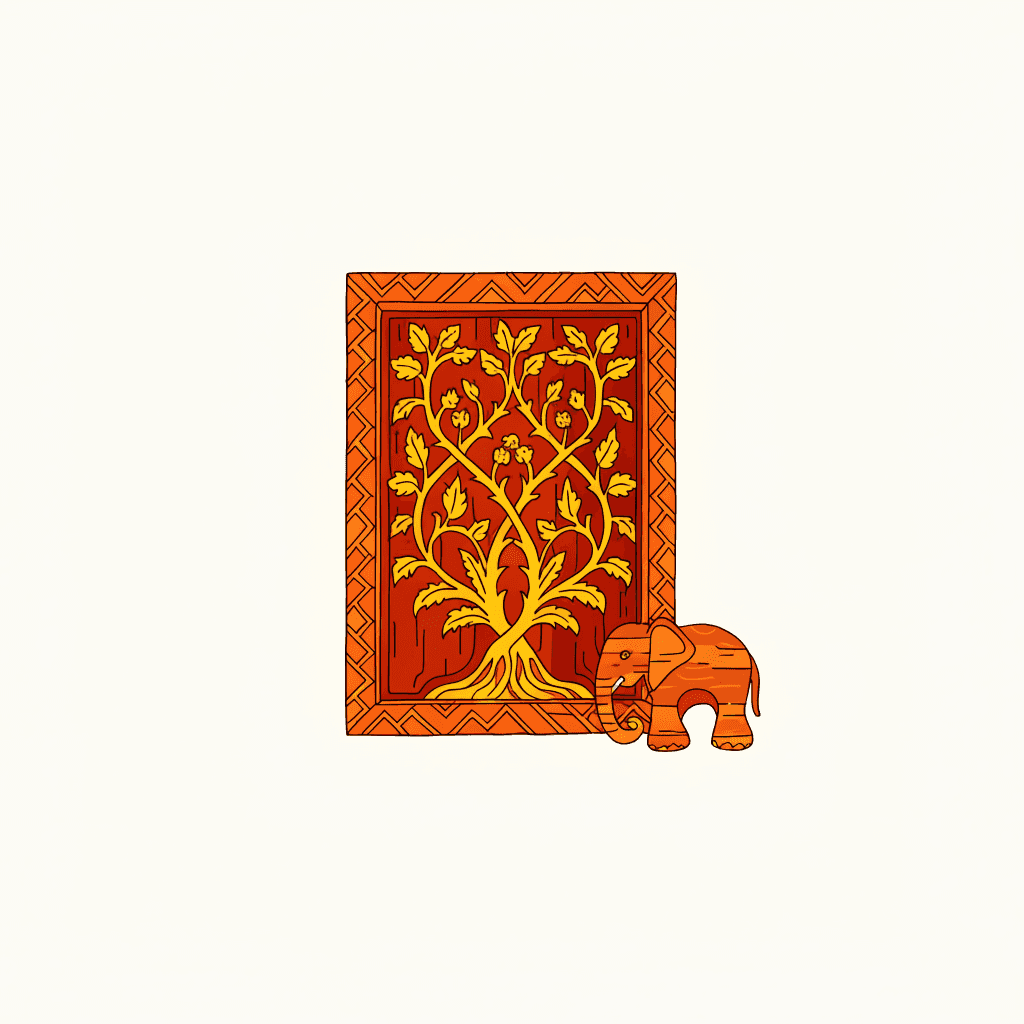
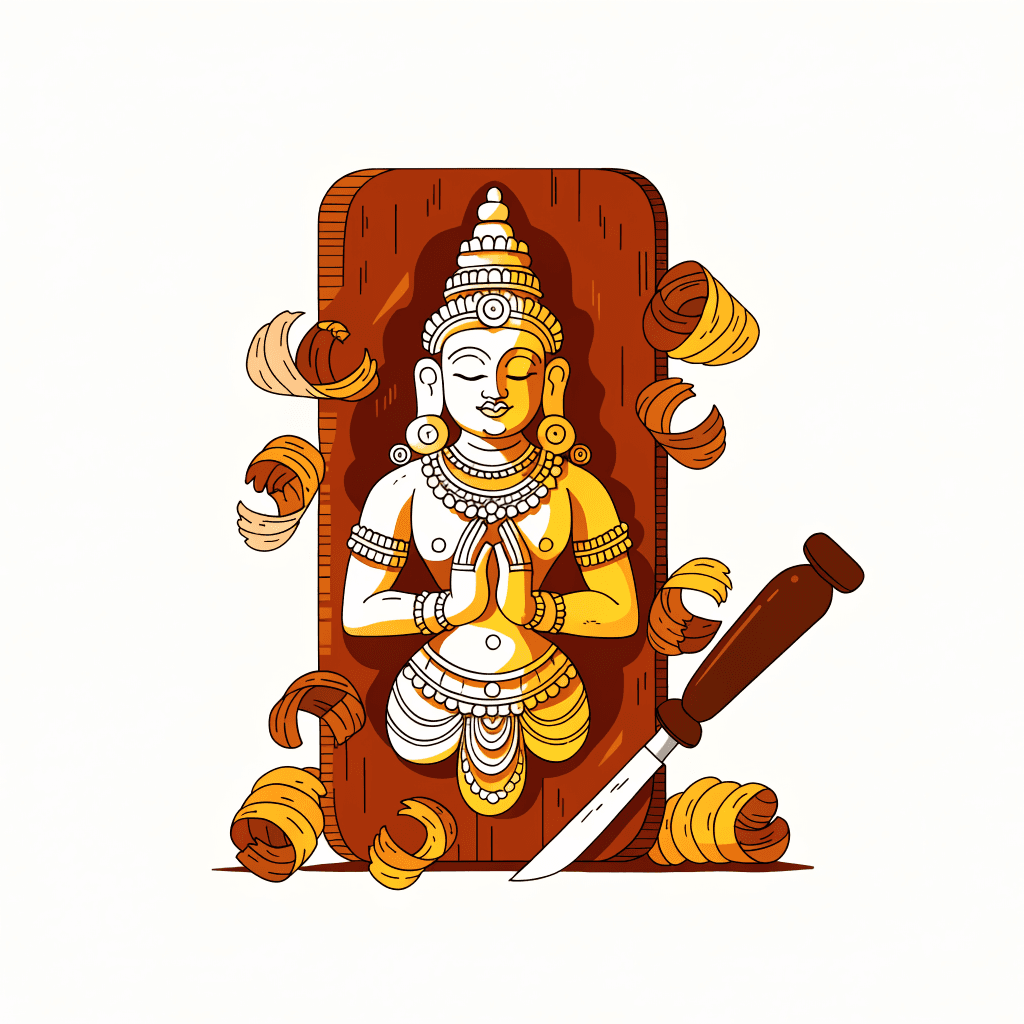
Karnataka has long been called Gandhada Gudi — the sanctuary of sandalwood — and nowhere is that identity carved more literally than in the workshops of the Gudigar community. Concentrated around Mysore and the Shimoga belt, the Gudigars are hereditary carvers believed to have migrated from the Goa coast centuries ago, carrying a tradition of temple carving that found its perfect material in Santalum album, Indian sandalwood. The wood is unlike any other a carver could ask for: dense, fine-grained, almost free of knots, and saturated with aromatic oil, so a finished piece releases its scent for decades. Under the patronage of the Mysore court, the craft rose from devotional images to a full luxury vocabulary — gods and goddesses in lace-like relief, caskets and jewel boxes, panels crowded with scenes from the epics. Wodeyar rulers commissioned elaborate pieces and showcased them at exhibitions, fixing Mysore's reputation as the home of the finest sandalwood work in India. Because sandalwood is now a protected, government-regulated resource, the craft has become rarer and more precious, practised by a shrinking circle of master carvers whose skills are measured in decades.
How it is made
Everything begins with legally sourced sandalwood, seasoned so it will not crack. The carver draws the design directly onto the block or transfers it from a paper sketch, then removes the bulk with saws and broad chisels. The signature stage is the fine work: dozens of small chisels, gravers and needle files are used to undercut foliage, jewellery and drapery until the surface reads like lace, with layers of detail floating over deeper shadow. A large deity or panel is usually cut from a single block. There is no varnish or stain at the end — the piece is finished with fine abrasives, because sandalwood's own oils give it a soft, matte sheen and its unmistakable fragrance.
Buying guide
Real sandalwood is heavy for its size, faintly oily to the touch, and smells of the wood itself — a soft, persistent scent from the heartwood, not a perfume applied to the surface. Look for crisp undercutting and clean detail in deep recesses; blurred inner carving suggests machine routing or a softer substitute wood. Ask about the wood's provenance, since sandalwood is a regulated material. Small carved boxes and idols typically start around ₹3,000, while large, museum-grade panels and deities by master carvers can run to several lakh rupees.
Care
Keep sandalwood away from direct sunlight and heat sources, which dry the oils and fade the fragrance. Never varnish, oil or wax it. Dust with a soft, dry brush, working along the carving rather than across it. Avoid water entirely. Stored in a closed cabinet or vitrine, a good piece will hold its scent for decades.
Good questions, honest answers
Does the fragrance of sandalwood carving fade over time?
The scent comes from oils within the heartwood itself, so it lasts for decades rather than months — collectors often report pieces that are still fragrant after a generation. It does soften with exposure to sun and dry heat. Keeping the carving in an enclosed space, away from direct light, preserves both the aroma and the wood's colour.
Why is sandalwood carving so expensive?
Two reasons: the material and the labour. Indian sandalwood is a protected, government-regulated wood, legally available only through official channels, which makes the raw block itself costly. On top of that, fine Gudigar-style carving is extraordinarily slow — a detailed panel can absorb months of work with miniature chisels. You are paying for scarce wood and rare, inherited skill.
How can I tell real Mysore sandalwood from a scented imitation?
Genuine sandalwood is dense and slightly oily, with a scent that rises from the wood itself, not just the surface. Imitations are usually lighter woods doused in sandalwood oil; their perfume is strong at first and gone within months. Check that deep recesses are as crisply carved as outer surfaces, and buy from sellers who can state the wood's legal origin.
Explore the living traditions
We are onboarding Mysore Sandalwood Carving artisans. Meanwhile, explore every craft available on VedikCraft today.
Explore all crafts →
At a glance
- Region
- Mysore / Shimoga, Karnataka
- Community
- Gudigar carvers
- Materials
- sandalwood
- Techniques
- fine intricate carving
- Typical price band
- ₹3,000 – ₹5,00,000