Cane, Bamboo & Basketry
Cane & Bamboo Craft of the Khasi and Garo Hills
The story
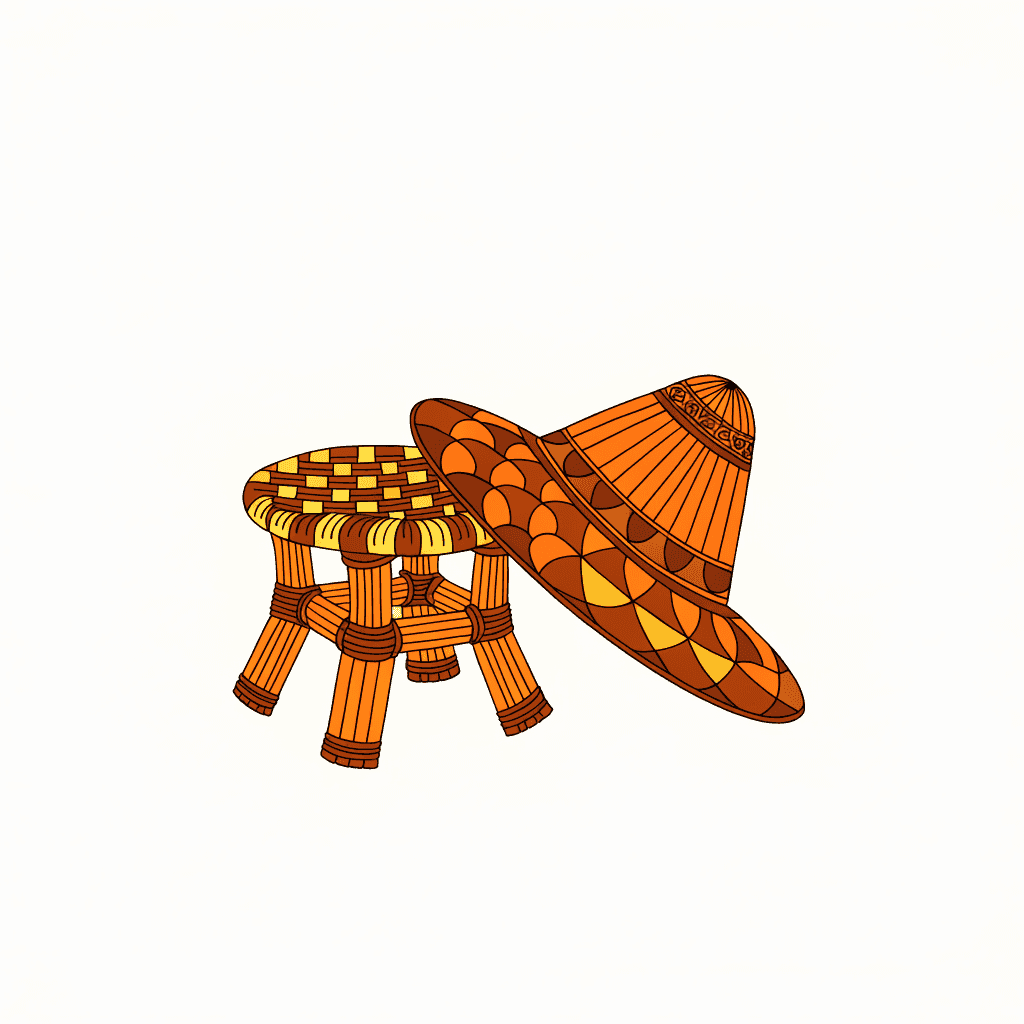
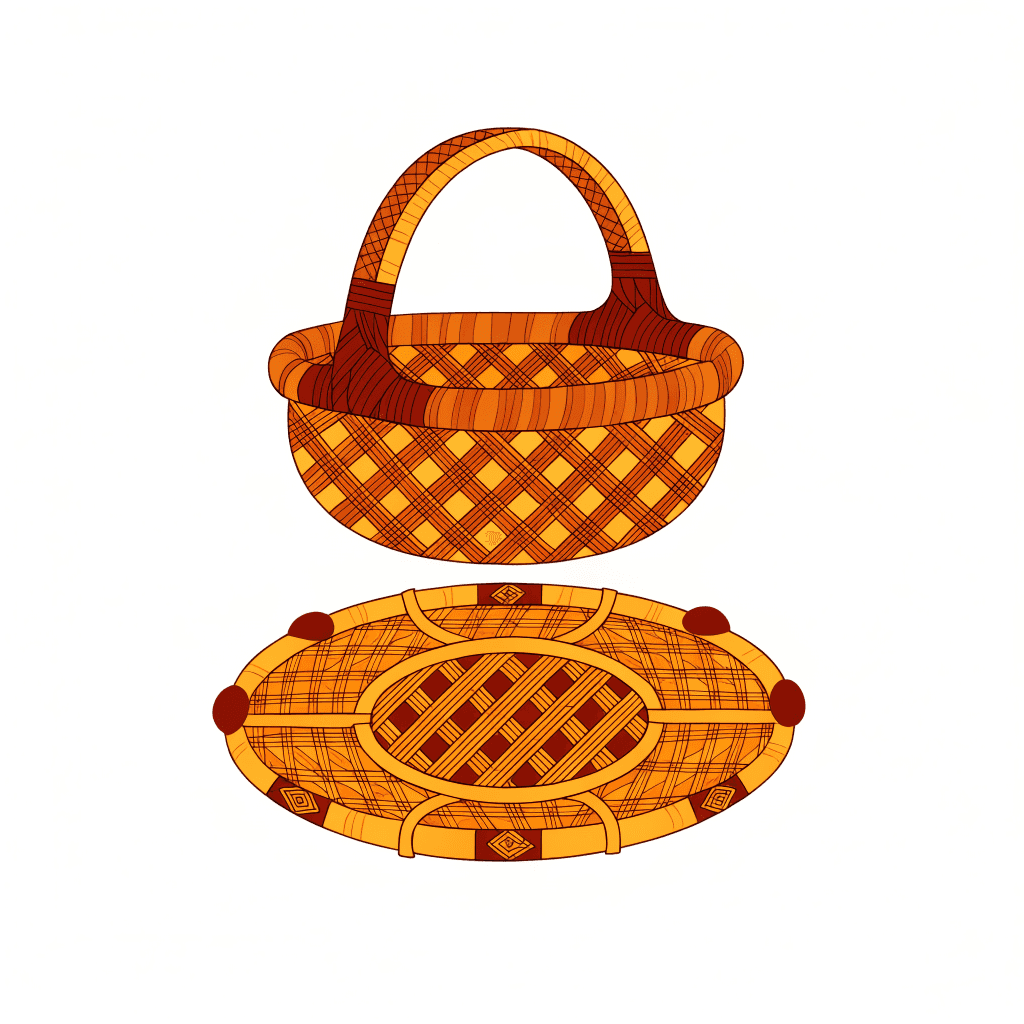
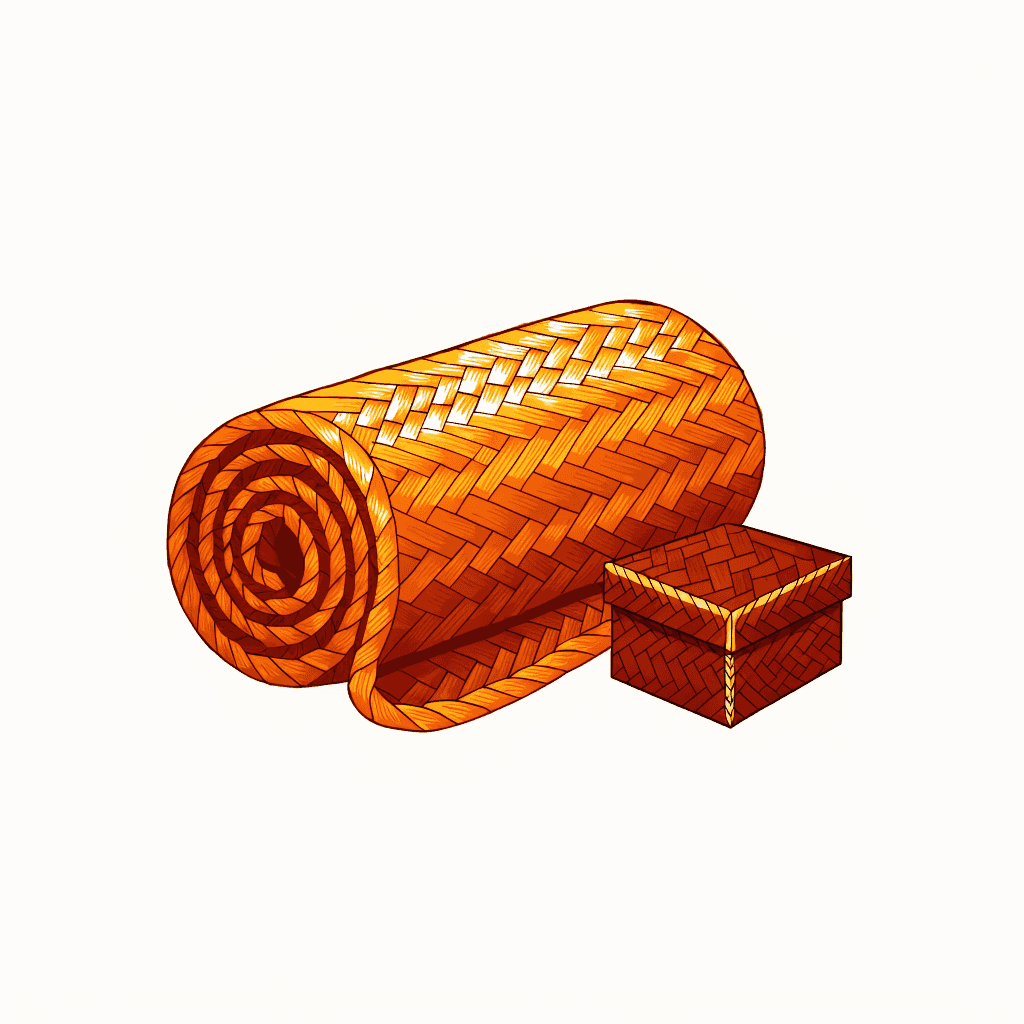
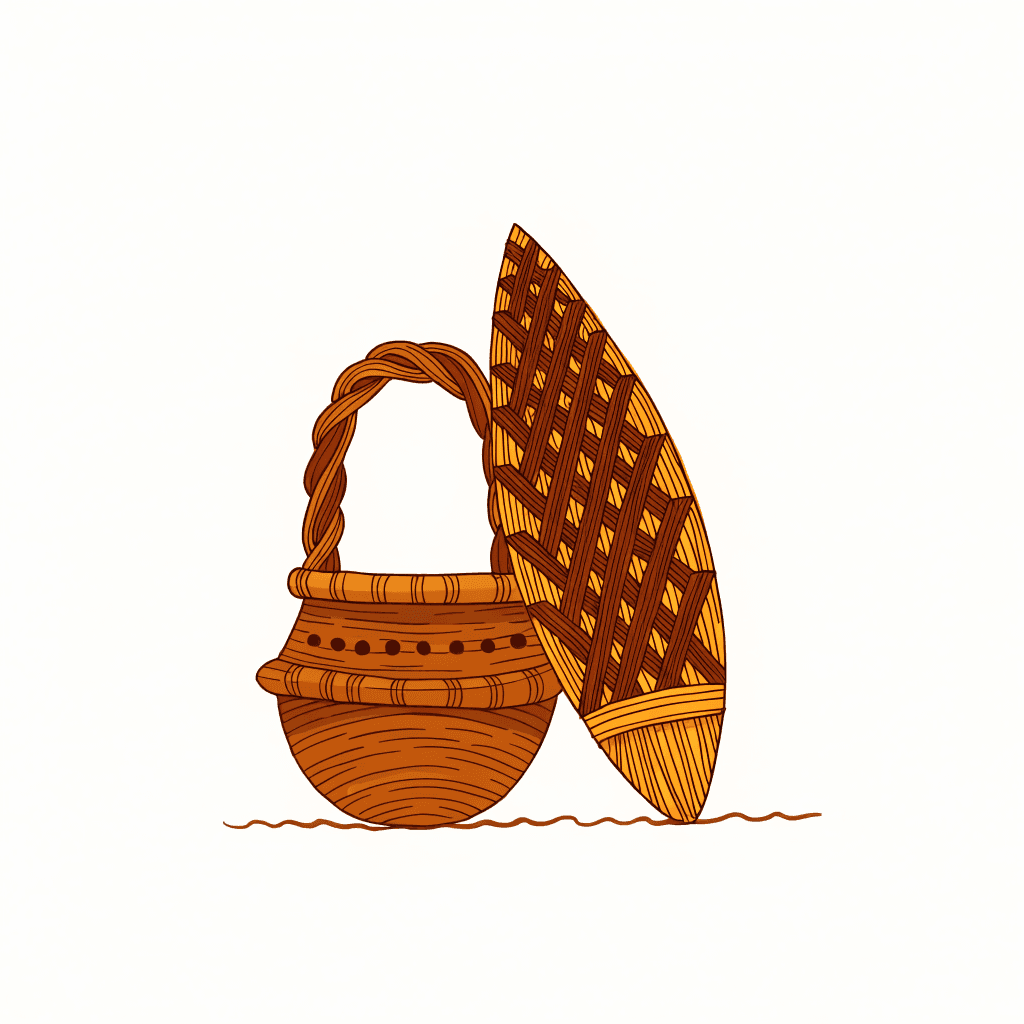
Meghalaya receives some of the heaviest rainfall on earth, and its crafts were shaped by that fact. In the Khasi and Garo hills, where bamboo and cane grow in dense profusion, weaving is less a decorative art than a complete material culture: almost everything a hill household needs — from grain baskets to fishing gear — has traditionally been made from split cane and bamboo. The most distinctive object is the knup, a conical rain-shield woven from bamboo and layered with leaves, worn over the head and back so a farmer can work the fields hands-free through a downpour. Equally iconic is the tightly woven conical carrying basket, borne on the back with a strap across the forehead, in which everything from firewood to market vegetables travels up and down the hills. Fish traps, winnows, mats and sturdy low stools complete the repertoire. The skills pass within families and villages, with men and women both weaving in the agricultural off-season. What reaches urban homes today — laundry baskets, planters, stools, trays — is the same weaving grammar, refined over centuries of daily use, applied to contemporary forms. It is, quite literally, survival made beautiful.
How it is made
Artisans harvest mature bamboo and cane from surrounding forests, selecting stems by age and straightness. The culms are cut, sun-dried and split with a knife into strips of remarkably consistent width — a skill that takes years — then shaved smooth and sometimes softened over gentle heat to make them pliable. Two techniques dominate: open and closed plait-weaving for baskets, mats and rain-shields, and coiling, in which a cane core is spiralled and bound into dense, rigid forms such as stools and lidded containers. Joints are lashed with fine cane rather than nails or glue. A knup comes together in layers — a woven bamboo frame sandwiching broad dried leaves — making it light, waterproof and surprisingly durable.
Buying guide
Pick up the piece: good Meghalaya basketry is light but rigid, with tight, even weaving and no loose ends or fuzzy splinters. Check that rims and joints are lashed with cane, not stapled or glued, and that strips are uniform in width — the clearest mark of a practised hand. Natural colour variation is normal and desirable. Expect to pay from around ₹300 for small baskets and trays up to ₹10,000–₹12,000 for large coiled stools and statement pieces.
Care
Dust regularly and wipe with a dry or slightly damp cloth. Keep pieces out of prolonged direct sunlight, which fades and dries the cane, and away from sustained damp, which invites mould. In dry climates, an occasional light wipe with a barely oiled cloth keeps bamboo from cracking. Never soak baskets or leave them outdoors through rain.
Good questions, honest answers
What is a knup?
The knup is Meghalaya's traditional rain-shield: a cone of woven bamboo enclosing layers of dried leaves, worn over the head and shoulders like a personal roof. It leaves both hands free for field work — a necessity in hills that see some of the highest rainfall on the planet. Today it is also bought as a striking piece of wall decor.
Is cane the same as bamboo?
No. Bamboo is a hollow, jointed grass; cane (rattan) is a solid-cored climbing palm that is more flexible and stronger in binding work. Meghalaya's artisans use both, often together — bamboo for structure and broad weaving, cane for lashing joints, rims and fine coiled work. Many pieces you see combine the two.
Will bamboo furniture last in a modern home?
Yes, with basic care. These are objects designed for decades of hard daily use in one of the world's wettest climates. Kept reasonably dry, out of harsh sun and dusted now and then, a well-made coiled stool or basket will comfortably outlast most factory furniture. The material also ages gracefully, deepening to a warm honey tone.
Explore the living traditions
We are onboarding Meghalaya Cane & Bamboo artisans. Meanwhile, explore every craft available on VedikCraft today.
Explore all crafts →
At a glance
- Region
- Khasi & Garo Hills, Meghalaya
- Community
- Khasi & Garo communities
- Materials
- cane, bamboo
- Techniques
- fine weaving & coiling
- Typical price band
- ₹300 – ₹12,000