Textiles & Handloom
Mizo Puanchei: Mizoram's Festival Weave
Also known as Puanchei, Mizo Puan
The story
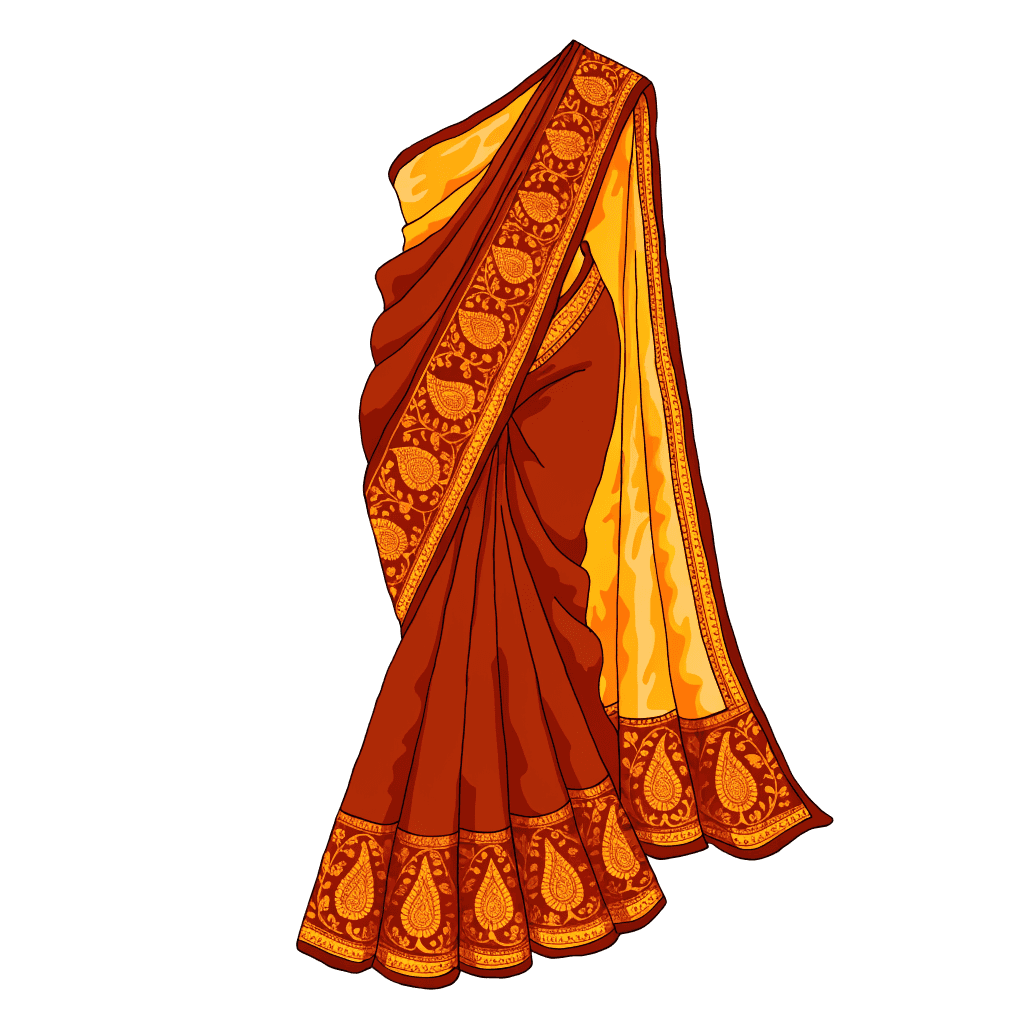
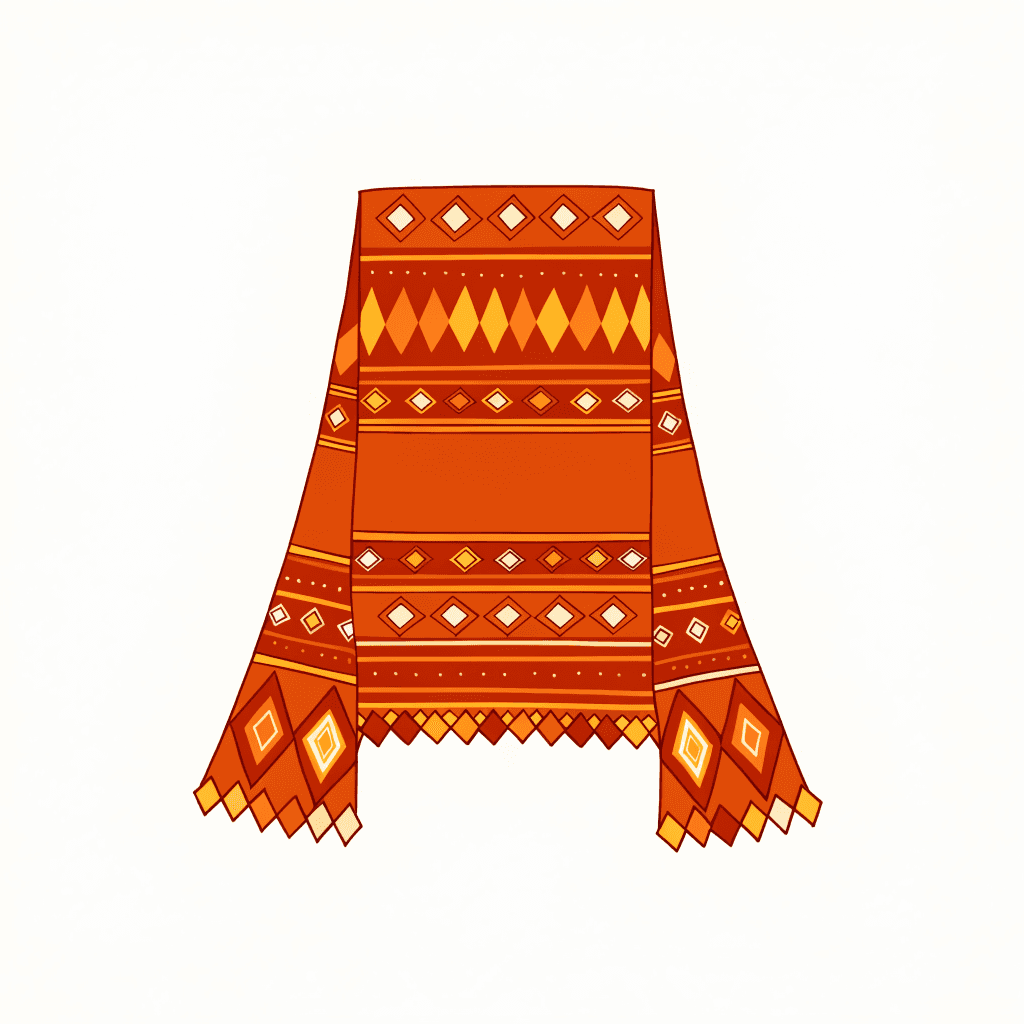
In Mizoram, the word 'puan' simply means cloth — but the Puanchei is never simple. It is the most colourful of all Mizo handlooms, the wrap a woman reaches for at weddings, at the spring festival of Chapchar Kut, and when she takes her place in the Cheraw, the famous bamboo dance in which performers step in and out of clapping bamboo poles. Bands of red, black, white, green and yellow run the length of the cloth, broken by rows of diamonds and zig-zags that seem to vibrate against the striped ground. Weaving has long been a woman's art in the Mizo hills, learned at home and judged closely: a bride traditionally carried her finest puan into marriage, and the intricacy of a Puanchei spoke plainly for the weaver's skill and patience. Older pieces were woven from home-grown cotton on the loin loom; today frame looms and brighter yarns have joined the tradition without displacing its grammar of motifs. Worn as a wrap-around skirt with a matching blouse, the Puanchei remains Mizoram's signature cloth — the textile by which the state announces itself at any gathering in the Northeast.
How it is made
A Puanchei begins with the warp: long stripes of colour planned before a single pick is thrown. The ground is woven in cotton or acrylic yarn — acrylic is now common for its saturated, fast colours — while the signature diamond and zig-zag bands are built up by supplementary-weft weaving. Here the weaver inserts extra pattern threads pick by pick, lifting selected warps by hand so the motif floats above the ground cloth like embroidery, though it is entirely woven in. Traditional pieces come off the backstrap loin loom in panels; frame looms now produce wider cloth. A densely patterned Puanchei can occupy a weaver for weeks, and the reverse of the cloth — with its neat pattern floats — shows the honesty of the work.
Buying guide
Prices typically run from around ₹1,200 for simpler acrylic-yarn puans to ₹15,000 for finely worked cotton ceremonial pieces. Turn the cloth over: genuine supplementary-weft motifs show floats and slight hand-made irregularities on the reverse, while printed or powerloom imitations look flat and mechanically even. Denser, sharper diamond bands mean more weaving hours and higher value. Buy from Mizoram-based weavers or GI-aware sellers, and ask whether the piece is loin-loom or frame-loom woven — both are authentic, but hand-patterning is the point.
Care
Hand wash gently in cold water with a mild detergent, keeping soak time short so the bright bands don't bleed. Never wring; press water out between towels and dry flat in shade. Iron on low from the reverse, avoiding direct heat on the motif floats. Store folded with a cotton liner, and refold along different lines a few times a year to prevent permanent creases.
Good questions, honest answers
When is a Puanchei worn?
It is Mizoram's celebration cloth — worn by women at weddings, at festivals such as Chapchar Kut, and above all during the Cheraw bamboo dance, where rows of dancers in matching Puanchei are one of the Northeast's great spectacles. Many Mizo families also present one to a bride, and it doubles today as a proud formal drape.
Is a Puanchei made of cotton or acrylic?
Both are in honest use. Traditional pieces were home-grown cotton; today many weavers prefer acrylic yarns for their vivid, colour-fast brightness, which suits the Puanchei's festival role. Fine cotton versions cost more and drape more softly. What matters most is the hand-woven motif work, not the fibre alone.
Can I wear a Puanchei if I'm not Mizo?
Yes — Mizo weavers sell the Puanchei precisely so the cloth travels, and it works beautifully as a wrap skirt, stole or dramatic table runner. Wear it with the respect due a ceremonial textile: it isn't a beach sarong. Buying a genuine Mizoram-woven piece, rather than a copy, is the best form of appreciation.
Explore the living traditions
We are onboarding Mizo Puanchei artisans. Meanwhile, explore every craft available on VedikCraft today.
Explore all crafts →
At a glance
- Region
- Mizoram
- Community
- Mizo weavers
- Materials
- cotton, acrylic
- Techniques
- supplementary-weft motif weaving
- Typical price band
- ₹1,200 – ₹15,000