Wood Craft & Toys
Etikoppaka Toys, Coloured Entirely by Plants
Also known as Etikoppaka Bommalu
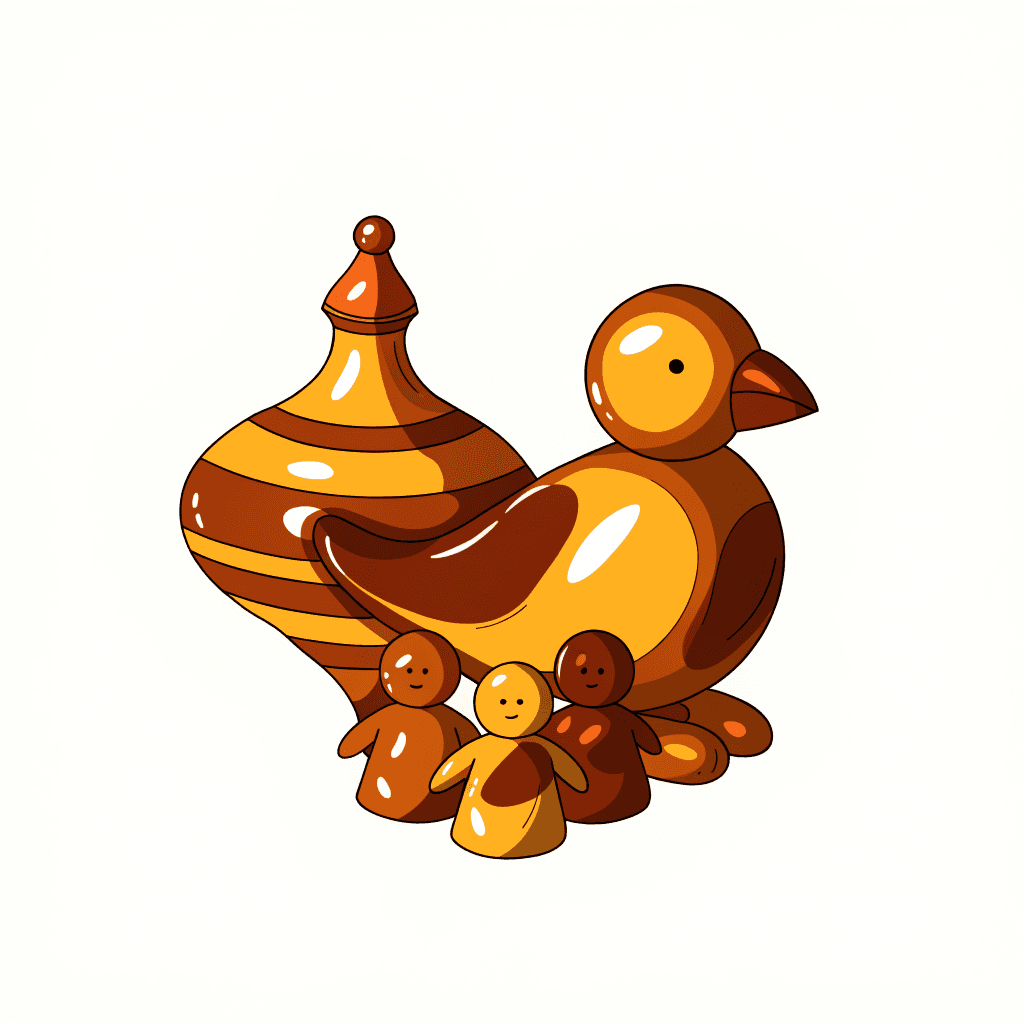
The story
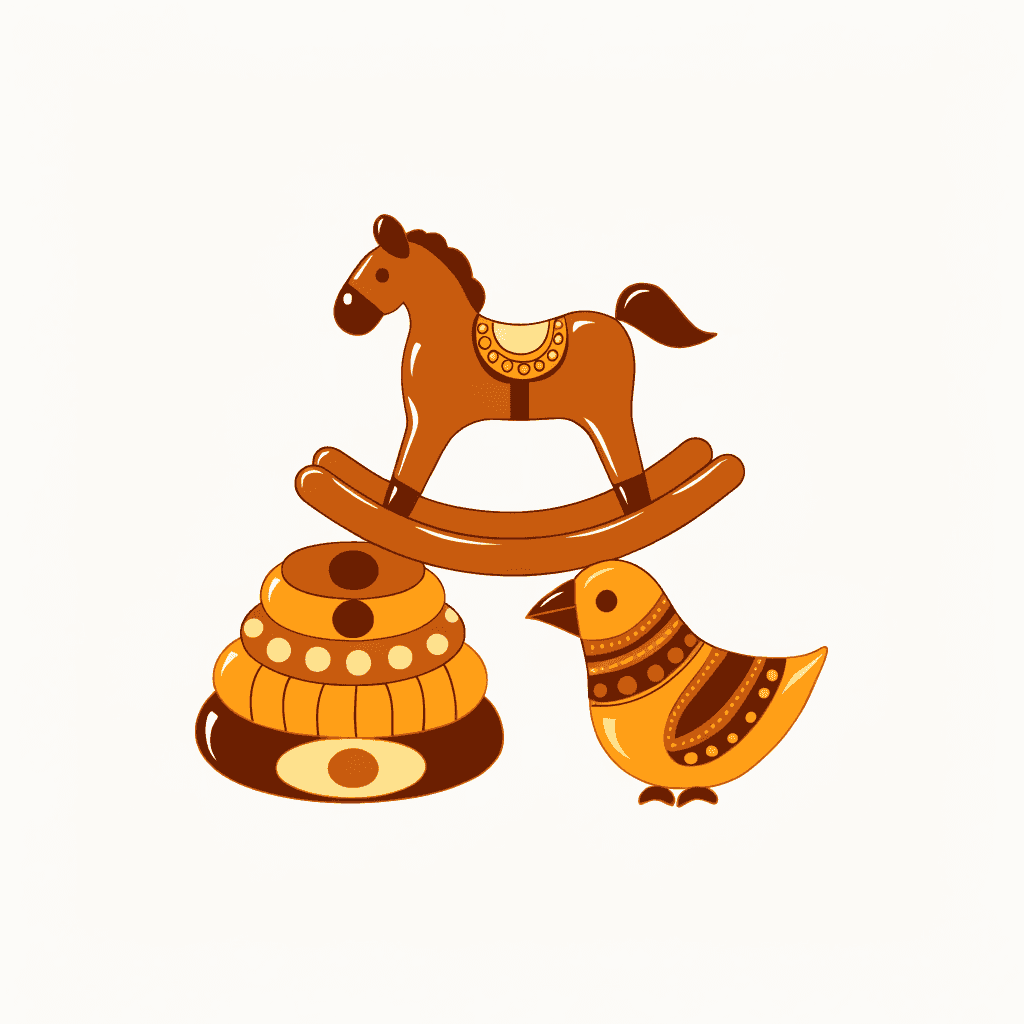
Etikoppaka, a village on the banks of the Varaha river near Visakhapatnam, turns wood the way other places dye cloth — with plants, patience and inherited skill. Its lathe-turned toys, known as Etikoppaka bommalu, are coloured entirely by nature: lac resin blended with dyes drawn from seeds, bark, roots and leaves, applied while the toy spins. The tradition is old and quietly continuous — local accounts link it to the lac bangle-making once common in the region — and it grew into a full toy vocabulary of spinning tops, rattles, bowls, boxes and little figures of gods, brides and birds. The wood is ankudu, a soft, close-grained local timber that turns cleanly and takes lac beautifully. What distinguishes Etikoppaka even among India's toy crafts is its wholesale commitment to plant-based colour: when synthetic dyes spread through the market in the twentieth century, the village's artisans worked to recover and refine natural dye recipes, and the muted, glowing palette that resulted is now the craft's signature. The toys carry a Geographical Indication as Etikoppaka Toys, and the village remains a working centre where turning is still the family trade.
How it is made
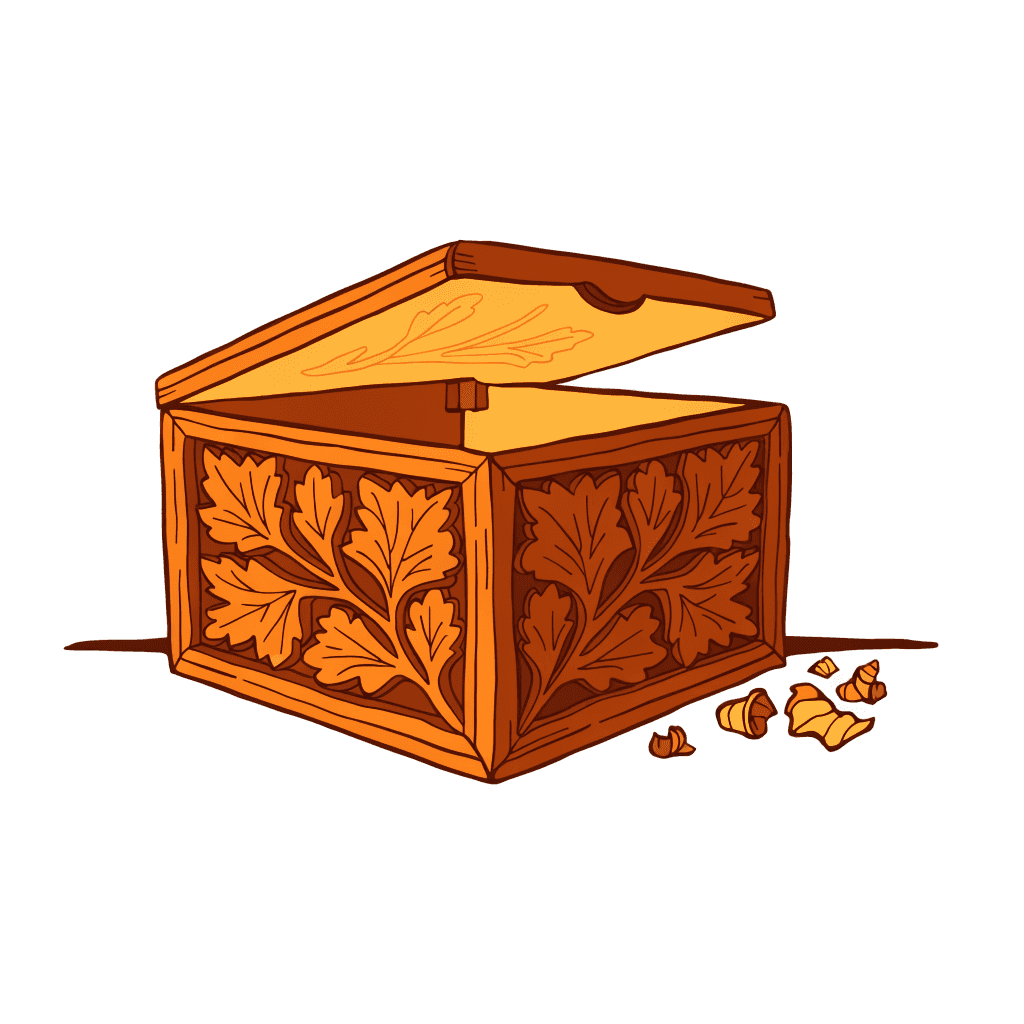
Ankudu wood is cut, seasoned and mounted on the lathe, where the turner shapes it into rounded, flowing forms. Colour is applied in the same motion: sticks of lac, pre-mixed with dyes extracted from seeds, bark, roots and leaves, are pressed against the spinning wood so friction heat fuses the tinted resin onto the surface. The piece is then burnished on the lathe until it glows. Because the palette is plant-based, colours run to warm ochres, greens, madder reds and soft browns rather than neon brights. Parts such as lids and bases are turned to fit by hand — a well-made Etikoppaka box closes with a soft, satisfying resistance.
Buying guide
The palette is the tell: authentic Etikoppaka colours are warm and slightly muted — plant-dye ochres, greens and reds — with a soft lustre, never fluorescent. The finish is seamless, with no brush marks, and the wood is light and smooth. Prices typically run ₹200–₹5,000, from small tops and rattles to larger boxes, figures and decor sets. If a piece looks candy-bright and smells of paint, it is not the traditional finish.
Care
Keep the toys dry — wipe with a soft dry cloth and never soak them, as water dulls the lac and can raise the grain. Natural dyes prefer shade: prolonged direct sunlight will slowly soften the colours. Avoid leaving pieces near heaters or in parked cars, where heat can tack the resin. Handled normally, the finish deepens attractively with age.
Good questions, honest answers
How are Etikoppaka toys different from Channapatna toys?
Both are lac-turnery crafts, but they differ in wood, palette and place. Etikoppaka uses ankudu wood and insists on dyes from seeds, bark, roots and leaves, giving a warmer, more muted palette; Channapatna in Karnataka uses ivory wood with vegetable-dyed lac in generally brighter tones. Each holds its own GI, and collectors prize the differences.
Are the colours really all natural?
Yes — in traditional Etikoppaka work, the lac is tinted only with plant-derived dyes extracted from seeds, bark, roots and leaves. Recovering and refining these recipes has been a point of pride for the village's artisans. The result is a distinctive soft-glow palette that synthetic paint cannot quite imitate.
Are Etikoppaka toys safe for young children?
The traditional finish is well suited to children: natural plant dyes in a lac base, fused to smooth, rounded wood with no sharp edges or flaking paint. For infants and teething babies, buy from sellers who confirm the piece is finished the traditional way, then simply keep it clean and dry.
Explore the living traditions
We are onboarding Etikoppaka Toys artisans. Meanwhile, explore every craft available on VedikCraft today.
Explore all crafts →
At a glance
- Region
- Etikoppaka, Visakhapatnam, Andhra Pradesh
- Community
- Etikoppaka turners
- Materials
- ankudu softwood, lac, natural-dye
- Techniques
- lac-turnery, natural-dye colouring
- Typical price band
- ₹200 – ₹5,000