Jewellery & Adornment
Nagercoil Temple Jewellery for Brides and Dancers
Also known as Temple jewellery
The story
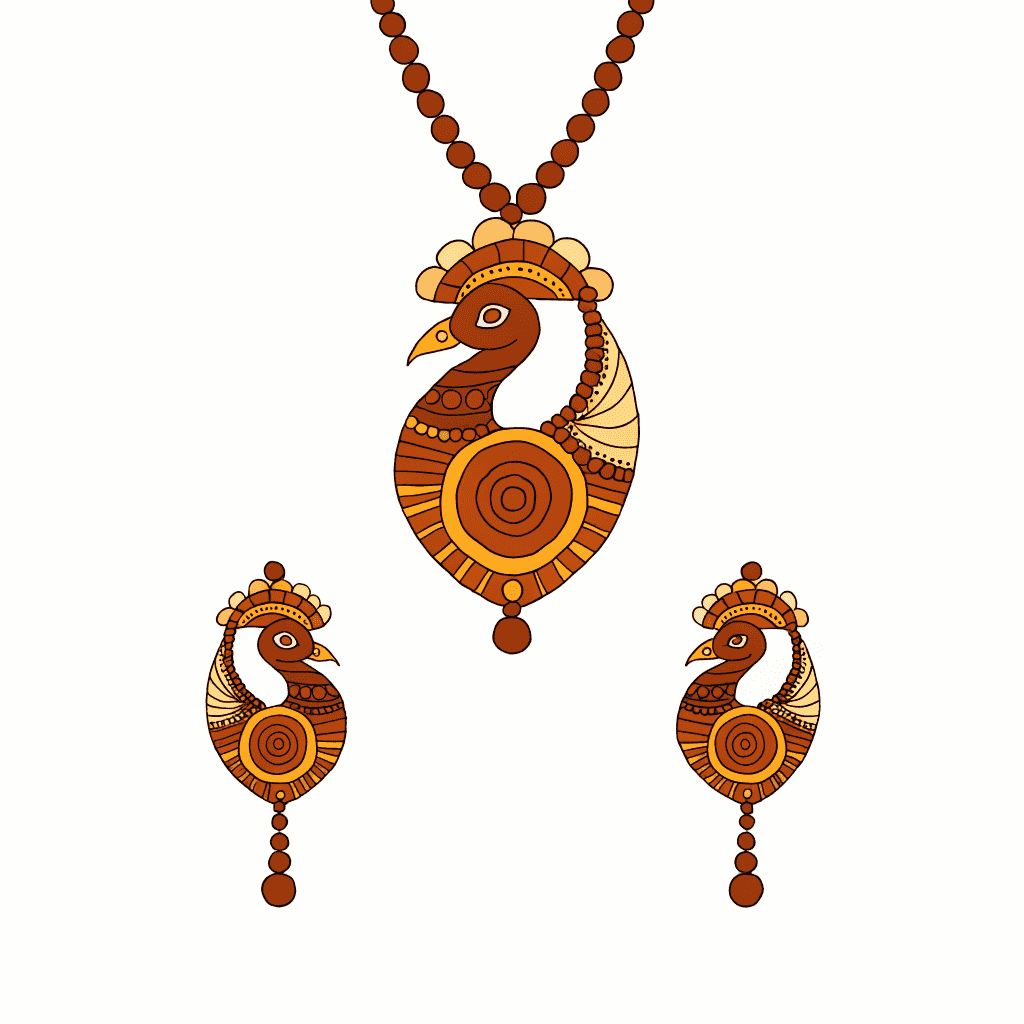
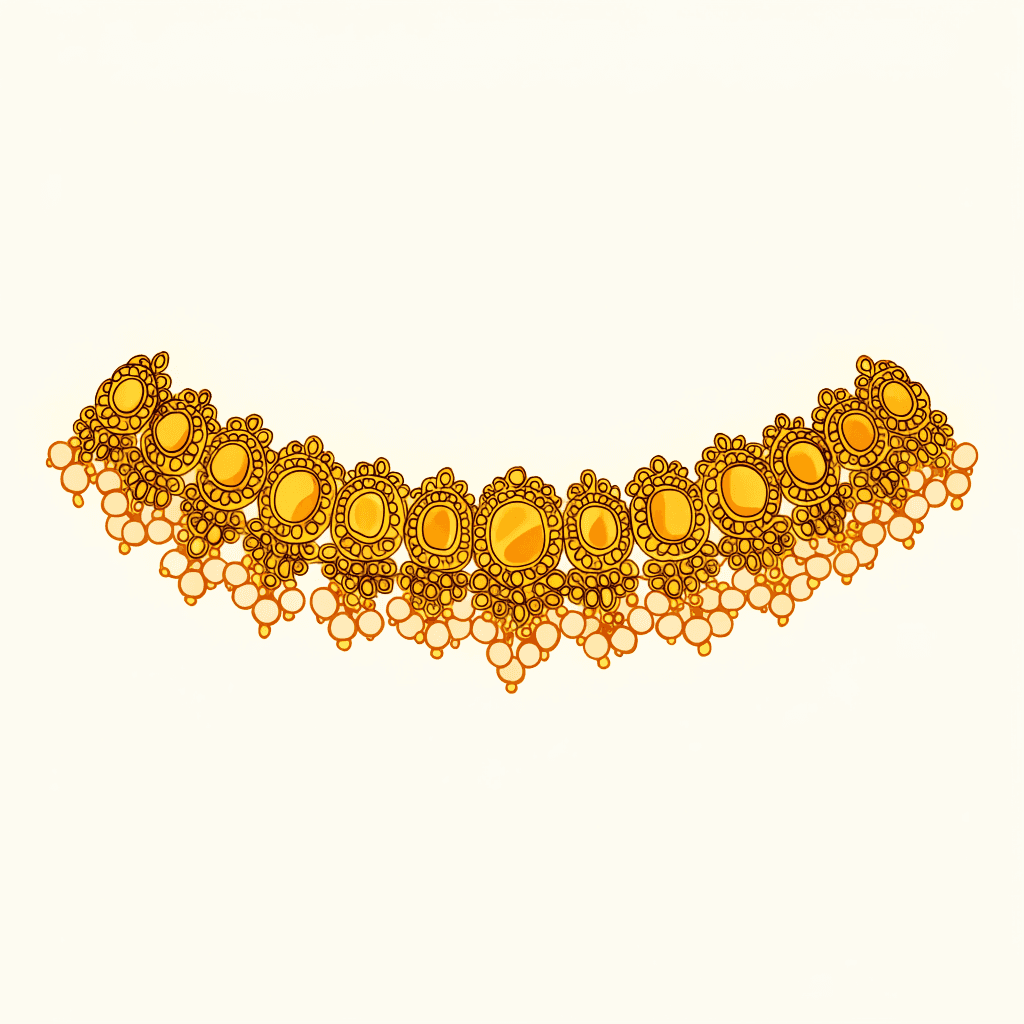
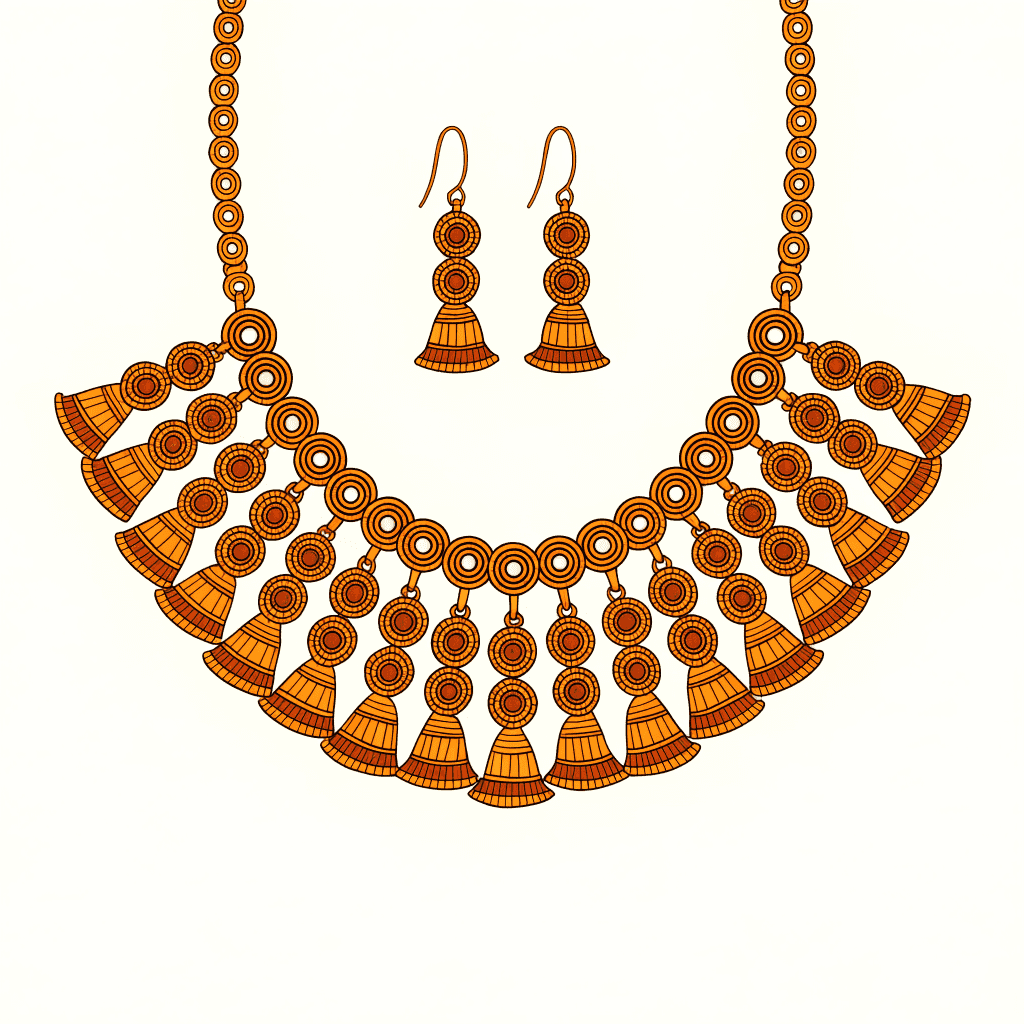
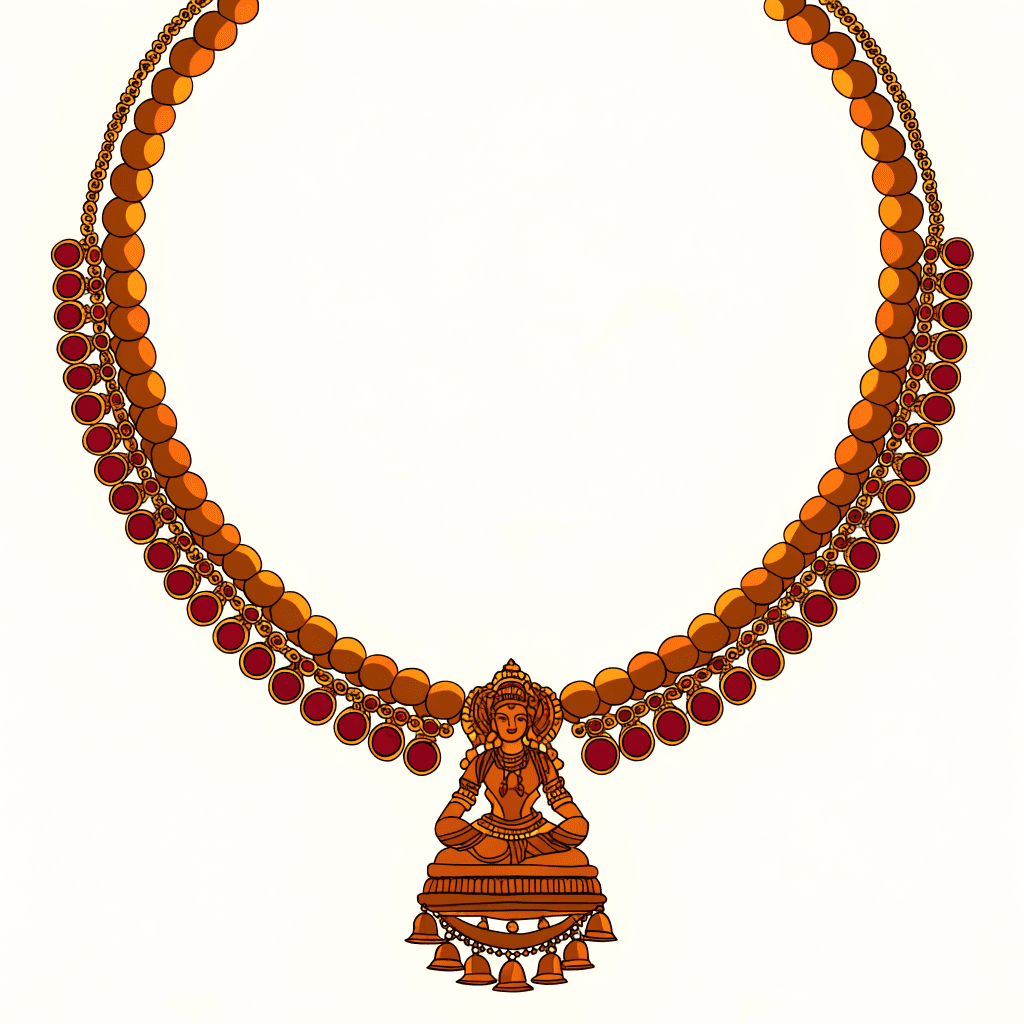
Temple jewellery earns its name literally: it was first made to dress gods. In the temple towns of southern Tamil Nadu, jewellers crafted ornaments for the deities themselves — necklaces, crowns and waist pieces donated by devotees and rulers, designed to be read from across a shrine. From the sanctum the style travelled to the stage: when Bharatanatyam dancers needed jewellery that matched the scale and iconography of temple sculpture, the same workshops supplied it, and temple jewellery became inseparable from South Indian classical dance. Nagercoil, near the tip of the peninsula in Kanyakumari district, emerged as the craft's heartland, its hereditary jewellers supplying temples, dance academies and bridal trousseaus across the South. The vocabulary is unmistakable — Lakshmi seated in a lotus, peacocks and parrots, temple gopurams and crescent moons — set with the deep red and green of rubies and emeralds against gold. A full dancer's set runs from the netti chutti headpiece, with its sun and moon, to jhumkas, chokers, long haarams and the odiyanam waist belt. For weddings, the same motifs signal blessing: to wear temple jewellery is to borrow the goddess's own ornament.
How it is made
Nagercoil's jewellers work in two grades of the same tradition. Heirloom pieces are gold, or silver clad in gold, with motifs formed by casting and repoussé — the deity or peacock raised in relief, then chased for detail — and set with rubies, emeralds and pearls. Dance jewellery, which must survive years of performance, is typically silver with gold finishing, set with the classic red and green stones in closed settings that hold fast through movement. Stones are seated in prepared beds and secured with rims of metal rather than prongs, giving the smooth, sculptural surface the style is known for. Pieces are finished with hanging pearls or beads, and sets are built to sit securely — a dancer's ornament cannot shift mid-performance.
Buying guide
Decide first between heirloom grade (gold, or gold on silver, with precious stones) and dance grade (silver-based, gold-finished, performance-tough) — both are authentic, at very different prices. Look for crisp deity detailing, smooth closed settings with no rattling stones, and secure hooks and screws on wearable pieces. Dance and everyday pieces typically start around ₹2,000; gold bridal sets with rubies and emeralds range from tens of thousands to ₹10 lakh. Confirm metal purity and hallmarking on gold.
Care
Wipe pieces with a soft dry cloth after wear — skin oils and sweat dull gold finishes over time. Keep jewellery away from perfume, hairspray and water, and store sets in cloth-lined boxes with pieces separated so stones don't scratch metal. Dance jewellery worked hard on stage should be checked yearly for loose settings and re-plated when the gold finish wears.
Good questions, honest answers
What's the difference between temple jewellery for brides and for dancers?
The designs overlap almost completely — the difference is construction. Bridal and heirloom pieces are gold or gold-on-silver with precious stones, made as lifelong investments. Dance jewellery is silver-based with gold finishing and robust closed settings, built to withstand rehearsals and performances. A Bharatanatyam set also includes stage-specific pieces like the netti chutti headpiece.
Why do temple jewellery designs feature gods and goddesses?
Because the craft began as ornament for temple deities themselves. Motifs like Lakshmi in a lotus, peacocks and gopuram forms came straight from temple sculpture and carried into human jewellery as emblems of blessing and auspiciousness. Wearing them at a wedding or on stage places the wearer within that sacred visual tradition.
Are the rubies and emeralds in temple jewellery always real?
Not always — and price tells you honestly. Heirloom-grade pieces use genuine rubies, emeralds and pearls; dance-grade and fashion pieces use traditional red and green stones that give the same visual effect at accessible cost. Both are legitimate forms of the craft. A reputable seller will state plainly which you are buying, in writing.
Explore the living traditions
We are onboarding Nagercoil Temple Jewellery artisans. Meanwhile, explore every craft available on VedikCraft today.
Explore all crafts →
At a glance
- Region
- Nagercoil, Tamil Nadu
- Community
- Nagercoil jewellers
- Materials
- gold, silver, rubies, emeralds
- Techniques
- cast & stone-set deity motifs
- Typical price band
- ₹2,000 – ₹10,00,000