Pottery & Ceramics
Longpi Black Pottery, Shaped Without a Wheel
Also known as Manipur black pottery
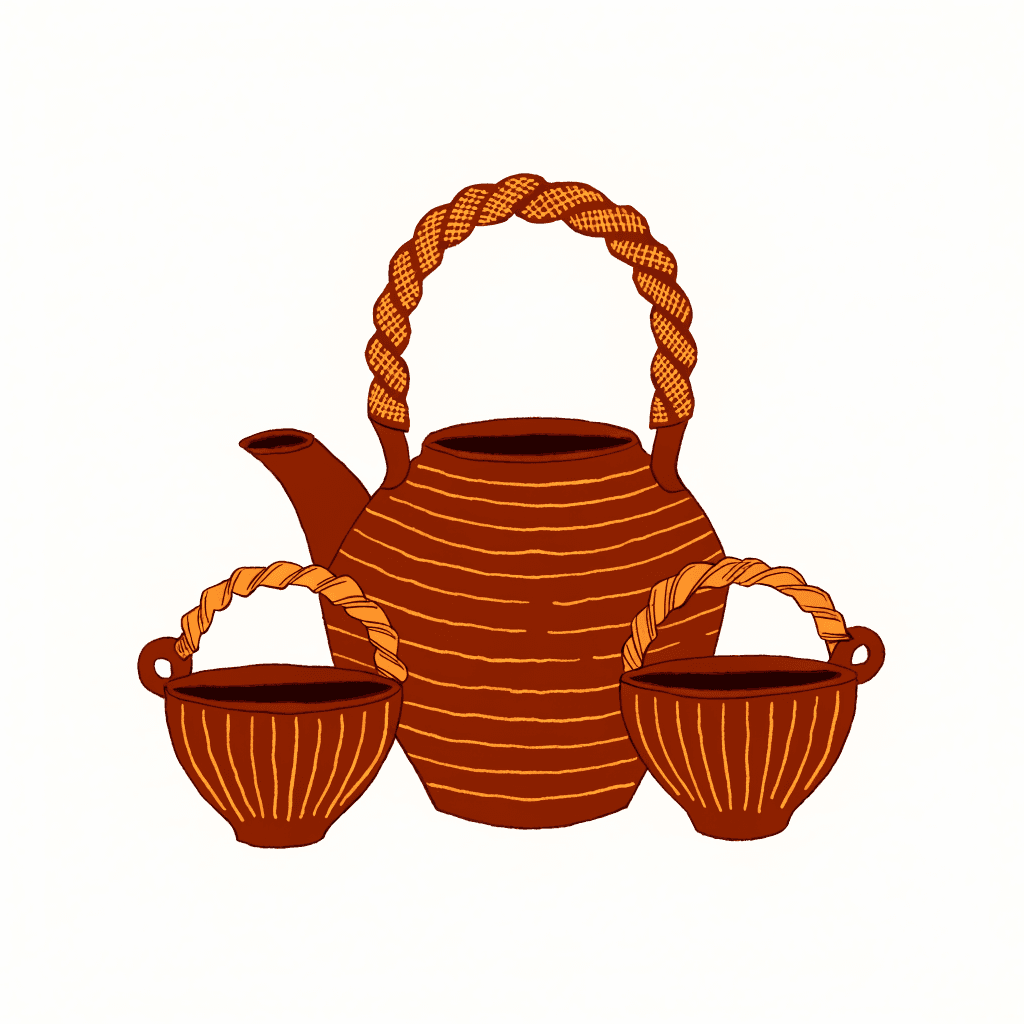
The story
In the hills of Ukhrul district in Manipur, the twin villages of Longpi Khullen and Longpi Kajui make a pottery unlike any other in India. The Tangkhul Naga potters here use no wheel — every kettle, bowl and cooking pot is raised by hand and mould from a paste of crushed, weathered serpentine rock and local clay, then fired in the open and rubbed with local leaves while still hot until the surface takes on its deep charcoal sheen. The result is stone-strong, matte-black ware that can sit directly on a flame. For generations Longpi pots — known locally in forms such as the tarung and hampai — were the cooking and serving vessels of Tangkhul households, valued as gifts at weddings and festivals, with certain vessels associated with feasts and standing. Food slow-cooked in Longpi is still said locally to taste better, and the pots hold heat remarkably well. In recent decades the craft has stepped from hill kitchens into design stores and hotel tables, its clean black minimalism reading as strikingly contemporary — an ancient utility rediscovered as modern form.
How it is made
There is no potter's wheel in Longpi. Weathered serpentine stone is crushed and ground, mixed with brown clay in careful proportion, and kneaded with water into a stiff, workable paste. Potters shape vessels entirely by hand, pressing slabs over moulds and building the walls up, then beating and scraping them true with wooden paddles and bamboo tools. After days of slow drying, the pots are fired in an open bonfire rather than a kiln, hardening the stone-clay body. Pulled hot from the embers, each piece is immediately rubbed with local leaves, which burnishes the surface and fixes the signature smoky black. Cane-wrapped handles and rims — a Longpi hallmark — finish the kettles, mugs and serving ware.
Buying guide
Mugs and small bowls start around ₹600; large kettles, casseroles and full serving sets range up to ₹9,000. Genuine Longpi is noticeably weighty and matte charcoal-black through and through — check a chip or unglazed base; painted imitations show a different colour beneath. Hand-beaten walls carry slight, pleasing asymmetries, and cane-wrapped handles are a classic tell. It should feel stone-like, not glassy. Buy from Manipur cooperatives or sellers who name the Longpi villages and their Tangkhul makers.
Care
Season a new pot by rinsing well, then boiling water in it or rubbing a little cooking oil inside. Longpi tolerates direct flame — heat it gradually and avoid shocks like cold water into a hot pot. Wash by hand with warm water and a soft brush, skipping harsh detergents; dry fully before storing. The black deepens handsomely with use.
Good questions, honest answers
Can I cook directly in Longpi pottery?
Yes — that is what it was made for. The serpentine-stone body is heat-resistant and goes on gas flames and coals; Tangkhul households have slow-cooked meats, dals and rice in it for generations. Heat it gradually, avoid sudden temperature shocks, and expect excellent heat retention that keeps food warm long after the flame is off.
Why is Longpi pottery black without any glaze or paint?
The colour comes from the making itself: the stone-and-clay body, the smoky open firing, and the finishing rub with local leaves while the pot is still hot, which burnishes the surface into its matte charcoal sheen. Because the black runs through the material, it never chips or peels the way paint or glaze would.
Is Longpi pottery fragile?
Less than it looks, more than metal. The stone-clay body is dense and stands up to daily cooking and washing, but it is still pottery: a hard knock on stone or tile can crack it, and violent thermal shock is its one real enemy. Handled with ordinary kitchen sense, pieces last for decades.
Explore the living traditions
We are onboarding Longpi Black Pottery artisans. Meanwhile, explore every craft available on VedikCraft today.
Explore all crafts →
At a glance
- Region
- Longpi, Ukhrul, Manipur
- Community
- Tangkhul Naga
- Materials
- serpentine-stone, clay
- Techniques
- hand & mould (no wheel), stone-clay mix
- Typical price band
- ₹600 – ₹9,000