Wood Craft & Toys
Naga Wood Carving — Totems and Panels from Nagaland
The story
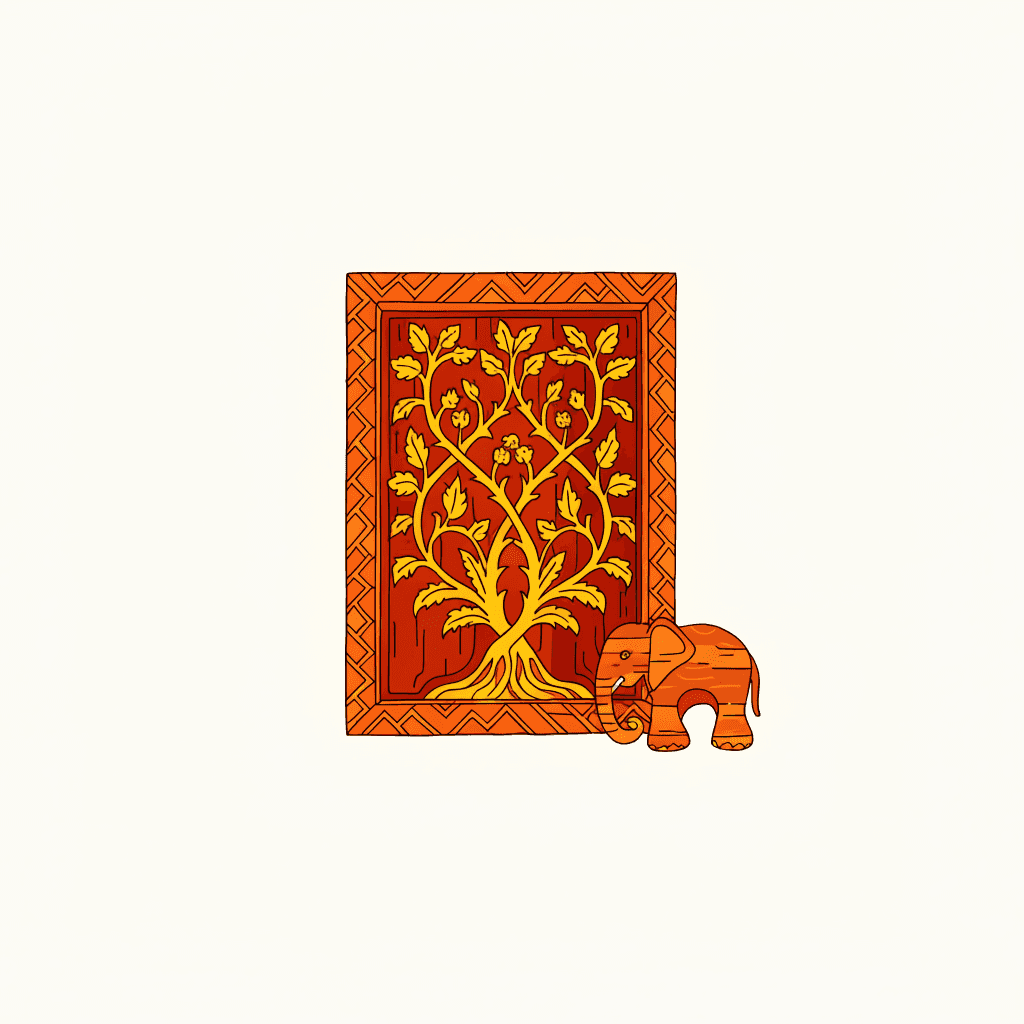
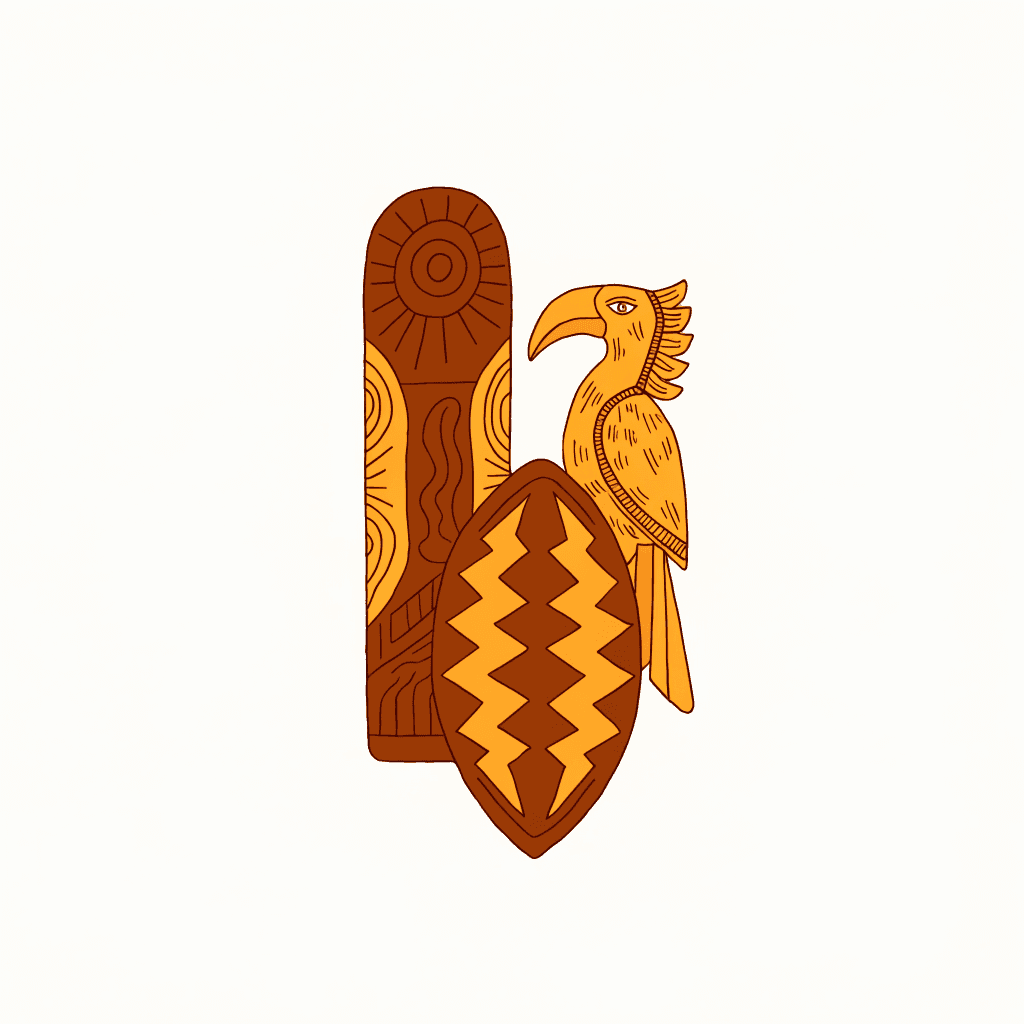
In the hill villages of Nagaland, wood carving was never mere decoration — it was a public record of status, courage and clan identity. The great carved structures were the morungs, the men's houses where boys were schooled in the skills and stories of the tribe. Their massive posts, doors and gables were cut with the imagery that mattered most: the mithun, the semi-wild bovine whose sacrifice in feasts of merit earned a man the right to display it; the hornbill, associated with prowess and honour; tigers, elephants, and rows of warrior figures commemorating the deeds of the household. Village gates, hewn from a single enormous trunk, carried the same guardian imagery. Each of the Naga tribes — Konyak, Ao, Angami, Sema and others — developed its own carving conventions, so a trained eye can read a panel's origin. Colonial disruption and religious change dimmed the tradition in the twentieth century, but it never disappeared: today's Naga carvers translate the old vocabulary of mithun heads, hornbills and warriors onto panels, masks, tables and doors for modern homes, keeping the bold, deep-cut style unmistakably alive.
How it is made
Naga carving is a hardwood tradition, worked with a confident, direct hand. Carvers select dense local timbers and rough out the form with dao — the all-purpose Naga blade — and axe before refining it with chisels and gouges. The style favours strong silhouettes and deep relief over fussy detail: features are boldly stated, surfaces left with visible tool facets that catch light. Large architectural pieces — posts, doors, gate panels — are traditionally cut from a single trunk or slab rather than joined. Some pieces are darkened by smoke, oil or pigment to the deep tones associated with old morung timbers; others show the raw wood. Motifs are not chosen at random even now — mithun heads, hornbills and human figures each carry inherited meaning.
Buying guide
Look for deep, decisive cutting with visible tool marks — authentic Naga work is carved, not routed, and its power lies in bold silhouettes rather than fine polish. Heavier native hardwoods are a good sign; very light, uniformly smooth pieces are often mass-made elsewhere. Ask which tribe or district the piece comes from, since motifs and styles differ. Small masks and figures typically start around ₹1,000, while large panels, totems and carved furniture can range up to ₹60,000.
Care
Hardwood carvings want stable conditions: avoid damp walls, direct sun and the blast of heaters or air conditioners, which can crack thick timber. Dust with a dry brush or cloth. An occasional sparing wipe with a neutral wood wax suits darkened pieces; test on the back first. Check outdoor-style pieces for insect activity before bringing them indoors.
Good questions, honest answers
What does the mithun head motif mean in Naga carving?
The mithun, a semi-wild bovine of the eastern Himalayas, is the great prestige animal of Naga society. Historically, a household earned the right to display carved mithun heads by hosting feasts of merit — lavish community feasts that raised the giver's status. On a panel or post, the motif still reads as a mark of honour and generosity.
Are these carvings antiques from actual morungs?
Almost never, and rightly so — original morung timbers and village-gate carvings are heritage objects that largely remain in Nagaland. What you buy today is contemporary work by Naga carvers using the traditional motifs and deep-relief style. Treat any dealer's claim of genuine old morung wood with scepticism unless it comes with serious documentation.
Which wood is used in Naga carving?
Carvers work with dense local hardwoods from Nagaland's forests, chosen for size, durability and how cleanly they take the blade. Large panels and posts are traditionally cut from a single trunk. Finishes vary from raw wood to surfaces darkened with smoke, oil or pigment, echoing the tones of aged morung timbers.
Explore the living traditions
We are onboarding Naga Wood Carving artisans. Meanwhile, explore every craft available on VedikCraft today.
Explore all crafts →
At a glance
- Region
- Nagaland
- Community
- Naga tribes
- Materials
- hardwood
- Techniques
- tribal relief carving
- Typical price band
- ₹1,000 – ₹60,000