Paintings & Folk Art
Pichwai: The Temple Cloth Paintings of Nathdwara
The story
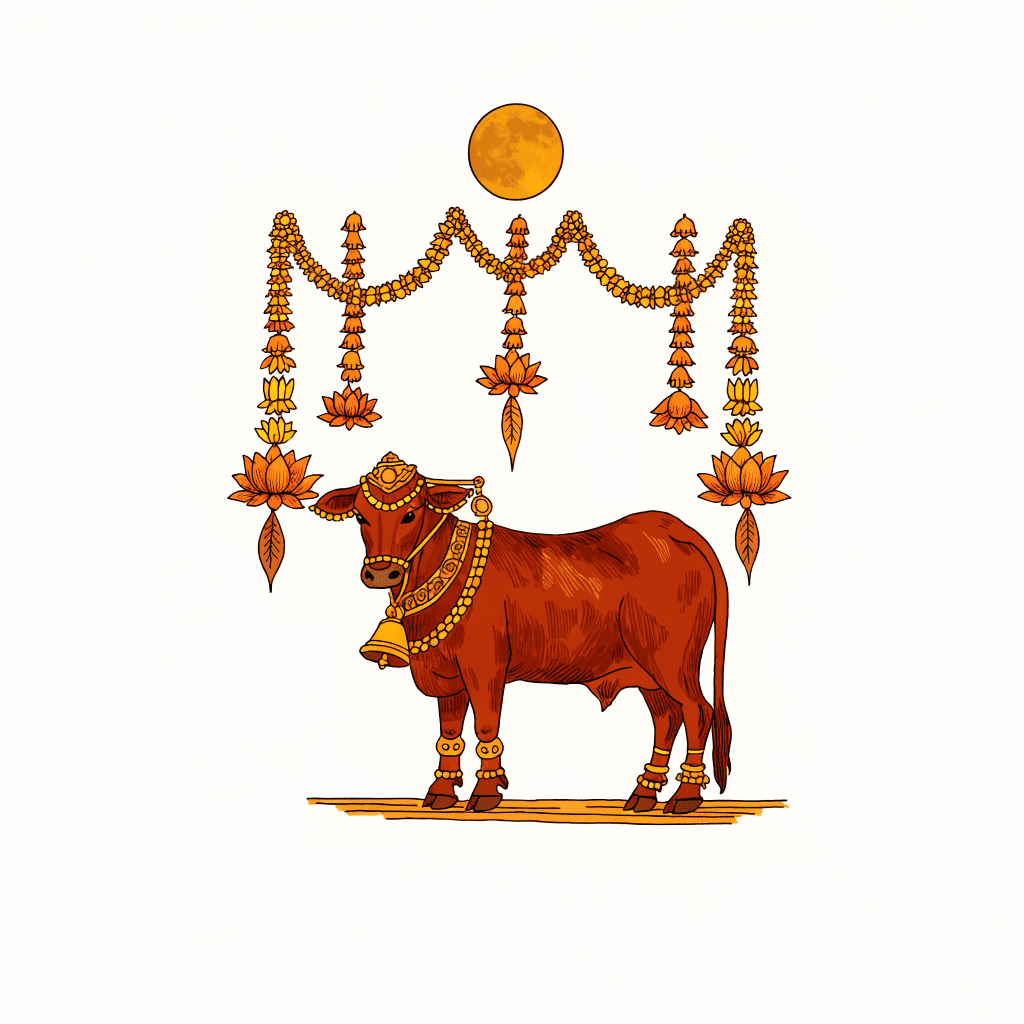
A pichwai — from pichh, meaning back — is the great painted cloth hung behind the image of Shrinathji, the child form of Krishna worshipped at the haveli-temple of Nathdwara in Rajasthan. The tradition belongs to the Pushtimarg, the Vaishnava path founded by the saint Vallabhacharya, and it took root in Nathdwara after the deity was carried there from the Braj region in the late seventeenth century. Pichwais are not generic paintings; they are liturgical. The temple changes them with the seasons and festivals — a moonlit raas for Sharad Purnima, a mountain of offerings for Annakut, garlanded cows for Gopashtami — so the deity's backdrop always mirrors the ritual moment. Their vocabulary is instantly recognisable: lotus ponds, banks of monsoon cloud, groves of banana and kadamba, gopis in procession, and the dark, wide-eyed figure of Shrinathji with one arm raised. The painter families of Nathdwara's temple lanes have kept the tradition alive for centuries, and in recent decades pichwai has travelled far beyond the shrine, becoming one of the most collected — and most imitated — of all Indian devotional arts.
How it is made
Pichwais are painted on hand-woven cotton, first stiffened with starch and burnished smooth. The composition is drawn in light outline, then built up in layers of flat, hand-ground colour — traditionally mineral and earth pigments, with deep indigo skies, rich greens and the warm reds of the Nathdwara palette. Gold comes last and generously: leaf or fine gold paint for jewellery, borders, halos and the trim of garments, so the cloth glows in lamplight as it would behind the deity. Faces and eyes receive the finest brushwork and are completed at the end. A large pichwai represents weeks or months of work, and traditional workshops still divide it the old way — one hand for figures, another for borders, another for gold.
Buying guide
'Pichwai' is used loosely in decor shops, so start by separating hand-painted cloth from digital prints on fabric: originals show pigment texture, fine brush ridges and slight tonal variation, especially in faces and gold work. Genuine gold leaf glints unevenly; printed gold looks flat. Traditional themes — Shrinathji, lotus ponds, cows — done densely by hand take weeks. Small works start around ₹3,000; large, museum-grade pichwais with gold detailing can reach ₹2,50,000.
Care
Keep pichwais stretched or framed, away from direct sun, incense smoke and humidity — cloth and mineral pigment both suffer in damp. Never fold a painted pichwai; creases crack the pigment layer. If it must travel, roll it loosely around a wide tube with acid-free paper. Dust with a soft dry brush only.
Good questions, honest answers
What does a pichwai traditionally depict?
Shrinathji — the child form of Krishna with one arm raised — and the world around his worship: lotus ponds, cows, gopis, peacocks, monsoon clouds and festival scenes. Different compositions belong to different rituals: a moonlit raas for Sharad Purnima, the food-mountain of Annakut, garlanded cattle for Gopashtami.
Why are cows and lotuses so common in pichwai?
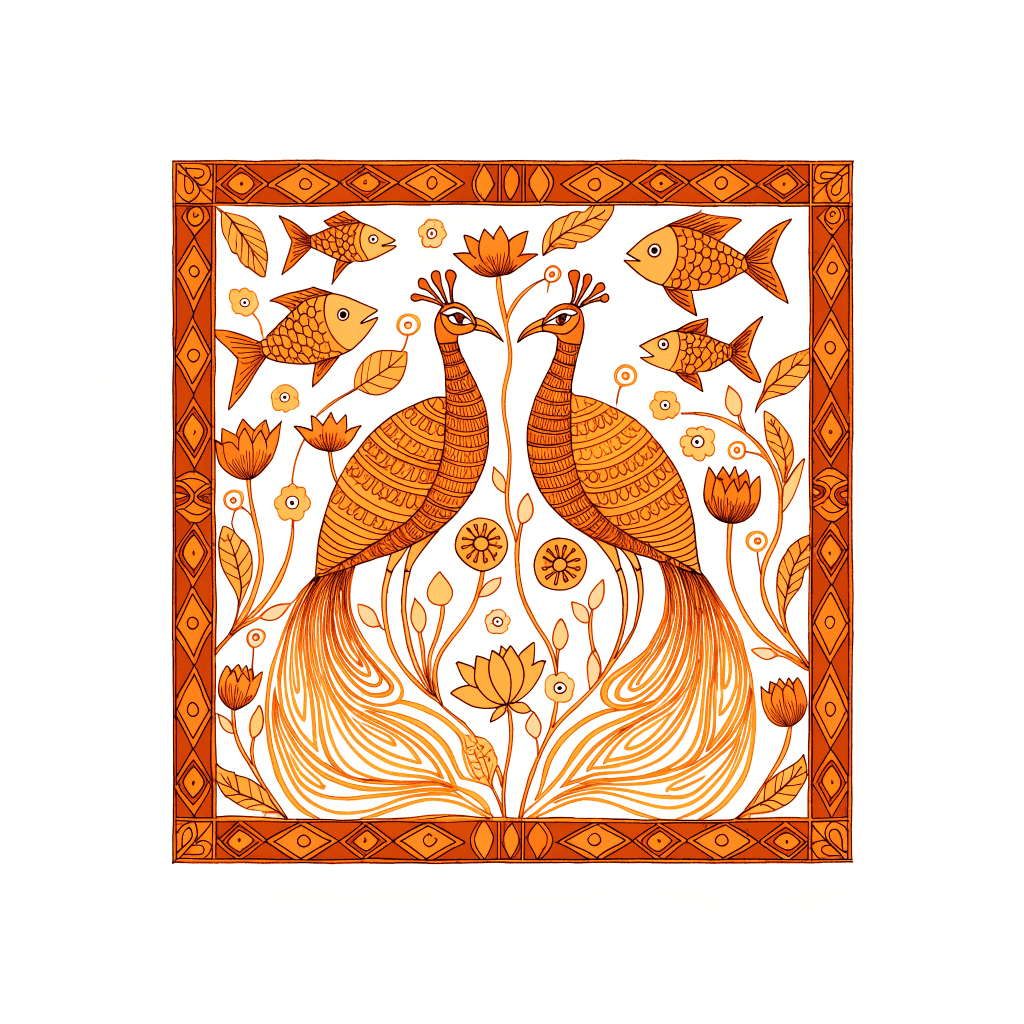
Both belong to Krishna's landscape. The cow is his companion and the emblem of Gopashtami, painted garlanded and doe-eyed in devoted rows. The lotus pond, or kamal talai, evokes the ponds of Braj where he played — and gives painters a gorgeous repeating motif that fills the cloth with rhythm.
Do pichwais only come in large temple sizes?
No. Temple pichwais are monumental because they dress the shrine wall, but Nathdwara workshops have long painted smaller formats — panels of a single cow, a lotus detail, a festival scene — sized for homes. What matters is the hand: a small genuine pichwai carries the same pigments, gold and brushwork as a grand one.
Explore the living traditions
We are onboarding Pichwai artisans. Meanwhile, explore every craft available on VedikCraft today.
Explore all crafts →
At a glance
- Region
- Nathdwara, Rajasthan
- Community
- Nathdwara painters
- Materials
- cloth, natural-pigment, gold
- Techniques
- fine-detail temple cloth
- Typical price band
- ₹3,000 – ₹2,50,000