Paintings & Folk Art
Aipan Painting — Kumaon's Ritual Art in Red and White
The story
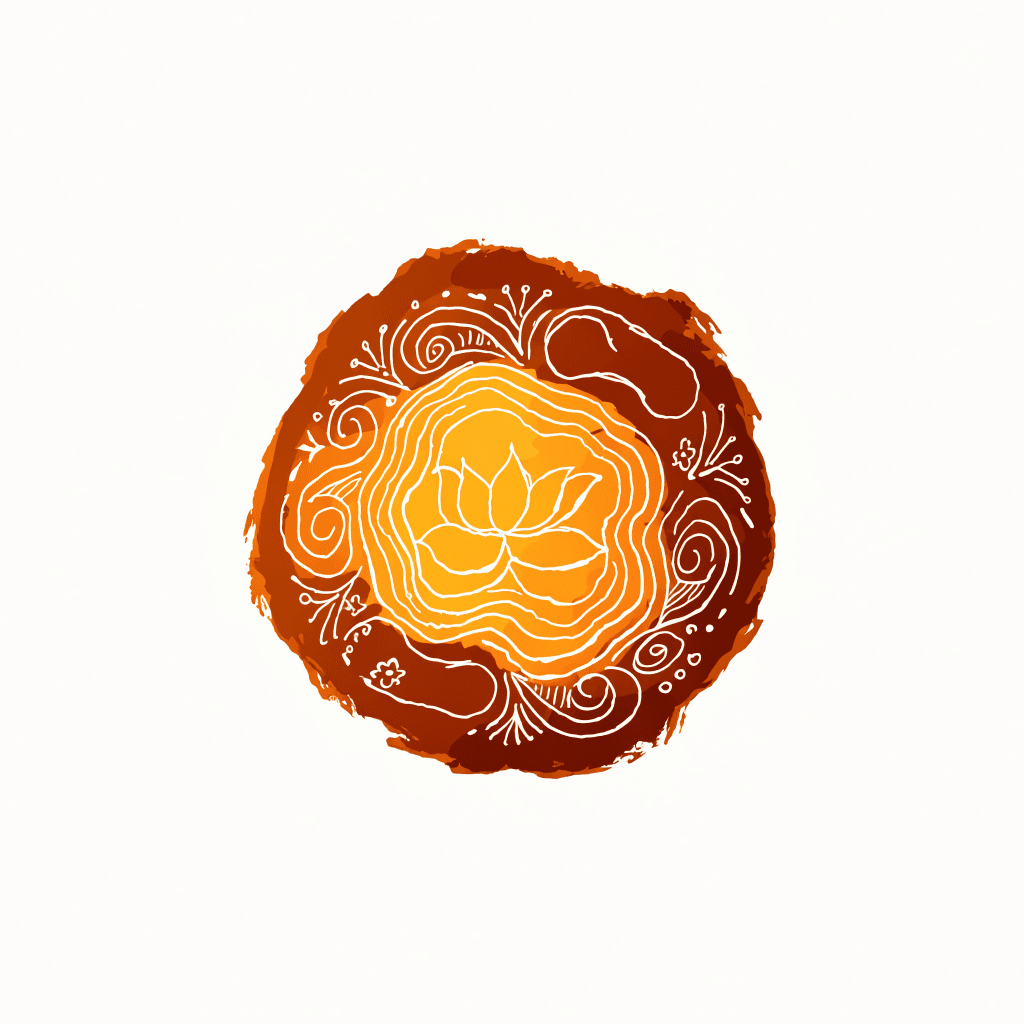
Aipan is the ritual art of Kumaon in Uttarakhand, made by women, for the household, at the moments that matter. On festival mornings, at weddings, naming ceremonies and pujas, the threshold, courtyard and place of worship are washed with geru — a warm red ochre — and designs are drawn over it in bisvar, a paste of soaked, ground rice. These white-on-red diagrams are not casual decoration; each occasion has its proper pattern. Lakshmi's footprints walk in from the doorway at Diwali, particular rites call for particular yantra-like compositions, and lotuses, conches and stepped lattices radiate from a central point. The knowledge passes from mother to daughter, and a practised hand draws entirely freehand, fingertips serving as the brush. Because the medium is literally the floor and wall of a living house, traditional aipan is renewed with the calendar — art as observance rather than object. In recent decades Kumaoni women have carried the same motifs onto paper, cloth and wooden decor, giving the tradition a life beyond the doorstep and an income for its keepers, while the household practice continues in the hills exactly as it always has.
How it is made
Two humble materials do all the work. Geru, a red ochre earth, is mixed with water and laid down as the ground — on a floor, a wall, or now a sheet of handmade paper or a stretch of cloth. Rice is soaked and ground into bisvar, a thick white paste. The artist dips her fingertips — traditionally the last three fingers of the right hand — and draws directly, without stencil or under-sketch, building the design outward from a central point. Dots, paired lines, lotus petals and stepped lattices follow rules learned by watching and repeating. On paper and fabric, artists keep the same two-colour discipline, usually sealing the surface so the rice paste binds fast.
Buying guide
Authentic aipan keeps its two-colour soul: white rice-paste design on a geru-red ground, drawn freehand. Look for the gentle waver of a hand-drawn line — stencilled or screen-printed versions are suspiciously uniform — and motifs that follow tradition rather than generic mandala patterns. Paper panels and small framed works typically start around ₹600, with large commissioned pieces on cloth or board reaching ₹20,000. Buying directly from Kumaoni women's collectives puts money where the tradition lives.
Care
Rice paste and ochre are organic, so moisture is the enemy. Frame paper works behind glass with an acid-free mount and hang them on a dry interior wall. Dust cloth pieces gently without rubbing the painted surface, and never wipe with anything damp. Kept dry and out of direct sun, a well-made aipan panel lasts for years.
Good questions, honest answers
What do the motifs in aipan mean?
Each has a job. Lakshmi's footprints, drawn walking inward from the threshold, invite the goddess of prosperity at Diwali. The central dot and radiating lattice mark sacred space; lotuses stand for purity, conches for auspicious beginnings. Specific ceremonies — weddings, naming rites, particular pujas — each call for their own prescribed composition, which is why the art is learned by occasion, not just by pattern.
Is aipan only made during festivals?
On floors and walls, yes — it is renewed with the ritual calendar, at festivals, weddings and pujas, and that impermanence is part of its meaning. But aipan on handmade paper, cloth and wooden decor is made year-round, letting the same motifs live in homes far from Kumaon and giving practitioners a steady craft income between ceremonial seasons.
Will the rice-paste design last on a piece I buy?
Yes, with basic care. Artists working on paper and cloth fix the bisvar so it bonds to the surface, and framed behind glass the design holds for years. The real risks are damp and abrasion: keep the piece dry, avoid rubbing the painted surface, and it will age gracefully like any natural-material artwork.
Explore the living traditions
We are onboarding Aipan Painting artisans. Meanwhile, explore every craft available on VedikCraft today.
Explore all crafts →
At a glance
- Region
- Kumaon, Uttarakhand
- Community
- Kumaoni women
- Materials
- geru (red ochre), rice-paste, paper, cloth
- Techniques
- ritual freehand floor & wall art
- Typical price band
- ₹600 – ₹20,000