Metal Craft
Swamimalai Bronzes, Cast the Chola Way
Also known as Chola bronze

The story
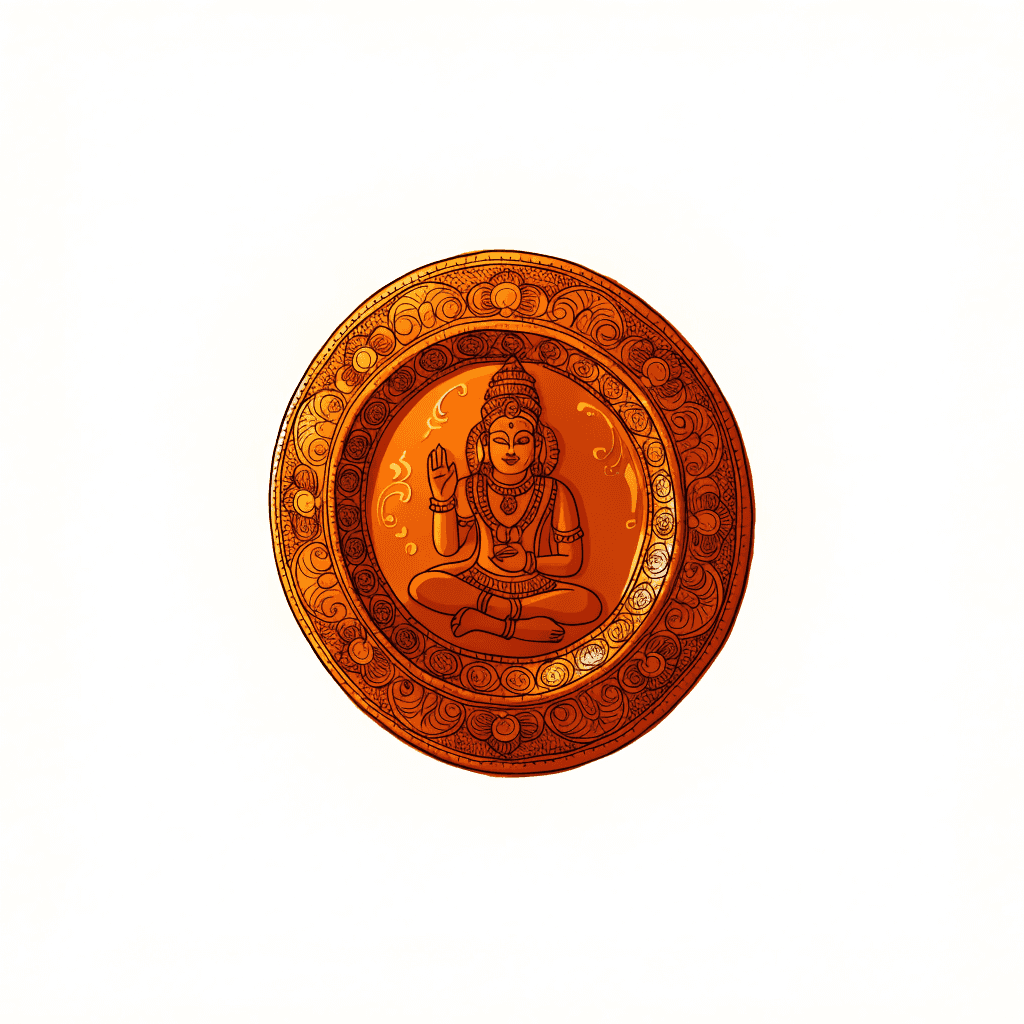
A thousand years ago, the bronze casters of the Chola empire produced what many consider the summit of Indian art — the dancing Nataraja, Shiva ringed in fire, cast in solid bronze with a grace no later tradition has surpassed. Swamimalai, a temple town on the Kaveri near Kumbakonam in Tamil Nadu, is where that lineage lives on. Its hereditary sthapathis — master craftsmen who trace their descent from the Chola-era guilds — still cast deity icons by the same solid lost-wax process, and still measure their figures by the talamana system of proportions codified in the Shilpa Shastras. Nothing about the iconography is left to whim: the span of the shoulders, the curve of the hip, the gesture of each hand are all prescribed, because these are not sculptures in the Western sense but sacred bodies made to receive consecration in temples. Swamimalai bronzes serve working temples across India and the diaspora, alongside collectors who prize them as continuations of Chola art. The alloy is panchaloha, the traditional five-metal blend, and the making remains slow, manual and ritual-bound — a living workshop practice with a millennium of unbroken pedigree behind it.
How it is made
Swamimalai icons are solid-cast by lost wax — madhuchishta vidhana, as the Shastras call it. The sthapathi models the deity in full detail in a blend of beeswax and resin, working to talamana proportions measured out against the figure's own face-length. The wax figure is coated in successive layers of fine alluvial clay from the Kaveri, dried, and heated so the wax runs out, leaving a hollow mould. Molten panchaloha — the traditional five-metal alloy based on copper — is poured in a single charge. After cooling, the mould is broken away and weeks of hand-finishing follow: chiselling, filing and burnishing to bring up the face, ornaments and drapery. Large icons can take months from wax to finished bronze.
Buying guide
A genuine Swamimalai bronze is solid cast and surprisingly heavy for its size — hollow or lightweight figures deserve suspicion. Look for crisp hand-chiselled detail in the face and ornaments, correct iconographic proportions, and a warm alloy tone rather than a sprayed-on antique finish. Ask whether the piece is solid panchaloha and cast by lost wax. Small icons typically begin around ₹5,000; consecration-grade temple bronzes of real size and complexity command ₹1–2 lakh.
Care
Dust regularly with a soft dry cloth, using a soft brush for crevices. Bronzes used in worship can be gently washed and dried immediately; decorative pieces are better kept dry. A trace of coconut oil rubbed in occasionally deepens the lustre. Let patina develop naturally — avoid brass polish and abrasives, which flatten the hand-finished surface.
Good questions, honest answers
What is panchaloha?
Panchaloha is the traditional five-metal alloy prescribed for sacred icons, built on a copper base with smaller shares of other metals; exact recipes vary between workshops and are often family knowledge. The alloy is valued for casting fidelity, durability and ritual significance — the texts associate the five metals with auspiciousness in consecrated images.
How long does a Swamimalai bronze take to make?
It depends entirely on size and detail. A small icon may take a few weeks from wax model to finished figure; a large, fully ornamented temple bronze can occupy a workshop for months. The casting itself is quick — a single pour — but the wax modelling before it, and the hand-chiselling and burnishing after it, consume most of the time.
Are these the same as antique Chola bronzes?
They are the same tradition, not the same objects. Antique Chola bronzes are museum property and protected antiquities; what Swamimalai offers is new work made by the unbroken descendant lineage, using the same solid lost-wax process and proportional canons. A new Swamimalai Nataraja is a legitimate continuation of Chola practice — and, unlike an antiquity, legal to buy and own.
Explore the living traditions
We are onboarding Swamimalai Bronze Icons artisans. Meanwhile, explore every craft available on VedikCraft today.
Explore all crafts →
At a glance
- Region
- Swamimalai, Tamil Nadu
- Community
- Sthapathi bronze casters
- Materials
- panchaloha (five-metal alloy)
- Techniques
- lost-wax casting
- Typical price band
- ₹5,000 – ₹2,00,000