Wood Craft & Toys
Wancho Wood Carving from Longding, Arunachal Pradesh
The story
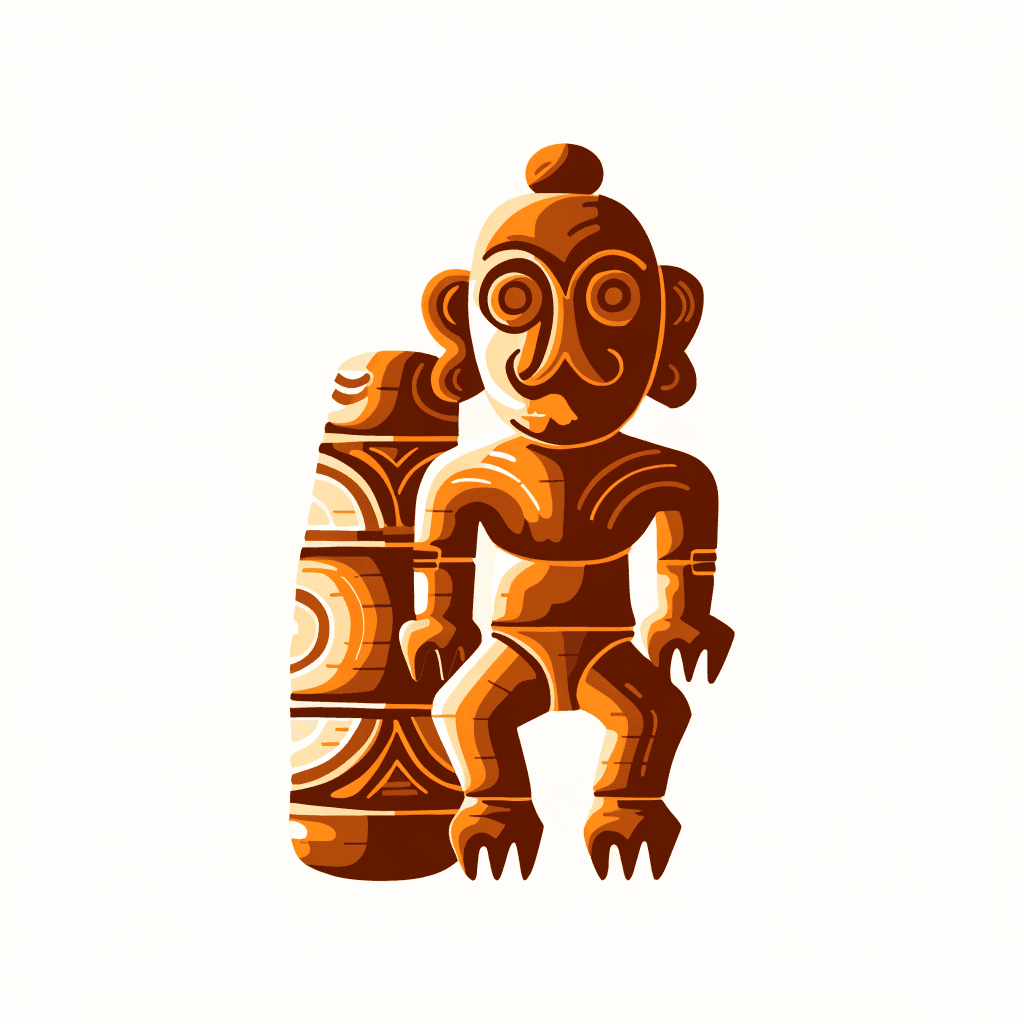
In the Patkai hills of Longding district, in the far southeast of Arunachal Pradesh, the Wancho tribe practises one of the Northeast's most arresting sculptural traditions. Wancho carving grew out of a warrior culture: historically, carved human heads and figures commemorated raids and honoured the fallen, and carving skill itself carried prestige. Chiefs' houses and communal spaces held figures and posts that declared the standing of the clan. The style is instantly recognisable — compact, frontal human figures with strong brows and set expressions, animal forms, and masks cut with the same fearless directness, usually from a single block of wood. Surfaces are often blackened, and many pieces are dressed the way the Wancho dress themselves: with strings of beads, cane bindings and other adornments the tribe prizes. Alongside figures and masks, Wancho men carved fine tobacco pipes, vessels and everyday objects with the same sculptural confidence. As the old customs receded, the carving tradition adapted rather than died, and today Wancho artisans produce figurines, masks and pipes for collectors who value the raw, totemic force of the work — among the most distinctive carving styles anywhere in India.
How it is made
A Wancho carving typically begins and ends as one piece of wood — figures, masks and pipes are cut from a single block, never assembled. The carver roughs out the form with a dao or axe, then defines the features with chisels and knives, favouring bold planes over fine detail: heavy brows, strong noses, squared shoulders. Bamboo is used for pipe stems and smaller elements. Many pieces are then blackened — by smoke, soot or pigment — giving the deep, aged tone characteristic of the style. Finally comes the adornment that sets Wancho work apart: strings of beads, cane bindings and other embellishments fixed to the figure, mirroring the beadwork the Wancho themselves wear. Tool marks are left honest and visible.
Buying guide
Authentic Wancho pieces feel sculptural rather than decorative: single-block construction, assertive faces, visible tool facets, and often a smoke-dark surface with bead or cane adornment. Uniform machine smoothness or glued joints are warning signs. Provenance from Longding district or a recognised Arunachal crafts outlet is worth asking about. Small figurines and pipes typically start around ₹800, mid-size masks and figures sit in the low thousands, and large or exceptional carvings can reach ₹30,000.
Care
Keep carvings away from damp and from direct sun, which can crack single-block wood. Dust gently with a dry brush, taking care around bead strings and cane bindings, which should not be tugged. If beadwork loosens, have it re-tied rather than glued. Avoid oils or polish on blackened surfaces — they can lift the finish.
Good questions, honest answers
What do the human figures in Wancho carving represent?
Historically, carved heads and figures were bound up with the Wancho warrior tradition, commemorating raids, honouring ancestors and asserting the standing of chiefs and clans. A figure was a statement, not an ornament. Contemporary carvings inherit that charge — the frontal pose and fixed gaze are deliberate — even when made for collectors rather than the chief's house.
Why are the carvings black?
Blackening is a signature of the style. Surfaces are darkened with smoke, soot or pigment, which deepens the shadows of the carving and evokes the tone of old pieces aged by hearth smoke in Wancho homes. Under the dark finish the work is solid carved hardwood, usually from a single block.
How is Wancho carving different from Naga wood carving?
The traditions are related — the Wancho are culturally close to the Konyak Naga, just across the state border — but Wancho work leans harder into compact, frontal human figures, masks and pipes, and is distinctive for its bead and cane adornment on the carved wood. Naga carving is more architectural, historically centred on morung posts, doors and large panels.
Explore the living traditions
We are onboarding Wancho Wood Carving artisans. Meanwhile, explore every craft available on VedikCraft today.
Explore all crafts →
At a glance
- Region
- Longding, Arunachal Pradesh
- Community
- Wancho tribe
- Materials
- wood, bamboo, beads
- Techniques
- figurative carving
- Typical price band
- ₹800 – ₹30,000