Leather & Puppetry
Mojari & Jutti: From Mughal Courts to Wedding Feet
The story
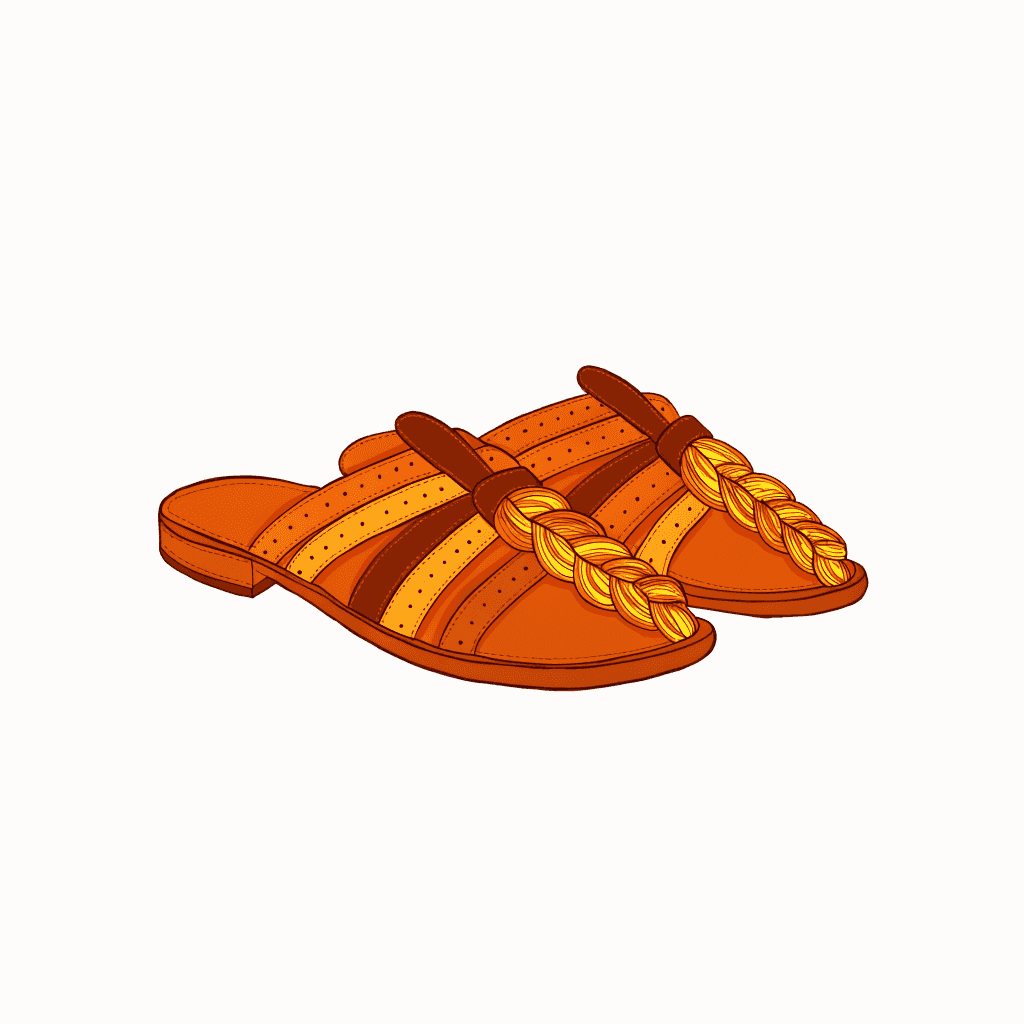
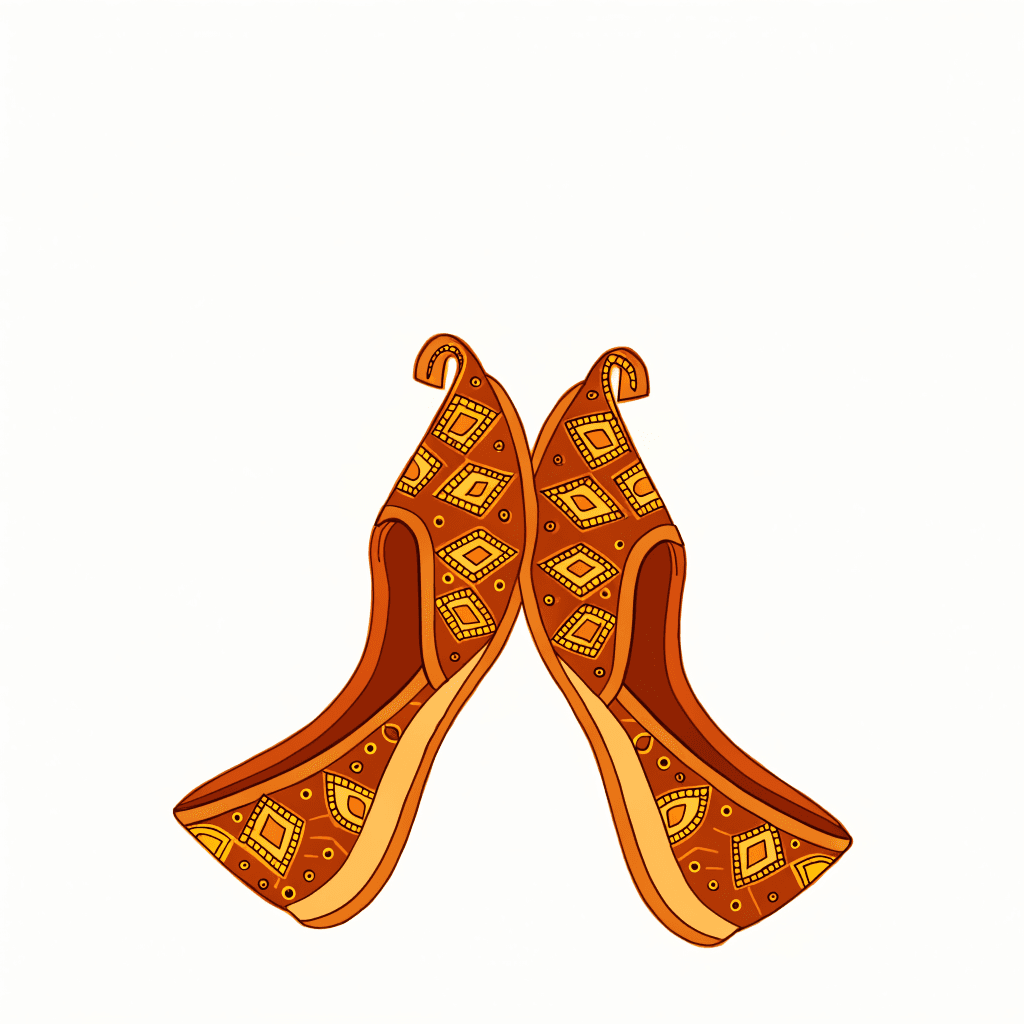
The jutti of Punjab and the mojari of Rajasthan are two names for a shared idea: a flat, closed-toe leather slip-on, embroidered until it shines. The form flourished under the Mughals, whose courts prized footwear worked with zari — metallic thread — silk floss, beads and even pearls, and the taste spread through the royal houses of Rajasthan and Punjab, with Jodhpur, Jaipur and the Punjab plains becoming enduring centres. The making has always belonged to hereditary Mochi (cobbler) families, in a neat division of labour that survives today: men typically cure and cut the leather and build the shoe, while women work the embroidery on the uppers. Styles diverge by region — the Rajasthani mojari often rises to a pointed, sometimes upturned toe, while Punjabi juttis run flatter and rounder — but both share a flat sole, a snug back and dense ornament. Traditionally, juttis are made with no left-right distinction, softening and shaping to each foot with wear. Once the daily wear of nobility, they are now the default finish for Indian festive and bridal dress, and the same workshops produce everything from plain everyday tans to heavily zardozi-worked wedding pairs.
How it is made
Locally cured leather is cut into soles, uppers and heel counters. The upper is the canvas: stretched over a wooden last or worked flat, it is embroidered with zari and silk thread, and often built up with beads, sequins, mirrors or cowrie shells — the densest bridal work, in raised metallic zardozi, can take longer than the shoe itself. Sole and upper are then joined by hand-stitching with cotton or leather cord, the seam turned so it never rubs the foot. There are no nails; the construction is thread, leather and paste. A final beating and burnishing sets the shape. Because the last is straight, most pairs leave the workshop identical, left and right emerging only as the wearer breaks them in.
Buying guide
Turn the shoe over: a genuine hand-made pair shows a leather sole with visible hand-stitching around its rim, not moulded rubber. Inside, the lining should be leather, not foam-backed synthetic that traps sweat. Embroidery should be stitched through the upper — run a finger inside to feel the thread — rather than glued appliqué. Everyday pairs typically cost ₹400–₹1,500; densely zardozi-worked bridal mojaris range from ₹3,000 to ₹8,000. Slight pair-to-pair variation is the signature of hand work.
Care
Break new juttis in gently at home; the leather softens fast. Keep them dry and store with the toes stuffed to hold shape. Brush dust from embroidery with a soft dry brush — never wet zari, which tarnishes. Condition plain leather areas occasionally, avoiding the embroidered zones, and air the pair after each long wear.
Good questions, honest answers
What's the difference between a mojari and a jutti?
Mostly geography and toe shape. Jutti is the Punjabi name, mojari the Rajasthani one, for the same family of flat embroidered slip-ons. Rajasthani mojaris often carry a pointed or gently upturned toe, while Punjabi juttis tend to be flatter and rounder at the front. Construction, materials and embroidery traditions overlap heavily, and traders use the names loosely.
Why don't juttis have a left and right?
They are traditionally built on a straight last, so both shoes start identical. Leather this soft moulds quickly: within days of wear, each shoe takes the shape of its foot and the pair becomes yours alone. It is a practical old design — easier to make, easier to replace one shoe, and self-customising by nature.
Will juttis be comfortable straight away?
Expect a short break-in. New pairs can pinch at the heel and toe for the first few wears, then relax noticeably as the leather softens. Wear them for an hour or two at home before an event, and use thin socks during break-in if needed. Once shaped, a good jutti is among the most comfortable flat footwear there is.
Explore the living traditions
We are onboarding Mojari / Jutti artisans. Meanwhile, explore every craft available on VedikCraft today.
Explore all crafts →
At a glance
- Regions
- Jodhpur / Jaipur, Rajasthan · Punjab
- Community
- Mochi artisans
- Materials
- leather, silk-thread, zari
- Techniques
- hand-stitched embroidered footwear
- Typical price band
- ₹400 – ₹8,000