Jewellery & Adornment
Thewa Art Jewellery — Pratapgarh's Gold on Glass
The story
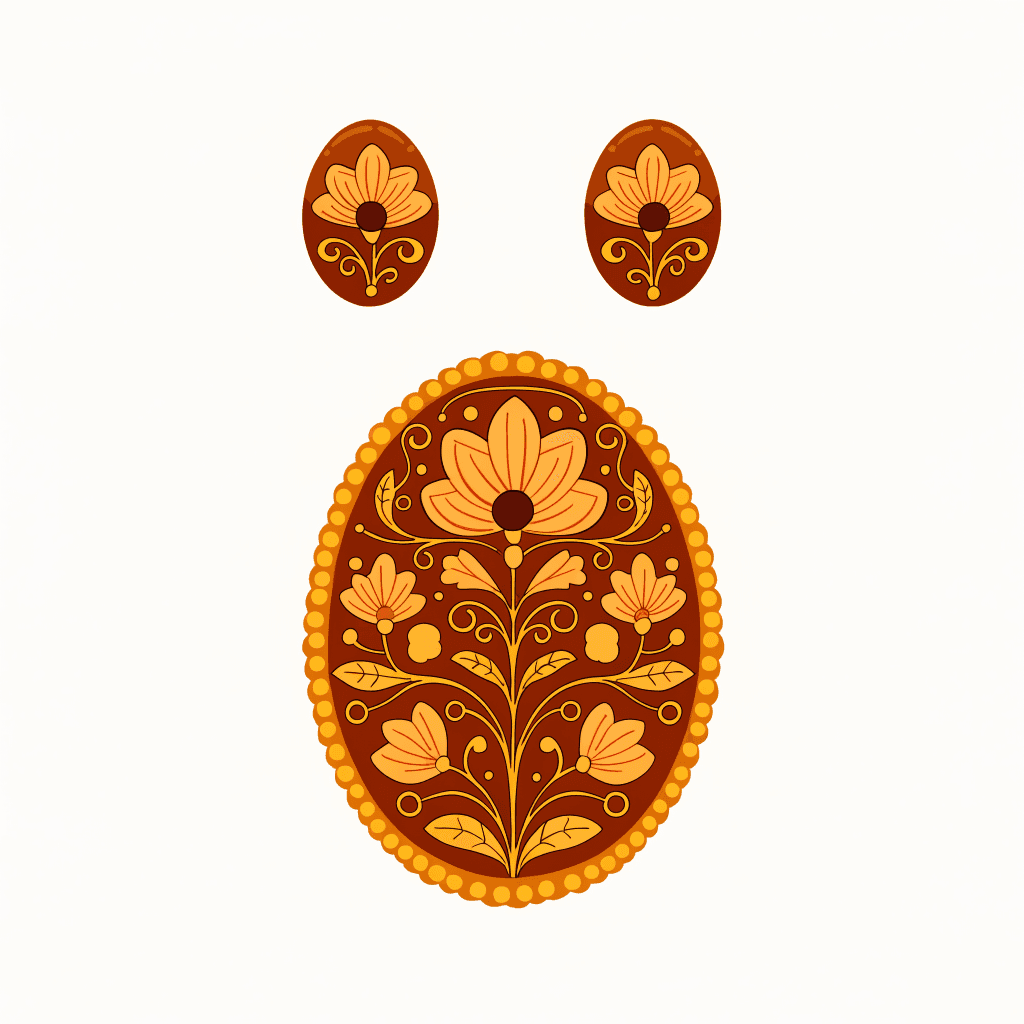
Thewa is that rarest of things: a jewellery technique invented in one town and still held, generations later, largely by one family. In Pratapgarh, in southern Rajasthan, the Soni family of goldsmiths developed a way of fusing intricately worked sheet gold onto coloured glass — a secret they have guarded for over 250 years, passing it from father to son. The name comes from the local word for 'setting', and what is set is extraordinary: a sheet of 23-carat gold, pierced and worked into miniature scenes — Krishna among the gopis, royal hunts, processions, birds and flowering vines — bonded to glass of deep green, red or blue so the metalwork appears to float on colour, lit from within. Thewa pieces travelled from Pratapgarh to princely courts and, in the colonial era, to European exhibitions, where the glowing plaques were mounted as brooches, boxes and jewellery. Members of the family have received national honours for the craft, and Thewa Art Work now carries a Geographical Indication tag, formally tying the technique to Pratapgarh. It remains slow, small-scale and stubbornly hand-made — which is precisely its value.
How it is made
A thewa plaque begins as a sheet of 23-carat gold, thin enough to work like foil but strong enough to hold detail. On this sheet the craftsman draws and pierces the design — figures, foliage, animals — using fine tools, creating delicate openwork with the density of lace. Separately, coloured glass is prepared and softened with heat. The worked gold sheet is then fused onto the molten glass surface, so metal and glass bond permanently; timing and temperature are the family's closely held secret, since too much heat destroys the gold work and too little fails the bond. The fused plaque, glowing like a miniature stained-glass window, is finally framed in silver or gold as a pendant, box lid or piece of jewellery.
Buying guide
Hold a piece up to light: genuine thewa glows, with the gold openwork sharply defined against luminous glass, and fine irregularities that betray the hand. Printed or stamped imitations look flat and mechanically even. Ask whether the gold is worked 23-carat sheet fused to the glass, and buy from sellers who can trace the piece to Pratapgarh. Small pendants typically start around ₹3,000; elaborate necklaces, boxes and framed plaques can reach ₹1,50,000.
Care
Treat thewa as you would fine glass. Store each piece separately in a soft pouch or box, away from anything that could knock or scratch the plaque. Keep it clear of perfume, hairspray and water, and wipe only with a soft dry cloth. Never use ultrasonic cleaners. If the frame loosens, have it repaired by a jeweller familiar with glass-set work.
Good questions, honest answers
Is thewa real gold?
Yes — the worked sheet is traditionally 23-carat gold, close to pure. The plaque's frame and chain may be gold or silver depending on the piece, which is worth confirming. Because the gold layer is a thin sheet rather than a solid casting, thewa delivers remarkable visual richness at a fraction of the gold weight of conventional jewellery.
Why is thewa made by only one family?
The fusing process — how the gold sheet bonds to softened glass without burning or distorting — has been kept as a family secret in Pratapgarh's Soni lineage for over 250 years, taught within the family across generations. That closed transmission is part of the craft's identity and its GI story, and it is why authentic thewa remains genuinely scarce.
What subjects appear in thewa work?
The classic repertoire is miniature narrative: Krishna and Radha, scenes from mythology, royal processions and hunts, peacocks and parrots, and dense flowering creepers filling every gap. Green glass is the most iconic ground, with red and blue also traditional. Each plaque reads like a tiny painting executed in pierced gold.
Explore the living traditions
We are onboarding Thewa Art Jewellery artisans. Meanwhile, explore every craft available on VedikCraft today.
Explore all crafts →
At a glance
- Region
- Pratapgarh, Rajasthan
- Community
- Raj Soni family of Pratapgarh
- Materials
- gold-sheet, coloured-glass
- Techniques
- fused gold-on-glass openwork
- Typical price band
- ₹3,000 – ₹1,50,000