Textiles & Handloom
Ajrakh Block Print — Indigo and Madder by Hand
The story
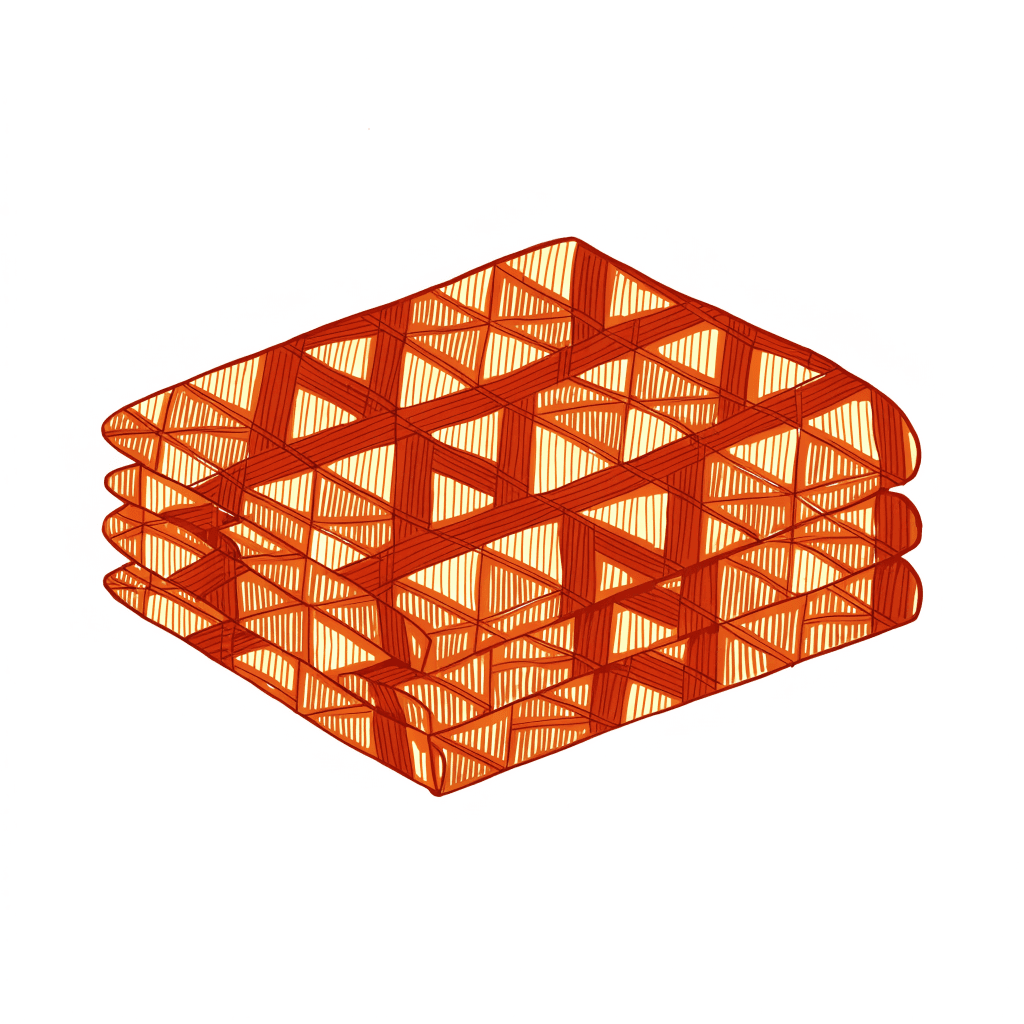
Ajrakh belongs to one of the oldest dyeing lineages on earth. Resist-printed cotton from the Gujarat–Sindh region travelled ancient trade routes for centuries — fragments of such cloth have been found as far away as Fustat in Egypt — and the Khatri printers who practise ajrakh today trace their craft back through generations on both sides of the border. By tradition, Khatri families were invited to settle in Kutch by its rulers several centuries ago; others carried the craft to Barmer in Rajasthan. The name itself is debated: some derive it from azrak, the Arabic word for blue; others from the Hindi phrase aaj rakh — 'keep it today' — a nod to the many days the cloth spends resting between stages. Ajrakh was working dress before it was fashion: Maldhari herders of Kutch wore it as turbans, lungis and shoulder cloths, the deep indigo practical against sun and dust. After the 2001 earthquake destroyed workshops at Dhamadka, printers rebuilt at a new village named Ajrakhpur — a rare case of a craft literally founding its own town. Its star-and-trellis geometry, echoing Islamic pattern traditions, remains instantly recognisable.
How it is made
True ajrakh can pass through as many as sixteen stages. The cotton is first washed and steeped in myrobalan (harda), which primes it for the dyes and gives the cream base tone. Outlines are block-printed with a lime-and-gum resist; an alum mordant is printed where madder will later bloom red; a paste of rusted iron and jaggery prints the blacks. Then comes indigo — the cloth dipped, oxidising from green to blue in the air, washed and often dyed again in madder before final washing and sun-drying. In the finest work, called do-rukhi, carved teak blocks print both faces of the cloth in register, so front and back mirror each other almost exactly. Every stage is done by hand and eye.
Buying guide
The reverse tells the story: in fine ajrakh the pattern shows strongly on both sides, and in do-rukhi work the two faces align almost perfectly. Natural indigo and madder give deep, slightly uneven tones — a chemical screen-print imitation looks flat and identical across every metre. Tiny misregistrations where blocks meet are marks of the hand, not defects. Yardage and stoles typically run from around ₹1,500, with fine natural-dyed pieces and garments reaching ₹30,000.
Care
Natural indigo releases a little colour at first — wash separately in cold water with a gentle, bleach-free detergent for the first few washes. Never soak for long, and dry in shade; direct sun fades madder reds over time. Iron on medium while slightly damp. With this care, ajrakh softens beautifully and its colours settle into a deeper, lived-in richness.
Good questions, honest answers
Why does my ajrakh fabric smell earthy or bleed slightly?
That is the signature of genuine natural dyeing. Indigo, madder and iron-based blacks carry a faint mineral, earthy scent, and loose surface dye releases in the first couple of washes. Wash the piece separately in cold water until the water runs clear. Chemically printed imitations neither smell of anything nor shed — which is precisely how you can tell them apart.
What makes ajrakh different from other Indian block prints?
Ajrakh is defined by its multi-stage resist-and-mordant process — myrobalan, lime resist, alum, iron black and indigo, layered over roughly two weeks — and by its strict geometry of stars, trellises and borders. Prints like Sanganeri or Bagh use different palettes, motifs and sequences. The double-sided printing of fine ajrakh is unique among them.
Is ajrakh always blue and red?
Indigo blue and madder red set against black and white are the classic grammar, and traditional pieces stay close to it. Contemporary Khatri printers also work in expanded natural palettes — pomegranate yellows, iron greys, deeper maroons — while keeping the resist process intact. If a piece shows neon or pastel synthetic shades, it is a modern adaptation rather than traditional ajrakh.
Explore the living traditions
We are onboarding Ajrakh Block Print artisans. Meanwhile, explore every craft available on VedikCraft today.
Explore all crafts →
At a glance
- Regions
- Ajrakhpur / Kutch, Gujarat · Barmer, Rajasthan
- Community
- Khatri printers
- Materials
- cotton, natural-dye (indigo, madder)
- Techniques
- resist block-printing, multi-stage mordant dyeing
- Typical price band
- ₹1,500 – ₹30,000