Jewellery & Adornment
Kundan Jewellery, Jaipur's Regal Polki Craft
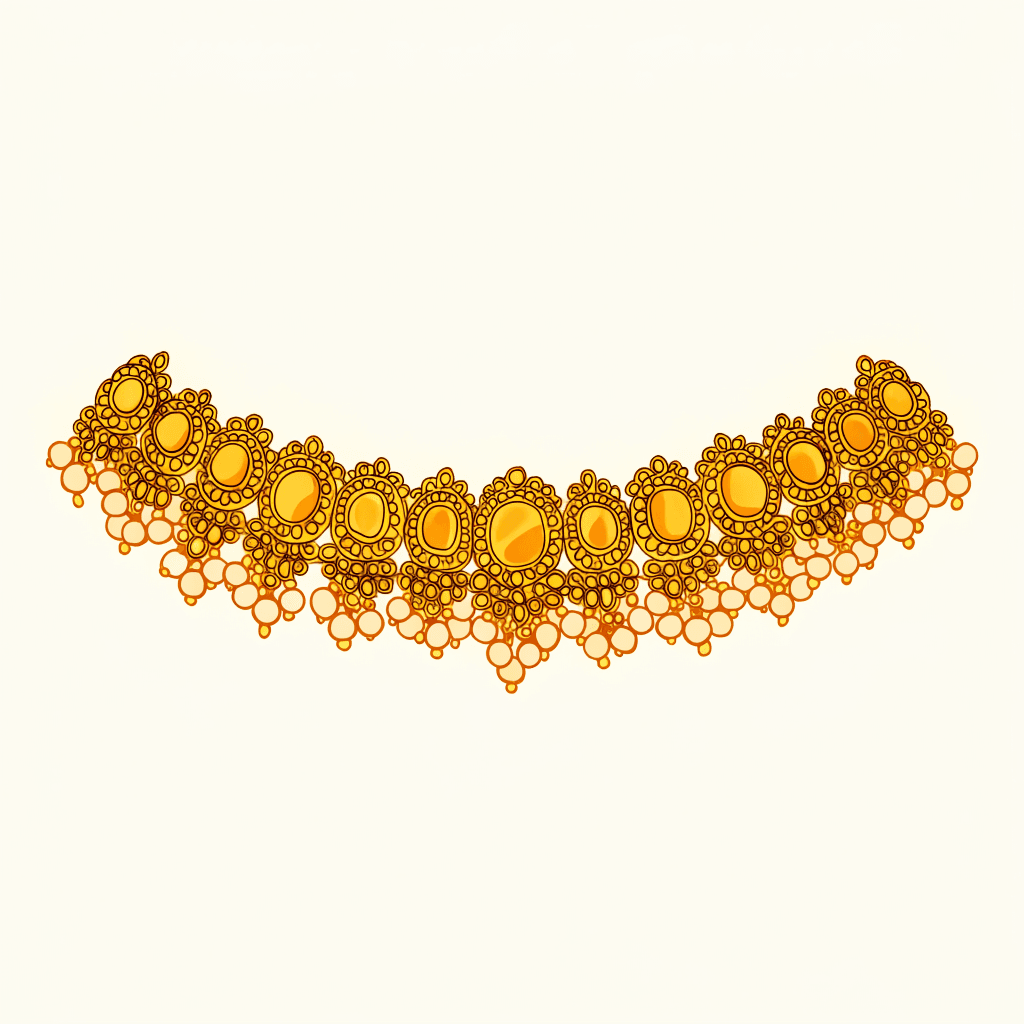
The story
Kundan takes its name from the material at its heart: kundan means highly refined, pure gold, worked so soft that it can be pressed like ribbon. The technique flowered in the Mughal ateliers and the courts of Rajasthan, where it solved a problem European jewellery answered with prongs — how to hold a gemstone. The kundan answer is more sumptuous: uncut, flat-backed diamonds known as polki, along with emeralds, rubies and other gems, are seated on a bed of lac and locked in place with layer upon layer of pure gold foil, burnished tight around the stone's edge with a steel tool. No claws, no solder near the stone — just gold pressed into brilliance. Jaipur and Bikaner became the great centres of this work, which is why the fullest form — engraved gold, kundan-set stones on the front, meenakari enamel on the back — is often called jadau and remains the default vocabulary of North Indian bridal jewellery. A single important necklace passes through many specialist hands: the goldsmith, the engraver, the enameller, the stone-setter. That division of inherited skills, largely unchanged since the courts, is what you wear.
How it is made
A kundan piece is built like a small piece of architecture. Goldsmiths first raise the hollow framework — the ghaat — then fill it with natural lac, which forms the supporting core. Stones come next: flat-cut polki diamonds and coloured gems are positioned on the lac, and the setter presses fine strips of kundan — pure, ductile gold foil — around each stone, layer over layer, burnishing until the gold grips the gem and forms a bright, mirror-like rim. Foil placed beneath the stones bounces light back through them, giving polki its watery glow. On fine pieces the reverse is then enamelled in meenakari, and strings of pearls or beads finish the necklace. Every stage is a separate hereditary trade.
Buying guide
Examine the gold rim around each stone: authentic kundan setting is smooth, continuous and bright, hugging the gem without gaps. Polki — uncut diamond — has a soft, glassy depth quite unlike the sharp fire of brilliant cuts; ask explicitly whether stones are polki, and request details of gold content and hallmarking where applicable. Weight and back-side finishing separate fine jadau from imitation. Silver-based and gilded pieces start around ₹3,000; gold jadau bridal sets range into lakhs, with heirloom pieces reaching ₹20 lakh.
Care
Kundan jewellery has a lac core, so keep it away from heat, water and perfume — never wear it while bathing and never clean it with liquids or ultrasonic machines. Wipe gently with a soft dry cloth after wear and store each piece flat in its own soft-lined box. If a stone loosens or gold foil lifts, go straight to a kundan specialist.
Good questions, honest answers
What is the difference between kundan and polki?
Polki is the stone; kundan is the setting. Polki refers to uncut or minimally cut, flat-backed diamonds prized for their soft glow. Kundan is the pure refined gold foil pressed around stones to hold them. Because the two almost always appear together, the trade uses the words loosely — but a jeweller should be able to tell you exactly which you are paying for.
Is kundan jewellery made of solid gold?
Not solid throughout — and that is traditional, not a shortcut. Classic kundan work is a hollow gold framework filled with natural lac, which supports the stones; the kundan foil around each gem is pure gold. This construction keeps large bridal pieces wearable. Ask the jeweller to specify gold weight and purity, since lac core weight is not gold weight.
Can kundan jewellery be worn every day?
It is best treated as occasion jewellery. The lac core dislikes heat and moisture, uncut stones sit in soft gold foil, and meenakari backs can chip with rough handling. Worn for weddings and festivals and stored properly between outings, kundan lasts for generations — many pieces in circulation today are inherited.
Explore the living traditions
We are onboarding Kundan Jewellery artisans. Meanwhile, explore every craft available on VedikCraft today.
Explore all crafts →
At a glance
- Region
- Jaipur / Bikaner, Rajasthan
- Community
- Jaipur jewellers
- Materials
- gold-foil, uncut-stones (polki)
- Techniques
- kundan stone-setting
- Typical price band
- ₹3,000 – ₹20,00,000