Paintings & Folk Art
Thangka Painting from the Indian Himalayas
The story
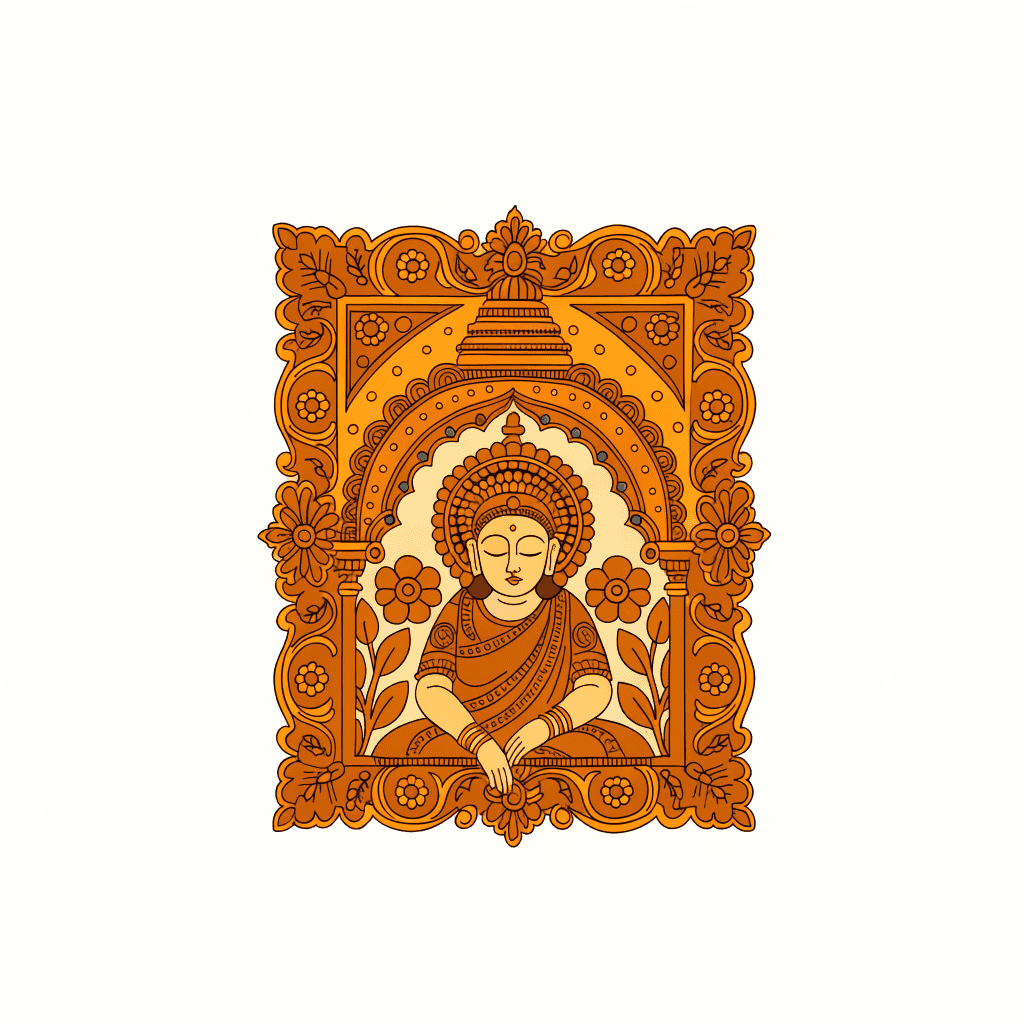
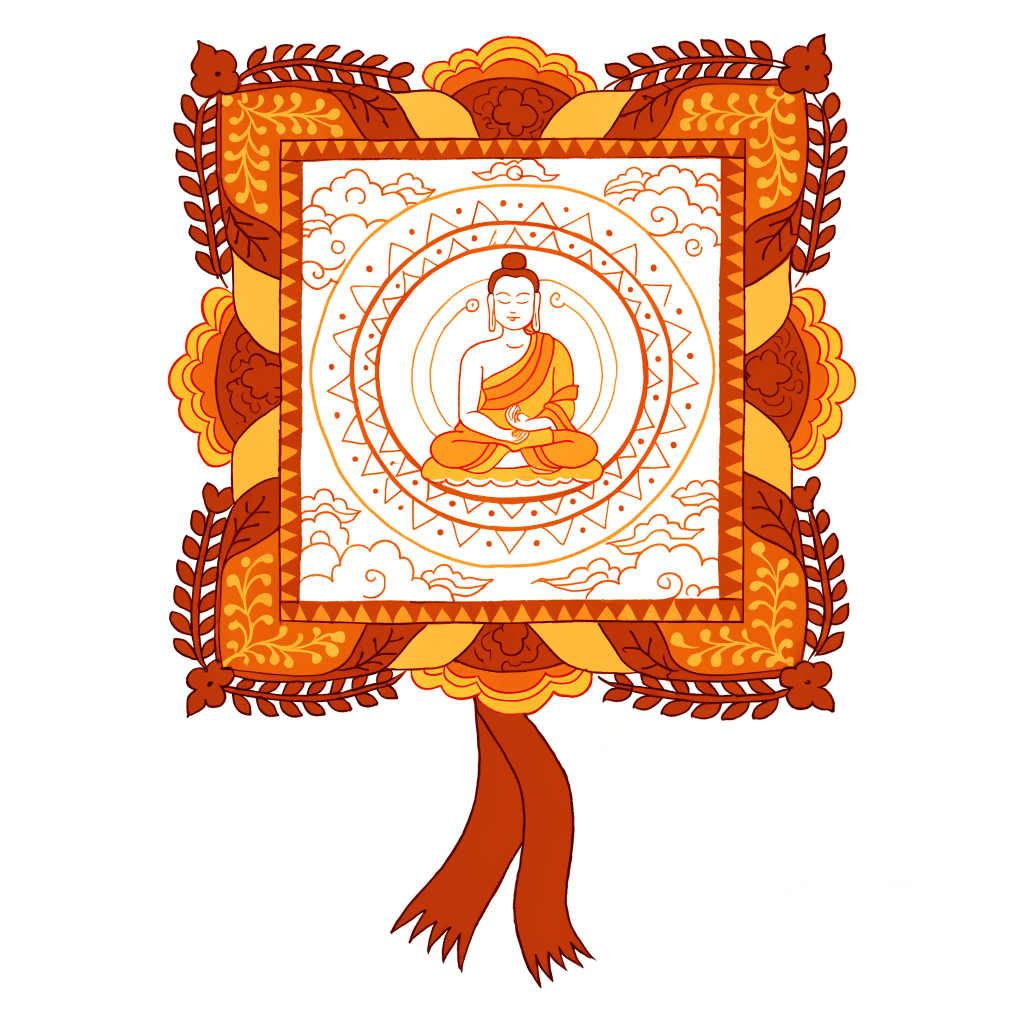
The thangka is the scroll painting of Himalayan Buddhism — a portable sacred image that can be rolled, carried between monasteries and unfurled for teaching, ritual and meditation. The form draws on ancient Indian cloth-painting traditions and matured over centuries in Tibet, travelling with Buddhism across the high passes into the regions that anchor it in India today: Sikkim, Ladakh, Tawang in Arunachal Pradesh and the Himachal hills. After 1959, Tibetan artists settling in India deepened the tradition further, and monastery ateliers continue to train painters through long apprenticeships. A thangka is not a free composition. Buddhas, deities and mandalas are constructed on precise iconometric grids — canonical proportions handed down in painting manuals — because the image is a support for visualisation practice, not decoration. Subjects range from the life of the Buddha and the Wheel of Life to protector deities and elaborate mandala palaces. Finished paintings are sewn into silk brocade mounts, often consecrated, and hung in shrine rooms and homes. The discipline is the beauty: within fixed geometry, a master's hand shows in the fineness of line, the depth of mineral colour and the restraint of the gold.
How it is made
The painter stretches cotton canvas on a wooden frame and primes it with layers of chalk gesso bound in hide glue, polishing each coat until the surface is smooth as shell. Iconometric grid lines go down first, fixing the proportions of every figure before a drop of colour. The palette is mineral — malachite green, azurite blue, cinnabar red, orpiment yellow — ground by hand, bound in glue, laid flat and then shaded. Pure gold outlines robes and ornaments and may be burnished to a raised shine. By convention, the eyes of the central figure are painted last. The finished canvas is trimmed and sewn into a silk brocade surround with wooden dowels, ready to hang or to roll.
Buying guide
The common trap is a printed canvas with a few hand-touched gold lines sold as a painted thangka. Examine the work closely: true painting shows brush texture and the faint tooth of gesso, and mineral pigments have a depth that poster colours lack. Brocade mounts should be sewn, not glued, and figures should sit correctly on their iconometric proportions. Simple painted thangkas typically start around ₹3,000; large, finely detailed works by monastery-trained masters can reach ₹3,00,000. Always ask where, and by whom, it was painted.
Care
A thangka is built to be rolled, but do it rarely and loosely, with the silk cover curtain laid over the painted face. Hang it away from direct sun, incense smoke and cooking grease. Dust with a soft, dry brush only — never water or cleaning fluids. In humid months, check the brocade for damp and give the piece airy, shaded ventilation.
Good questions, honest answers
Can I display a thangka at home if I'm not Buddhist?
Yes. Thangkas are collected worldwide for their artistry, and respectful display is welcome: hang the piece at or above eye level in a clean, quiet spot rather than low on a wall or in a bathroom. Consecration is a religious step that owners may choose or skip. What matters is treating the image with the care you would give any sacred art.
Why are the proportions of the figures fixed?
Because a thangka is a functional object of meditation, not free illustration. Painting manuals set out iconometric grids — exact ratios for faces, bodies and mandala geometry — so that every figure is correct for visualisation practice. Painters train for years to internalise these grids; mastery shows in the quality of line and colour within them, not in departures from them.
How long does a thangka take to paint?
A small, simple composition may take a few weeks once the canvas is prepared. Large works — crowded assembly scenes, detailed mandalas, extensive gold — can occupy a painter for many months. Gesso preparation, hand-grinding mineral pigment and fine gold work all add time, which is why prices for master-level thangkas climb steeply.
Explore the living traditions
We are onboarding Thangka Painting artisans. Meanwhile, explore every craft available on VedikCraft today.
Explore all crafts →
At a glance
- Regions
- Sikkim · Ladakh · Arunachal Pradesh · Himachal Pradesh
- Community
- Buddhist monastery painters
- Materials
- cotton-canvas, mineral-pigment, gold, silk-brocade
- Techniques
- Buddhist iconometric painting, brocade mounting
- Typical price band
- ₹3,000 – ₹3,00,000