Metal Craft
Bidriware — Silver Inlay on Blackened Metal
Also known as Bidri
The story
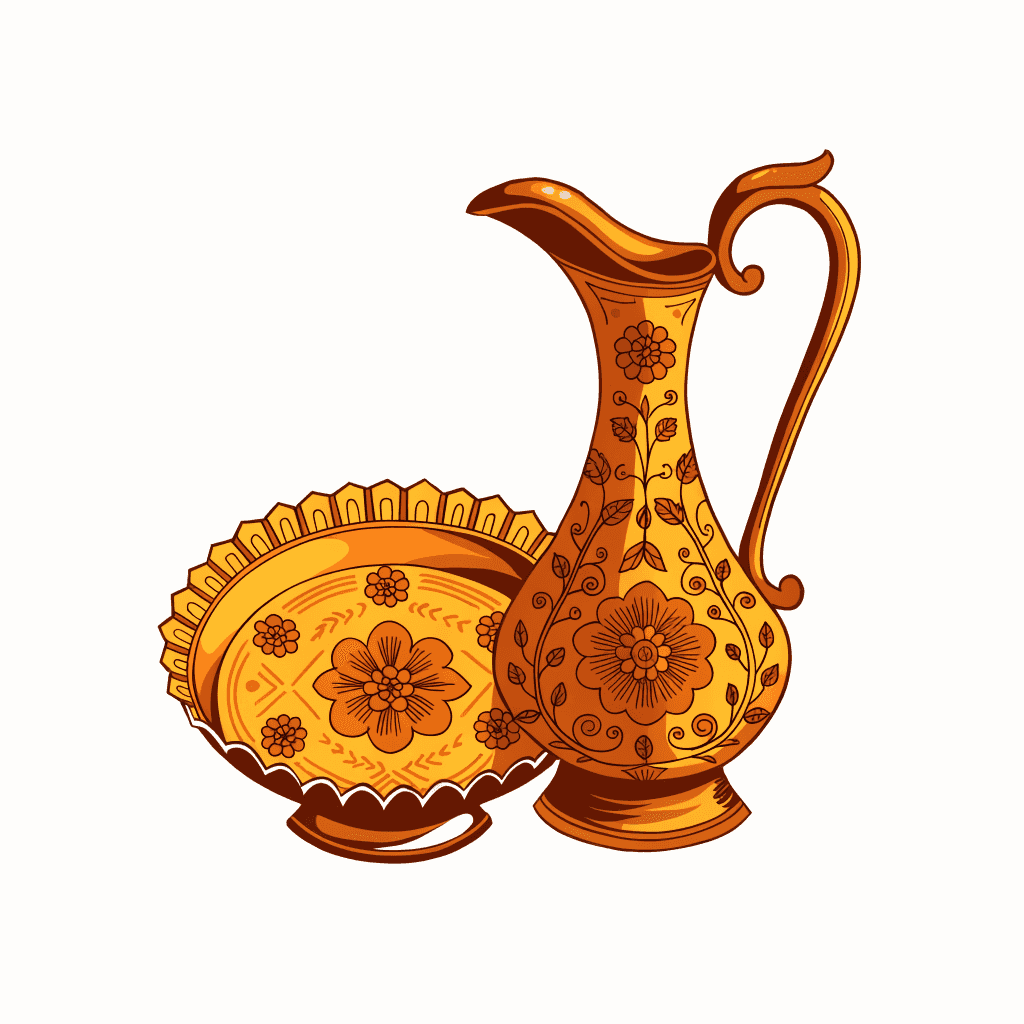
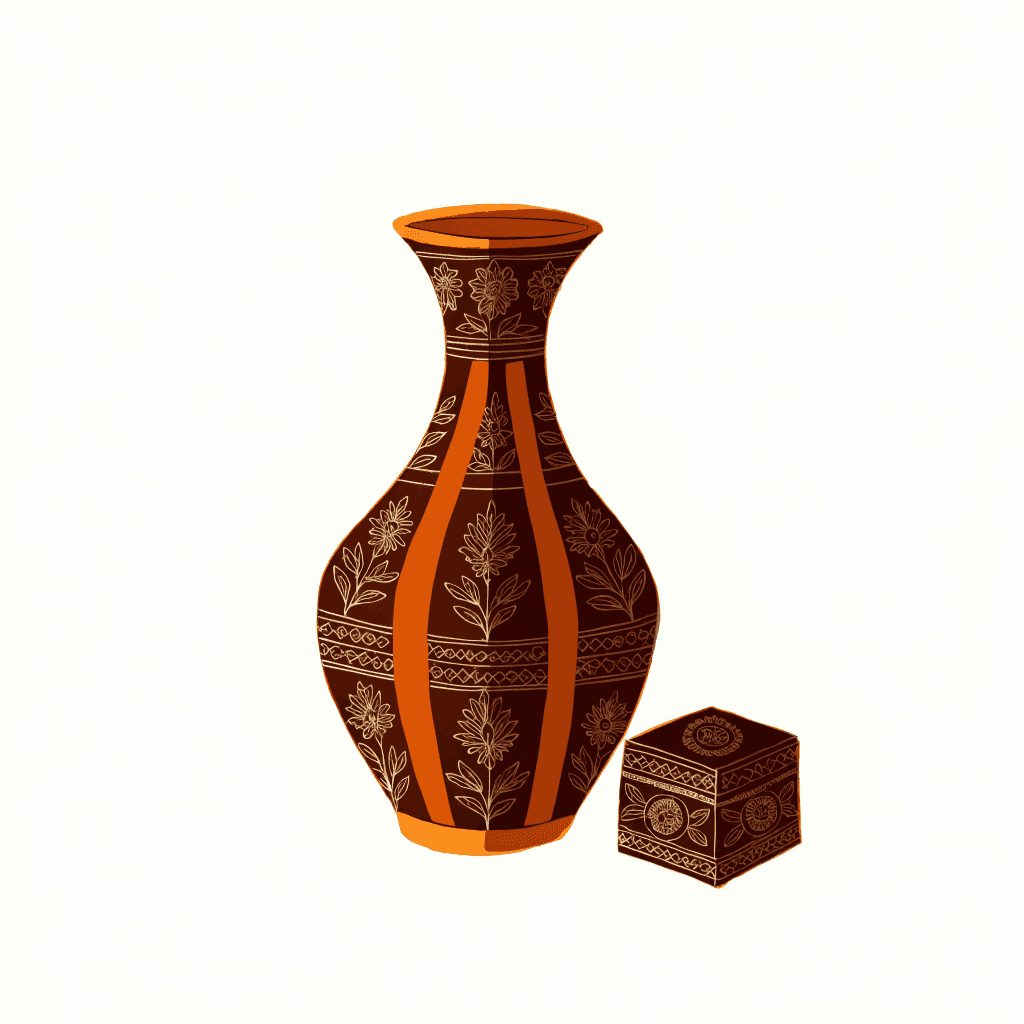
Bidriware takes its name from Bidar, the fortified Deccan city in Karnataka where the craft emerged in the fourteenth century under the Bahmani sultans. The court drew Persian craftsmen and design ideas into the Deccan, and Bidri grew from that meeting: Persianate motifs — vines, poppies, stars, geometric interlace — executed in a strikingly local material language. The body of a Bidri piece is a cast alloy of zinc and copper; onto its surface artisans inlay pure silver before blackening the ground to a deep, permanent matte. The famous final step uses soil from within Bidar's old fort walls, whose particular chemistry darkens the alloy while leaving the silver untouched — a process attached so specifically to place that the craft has never successfully migrated. Bidri hookah bases, ewers, boxes and paan containers circulated through Deccani courts and later became prized across Mughal India and beyond. The tradition has passed down through hereditary artisan families in Bidar, who still dominate the craft today. That unbroken black-and-silver contrast — no other Indian metal art looks anything like it — has made Bidriware one of the country's most recognisable and collected crafts.
How it is made
A Bidri vessel begins as a casting of zinc alloyed with copper, turned and smoothed, then coated with copper sulphate to blacken it temporarily so engraved lines show clearly. The artisan chisels the design freehand, cutting grooves and cavities, then hammers fine silver wire (tarkashi) or silver sheet (tehnishan) into them until the inlay locks flush. After filing and buffing, the piece is warmed and rubbed with a paste of ammonium chloride and soil gathered from inside Bidar fort. The soil's chemistry turns the zinc body a permanent velvet black but leaves the silver bright, revealing the design in full contrast. A final rub of oil deepens the black finish.
Buying guide
Real Bidri silver is inlaid, not painted or plated: run a fingernail across the design and you should feel the silver sitting flush and solid in the black ground. The black should be deep and matte, never glossy paint. Look for slight hand-cut irregularities in the linework — perfect machine uniformity is a red flag. Small boxes and jewellery typically start around ₹1,500–3,000; large vases, hookah bases and pieces with dense sheet inlay can reach ₹60,000.
Care
Wipe with a soft dry cloth; a very light coat of coconut or mineral oil now and then keeps the black ground rich. Never use silver polish or abrasive cleaners — they can scratch the blackened surface, which cannot be restored at home. Keep away from prolonged moisture and handle with dry hands to avoid fingermarks on the matte finish.
Good questions, honest answers
Why is Bidriware black — is it painted?
No. The black is a permanent chemical finish, not paint or lacquer. After the silver inlay is set, the piece is rubbed with a paste of ammonium chloride and soil taken from inside Bidar fort. The soil reacts with the zinc-copper body, turning it a deep matte black while leaving the silver untouched. The colour will not chip or peel.
Does the silver in Bidriware tarnish?
The inlay is pure silver, so it can dull slightly over the years, but because it sits against a permanently black ground even lightly aged silver still reads clearly. A gentle buff with a dry soft cloth restores the shine. Avoid liquid silver dips — they can seep into the inlay grooves and damage the black surface around them.
What is Bidriware used for today?
Historically Bidri produced hookah bases, ewers and paan boxes for Deccani courts. Today the same techniques go into vases, jewellery, cufflinks, coasters, trays and decorative boxes. It remains a favourite for formal gifting in India — the black-and-silver contrast photographs beautifully and suits both traditional and modern interiors.
Explore the living traditions
We are onboarding Bidriware artisans. Meanwhile, explore every craft available on VedikCraft today.
Explore all crafts →
At a glance
- Region
- Bidar, Karnataka
- Community
- Bidri artisans of Bidar
- Materials
- zinc-alloy, copper, silver
- Techniques
- inlay, oxidation-blackening
- Typical price band
- ₹1,500 – ₹60,000