Textiles & Handloom
The Kanchipuram Silk Sari, Explained
Also known as Kanjeevaram, Kanchi pattu
The story
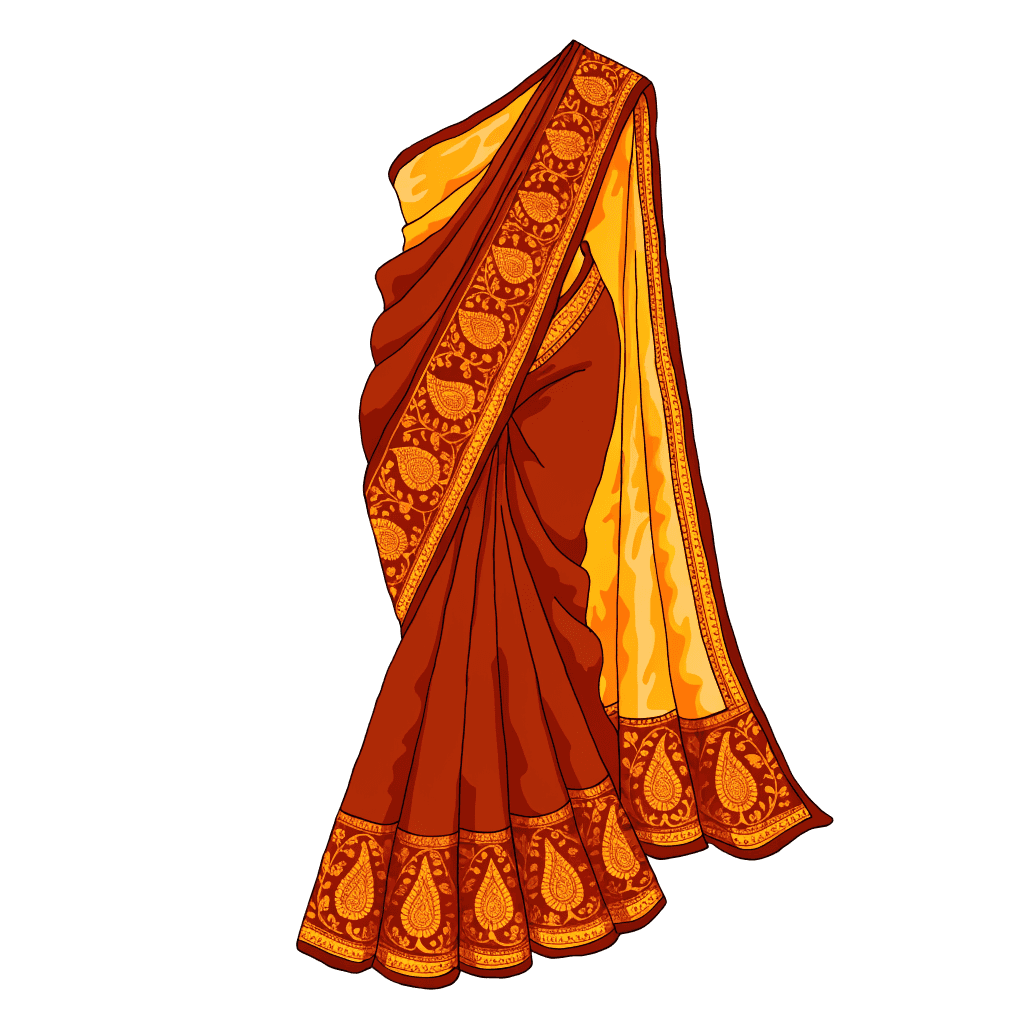
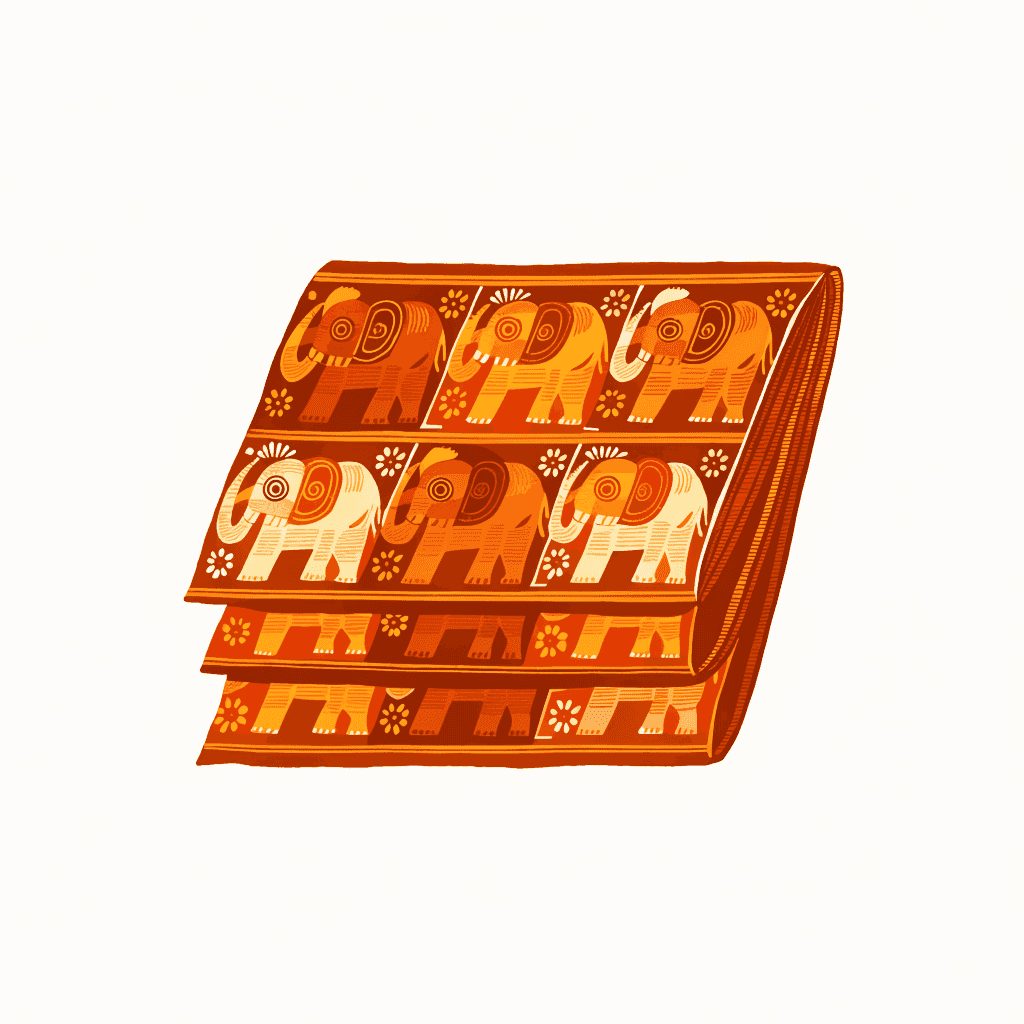
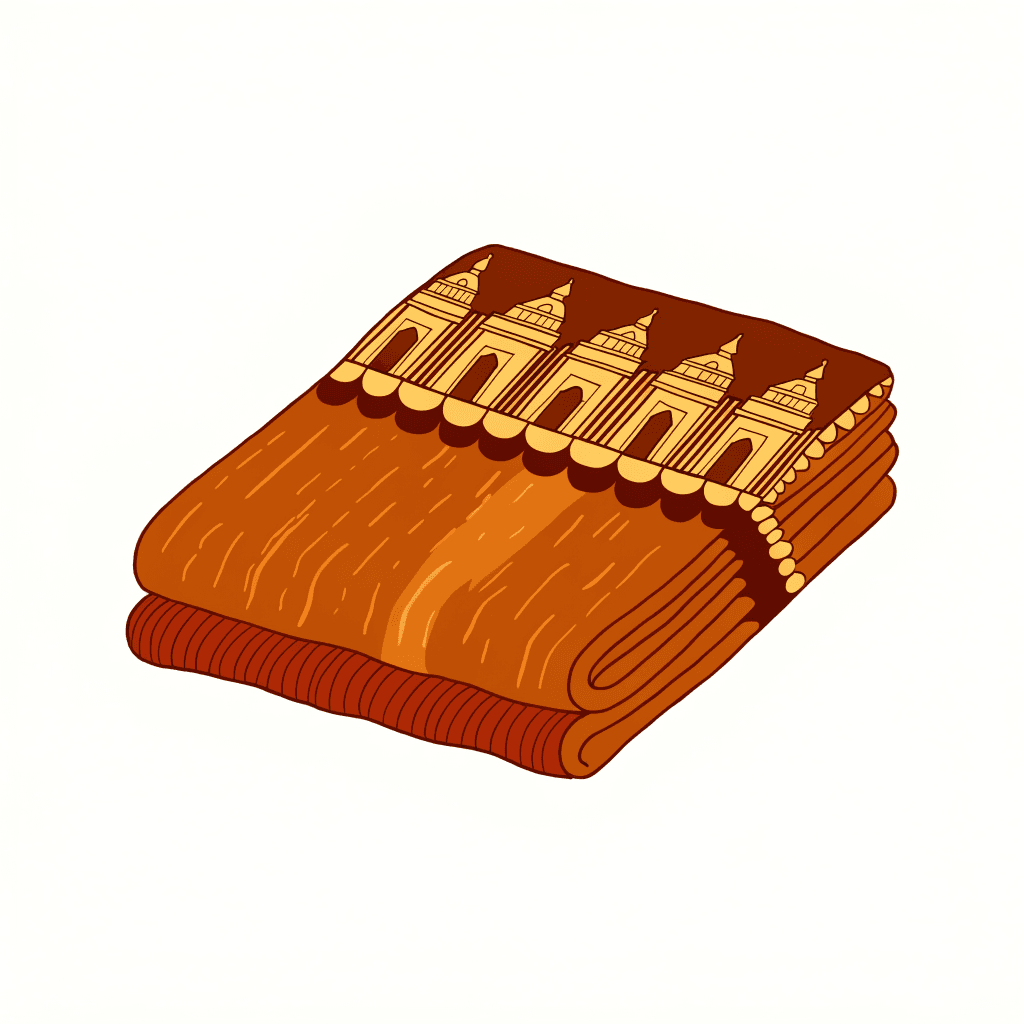
Kanchipuram, the temple town near Chennai, has woven silk for centuries, and its weavers carry a founding legend to match: descent from Sage Markanda, weaver to the gods himself. The historical record is nearly as resonant — weaving communities, prominently the Devanga and Saligar, settled here long ago and built the town into the benchmark of South Indian silk. A Kanchipuram sari is engineered as much as woven. Its mulberry silk is plied and twisted for body, its zari is real, and its defining feature is korvai: the border and body are woven in contrasting colours as separate structures and interlocked at the join, a feat requiring three shuttles and often a second pair of hands at the loom. The pallu, frequently in a third colour, is attached by an interlocking join that shows as a fine zigzag line. Motifs come from the town itself — temple gopurams, rudraksham beads, yali, peacocks, checks — carried down generations. For South Indian weddings the Kanchipuram is the standard against which everything else is measured, an heirloom expected to outlast its first owner. The Kancheepuram Silk Geographical Indication protects the name.
How it is made
The silk is heavy-gauge mulberry, degummed and dyed in small vat lots, then plied and twisted so the finished cloth has the dense, structured drape the weave is famous for. Zari — silver wire gilded with gold over a silk core — is laid in for borders, motifs and pallu. Korvai weaving is the signature move: body and border, dyed in contrasting colours, are woven simultaneously as separate sections with three shuttles and interlocked pick by pick along the join. The pallu is attached with an interlocked weft join that reads as a delicate zigzag. Dense brocaded saris can keep a weaver — often two — at the loom for weeks.
Buying guide
Weight is the first clue — a true Kanchipuram feels substantial, with a firm, structured drape. Check the korvai join: a contrast border interlocked with the body, and a fine zigzag where pallu meets field. Real zari has a silk core, traditionally red; a gentle scratch on an inconspicuous spot reveals it. Insist on Silk Mark and GI labels. Entry-level saris typically start around ₹5,000; heavily brocaded bridal pieces run well past ₹1,00,000, with masterworks approaching ₹4,00,000.
Care
Dry-clean only, and sparingly — a well-kept Kanchipuram needs little washing. Store wrapped in soft cotton or muslin, flat rather than hung, since the sari's own weight can distort it on a hanger. Refold along new lines every few months to protect the zari, keep perfume off the silk, and air in shade occasionally.
Good questions, honest answers
What is korvai?
Korvai is the technique of weaving the border and body in different colours as separate structures, interlocked thread by thread at the join — classically with three shuttles, and often a second weaver working the border. It is why a Kanchipuram border can be a deep contrasting colour with a crisp boundary, and the fine zigzag at the join is a reliable authenticity mark.
How do I check whether the zari is real?
Genuine Kanchipuram zari is silver wire, gilded, wound over a silk core that is traditionally red. On an inconspicuous edge, gently scratch the zari: real thread shows the coloured silk core, while imitation film zari reveals plastic or bare copper tones. Real zari also adds noticeable weight. Silk Mark certification and the GI label back up what your fingers find.
Why are Kanchipuram saris heavier than other silks?
The yarn itself is different: mulberry silk plied and twisted into a thicker, stronger thread, woven densely and often loaded with metallic zari. That construction gives the sari its architectural drape and its legendary durability — these are textiles designed to be worn for decades and passed on. The weight is not a flaw; it is the specification.
Explore the living traditions
We are onboarding Kanchipuram Silk artisans. Meanwhile, explore every craft available on VedikCraft today.
Explore all crafts →
At a glance
- Region
- Kanchipuram, Tamil Nadu
- Community
- Kanchipuram weavers
- Materials
- mulberry-silk, zari
- Techniques
- three-shuttle weaving, korvai contrast border
- Typical price band
- ₹5,000 – ₹4,00,000