Metal Craft
Dhokra Art — India's 4,000-Year-Old Lost-Wax Craft
Also known as Bastar Dhokra, Dokra
The story
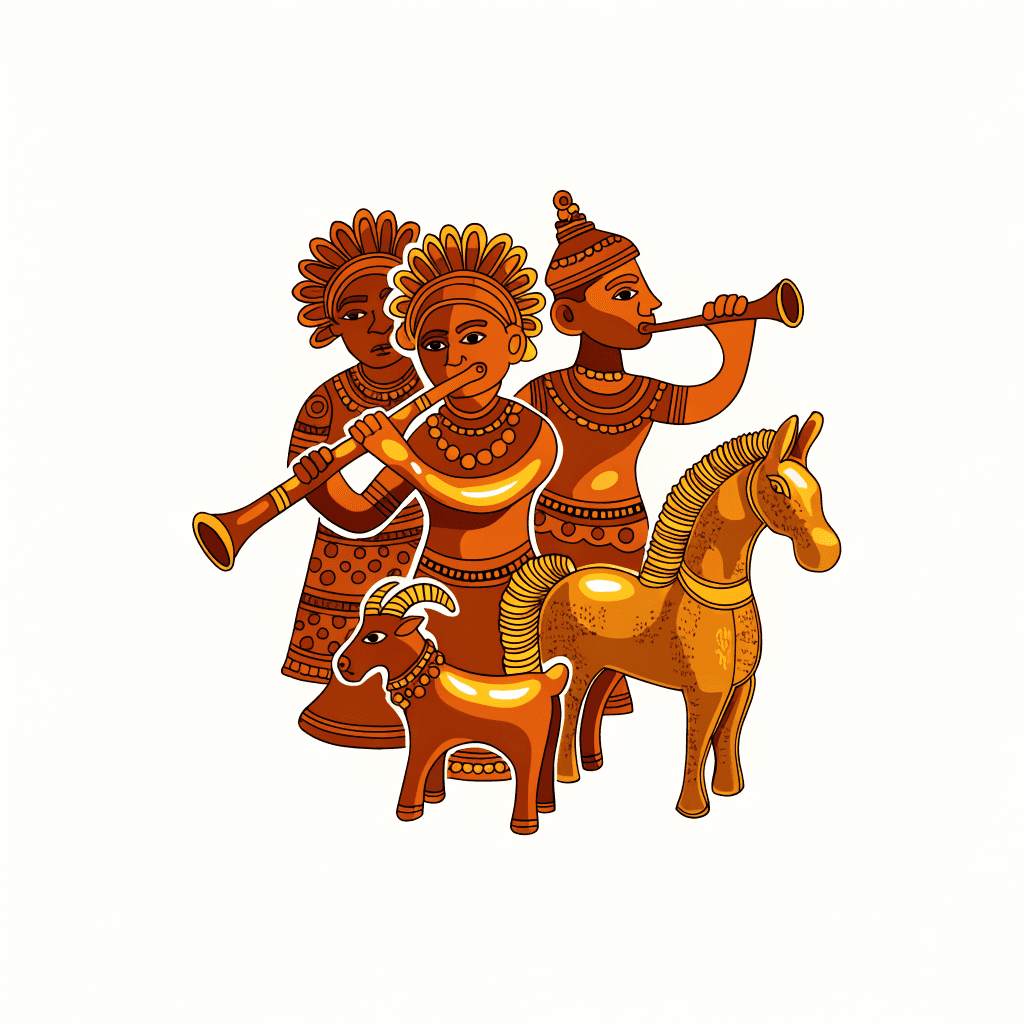
Dhokra is among the oldest metal-casting traditions still practised anywhere on earth. The lost-wax technique behind it stretches back over 4,000 years — the celebrated Dancing Girl of Mohenjo-daro was cast this way — and it survives today in the tribal belt of central and eastern India, above all in Bastar, Chhattisgarh, with sister traditions in Jharkhand, Odisha and West Bengal. The craft takes its name from the Dhokra Damar, itinerant metalsmiths who carried it across the region; in Bastar the work belongs chiefly to the Ghadwa community, whose name derives from a word for shaping. Dhokra was never a court art. It grew out of village and forest life, made for the people who used it: figures of tribal deities, measuring bowls, lamps, jewellery and votive animals — elephants, horses, owls — offered at local shrines. That origin shows in its character. Surfaces are honest and unpolished, forms are elongated and rhythmic, and decoration comes from the wax threads themselves, wound in coils and lattices before casting. Because every mould is broken to release the metal, no two Dhokra pieces are ever identical — each one is a single, unrepeatable cast.
How it is made
Dhokra follows the lost-wax (cire perdue) method in its hollow-cast form. The artisan first shapes a core of river clay mixed with rice husk, then dresses it in fine threads of beeswax blended with resin, pressed through a sieve into long strands. These wax threads — wound in spirals, plaits and lattices — form both the body and the ornament of the piece. The wax model is coated in layers of increasingly coarse clay and dried into a mould with a pouring channel left open. When molten brass or bronze goes in, the wax burns away and metal fills every ridge the threads left behind. Once cooled, the mould is broken open, the casting is filed and brushed, and the clay core often remains sealed inside.
Buying guide
Genuine Dhokra shows the fingerprint of its wax threads: fine ridged coils and lattices across the surface, slight asymmetries, and a warm, unpolished brass tone. Because the mould is destroyed in casting, no two pieces match exactly — identical multiples are a warning sign of machine casting. Check the base for filing marks rather than seam lines. Small figurines and jewellery typically start around ₹800; large, complex pieces — multi-figure tableaux, tall lamps — can run to ₹25,000 or more depending on weight and detail.
Care
Dust with a soft dry cloth and keep pieces away from sustained damp, which can encourage verdigris on brass. If the surface dulls, rub gently with a cloth touched with a drop of mustard or lemon oil, then buff dry. Avoid harsh metal polishes — Dhokra's slightly dark, rustic patina is intentional, and aggressive polishing strips the character the caster gave it.
Good questions, honest answers
Why is every Dhokra piece one of a kind?
Dhokra uses the lost-wax process: a wax model is encased in clay, the wax is melted out and molten metal poured in, and the clay mould must be broken to release the finished casting. The mould can never be reused, so each piece exists exactly once — a small variation in the wax threads or the pour makes every figure subtly different.
Is Dhokra made of brass or bronze?
Both are used. Traditional casters melted whatever copper alloy was available — often scrap — so pieces range from golden brass to deeper bronze. Most contemporary Bastar work is brass. The alloy affects colour and weight but not authenticity; what defines Dhokra is the wax-thread lost-wax technique, not a fixed metal recipe.
How old is the Dhokra tradition?
The lost-wax casting technique behind Dhokra is over 4,000 years old — the famous Dancing Girl figurine excavated at Mohenjo-daro was made the same way. The living tradition has been carried forward continuously by tribal metalsmith communities such as the Ghadwa and Dhokra Damar, making it one of the oldest unbroken metalworking practices in the world.
Bring Dhokra home
Authentic Dhokra pieces, artisan-direct with provenance on every listing.
Shop authentic Dhokra →
At a glance
- Regions
- Bastar, Chhattisgarh · Jharkhand · Odisha · West Bengal
- Community
- Ghadwa / Dhokra Damar tribes
- Materials
- brass, bronze, beeswax
- Techniques
- lost-wax casting
- Typical price band
- ₹800 – ₹25,000