Home Décor & Furnishings
Inside the Panja Weave: Warangal & Salawas Dhurries
Also known as Panja dhurrie
The story
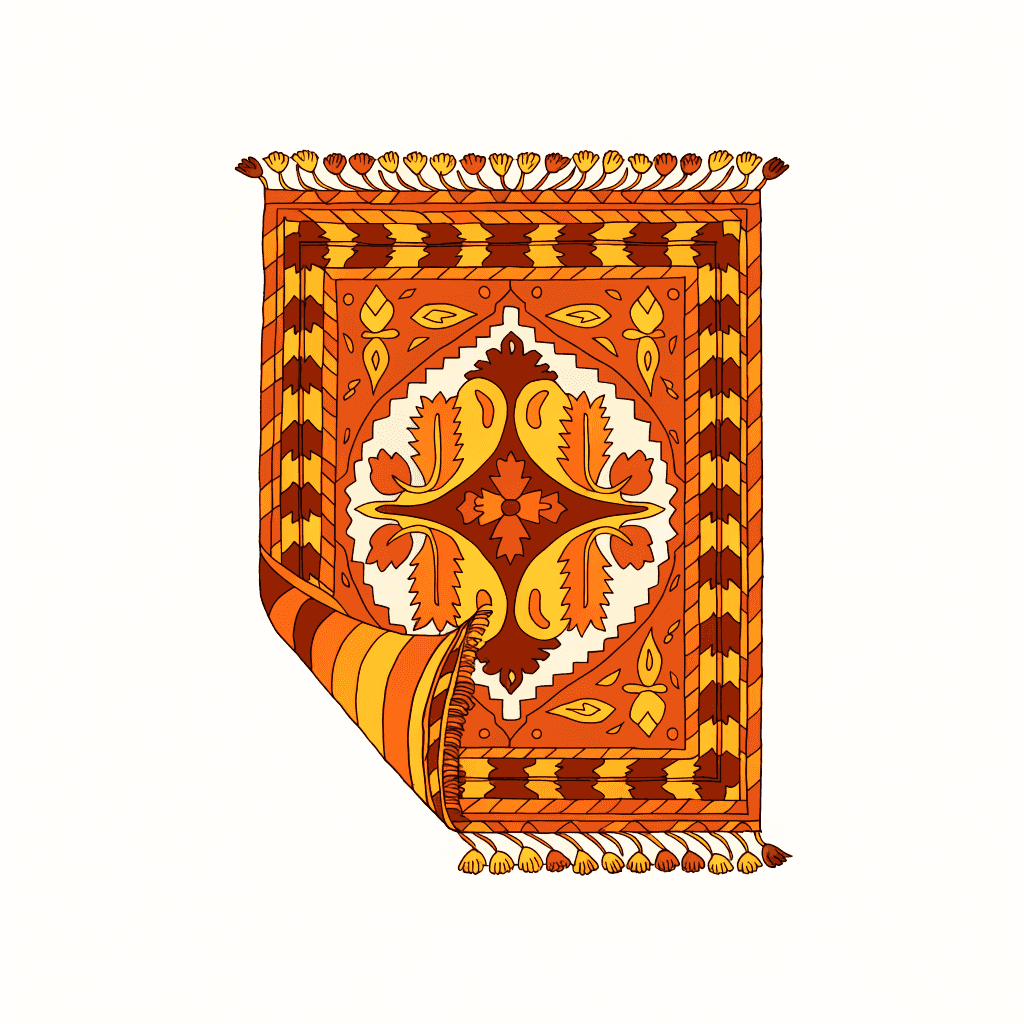
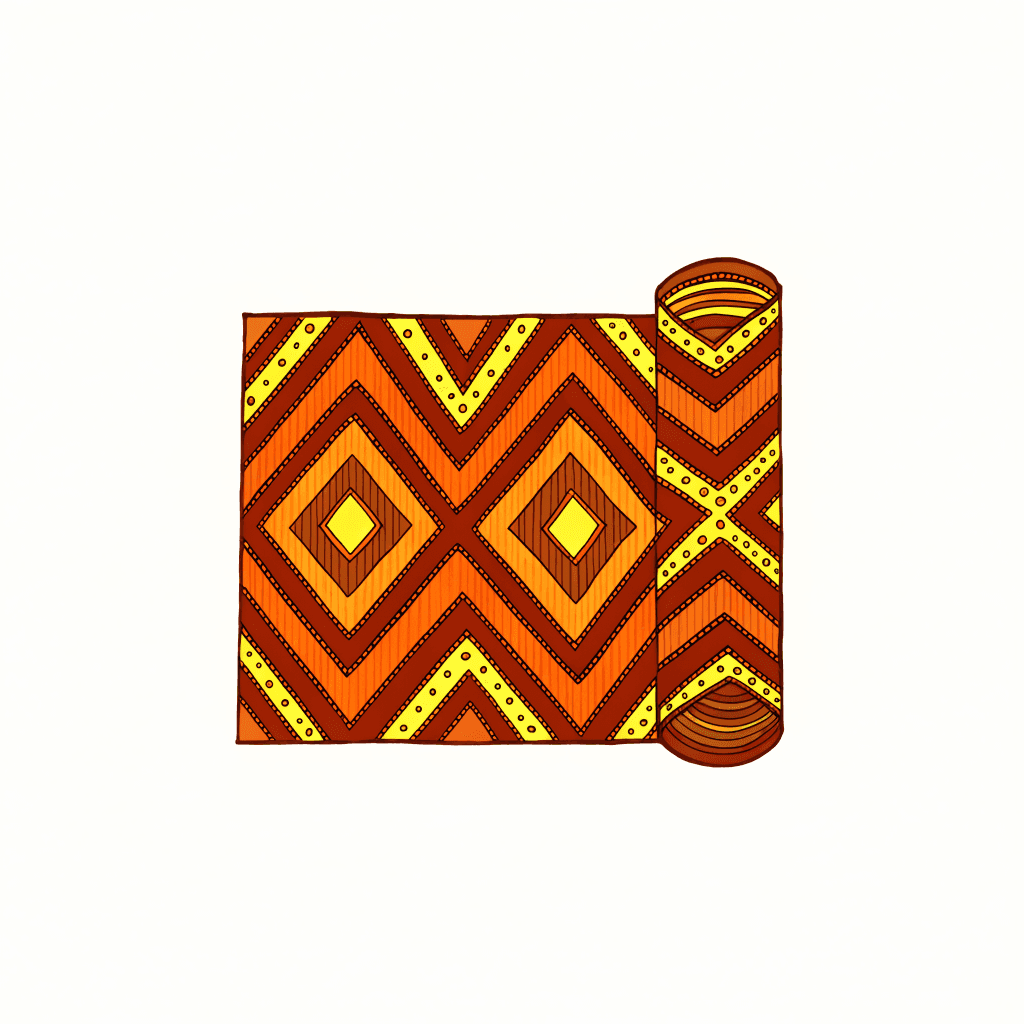
Long before wall-to-wall carpeting, India had the dhurrie: a flat-woven cotton rug spread in homes, schools, temples and tents, rolled up at night and beaten clean in the morning. Two places raised this everyday object into a design tradition. Warangal, an old handloom town in Telangana, gave the dhurrie its boldest geometry — stepped diamonds, stripes and interlocking blocks in saturated colour. Salawas, a weaving village near Jodhpur in Rajasthan, built a parallel tradition on pit looms, often working animal and bird motifs alongside the geometry. Both share the technique that names the craft: the panja, a metal claw the weaver uses to beat every line of weft down until the fabric is dense enough to shrug off years of footfall. Because the pattern is created by the weft itself rather than a knotted pile, a dhurrie is fully reversible — two rugs in one — and light enough to wash, move and store. That practicality is why it survived. Warangal's weavers earned a Geographical Indication for their durries, and the craft continues in family workshops in both regions, supplying floor coverings that work as hard in a modern flat as they did in a courtyard home.
How it is made
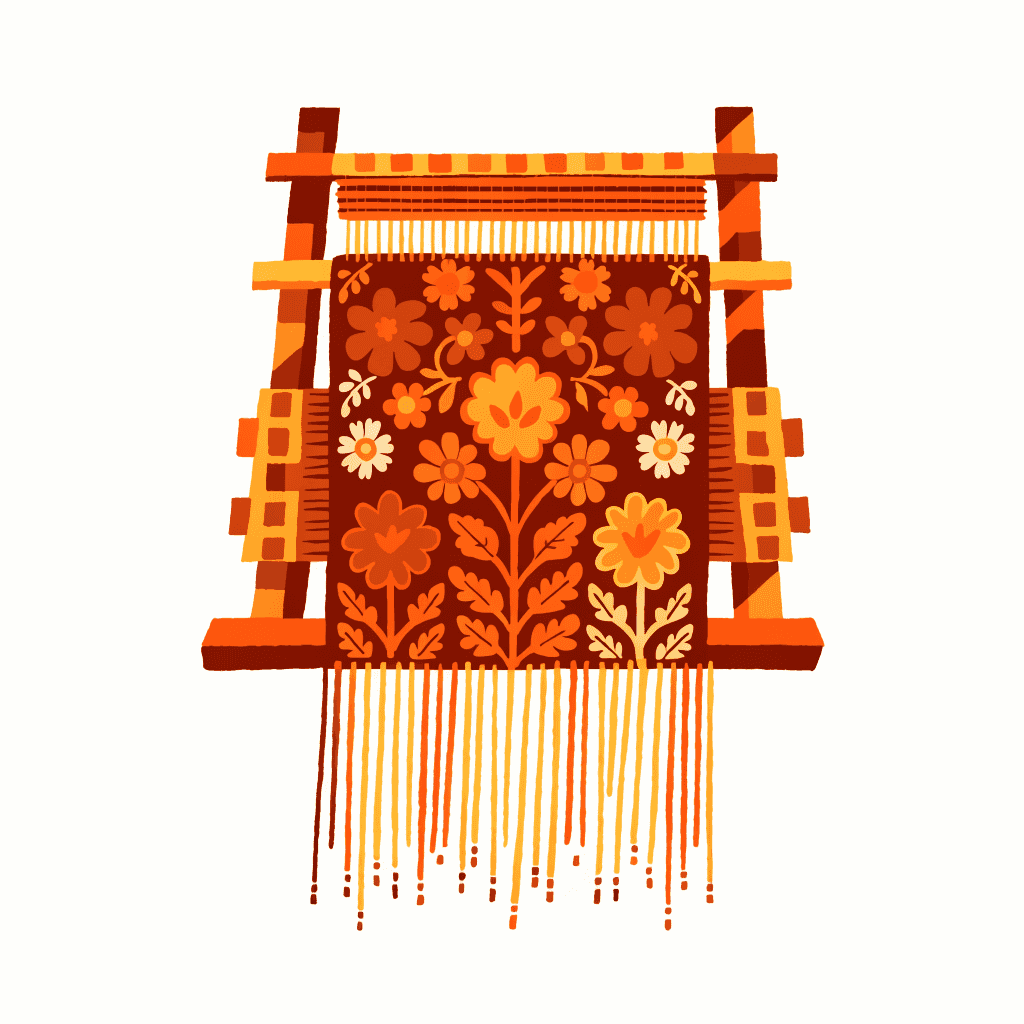
A dhurrie is a weft-faced flat weave. The weaver stretches a cotton warp on a horizontal frame or pit loom, then passes coloured weft yarns back and forth, building the pattern in blocks. Where two colours meet, the wefts are interlocked around each other or around a shared warp thread — the tapestry technique that keeps the joins tight and the design crisp on both faces. After every few picks, the weaver drives the panja claw down through the warp, packing the weft so hard that the warp disappears entirely inside the fabric. There is no pile and no backing: what you see is solid, beaten yarn. Cotton gives a crisp, washable rug; wool versions are heavier and warmer underfoot.
Buying guide
Flip it over: a true panja dhurrie is identical on both faces, with no backing or glue. Hold it to the light — a tightly beaten weave shows few pinholes. Check that colour joins are firm, edges straight and selvedges even, and rub a damp white cloth on a corner to test colourfastness. Small mats start around ₹800; large room-sized cotton dhurries and wool pieces run to ₹40,000. Warangal pieces lean boldly geometric; Salawas weaves often add motifs — both are true to their tradition.
Care
Shake out and vacuum both sides regularly, and flip the dhurrie every month or two so wear spreads evenly — reversibility is the point. Small cotton dhurries can be gently hand-washed in cold water and dried flat in shade; larger and wool pieces are safer dry-cleaned. Use a rug pad on smooth floors to stop slipping.
Good questions, honest answers
What is the difference between a dhurrie and a carpet?
A carpet has pile — yarn knotted or tufted so it stands up from a backing. A dhurrie is a flat weave: the coloured weft itself forms the surface, packed down hard with the panja claw. That makes a dhurrie thinner, lighter, reversible and far easier to wash and store, while a carpet is plusher and heavier underfoot. Different tools for different rooms.
Can I wash a cotton dhurrie at home?
Small cotton dhurries, yes: cold water, mild detergent, gentle handling, and dry flat in shade so the weave keeps its shape. Test a corner first for colourfastness with a damp white cloth. Large dhurries hold a lot of water and are hard to handle safely — dry-cleaning is wiser for those, and for anything with wool in it.
Are dhurries good for high-traffic areas?
That is what they were made for. The panja-beaten weave is dense and hard-wearing, and because a dhurrie is reversible you can flip it whenever one face starts to show wear — effectively doubling its life. Add a rug pad on smooth flooring to stop it sliding, and rotate it now and then so sunlight and footfall spread evenly.
Explore the living traditions
We are onboarding Warangal & Salawas Dhurrie artisans. Meanwhile, explore every craft available on VedikCraft today.
Explore all crafts →
At a glance
- Regions
- Warangal, Telangana · Salawas, Rajasthan
- Community
- dhurrie weavers
- Materials
- cotton, wool
- Techniques
- flat-weave (panja)
- Typical price band
- ₹800 – ₹40,000