Textiles & Handloom
Baluchari Sarees, Where Silk Tells the Epics
The story
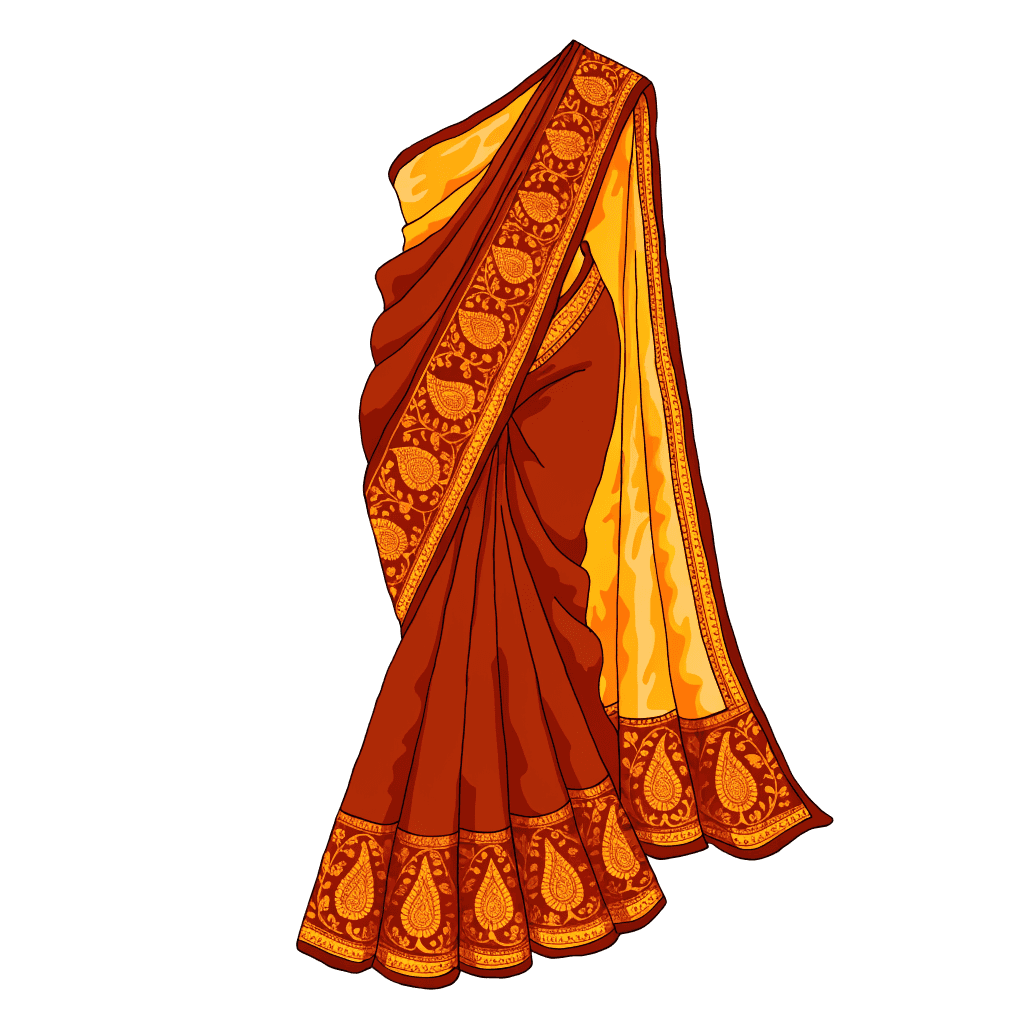
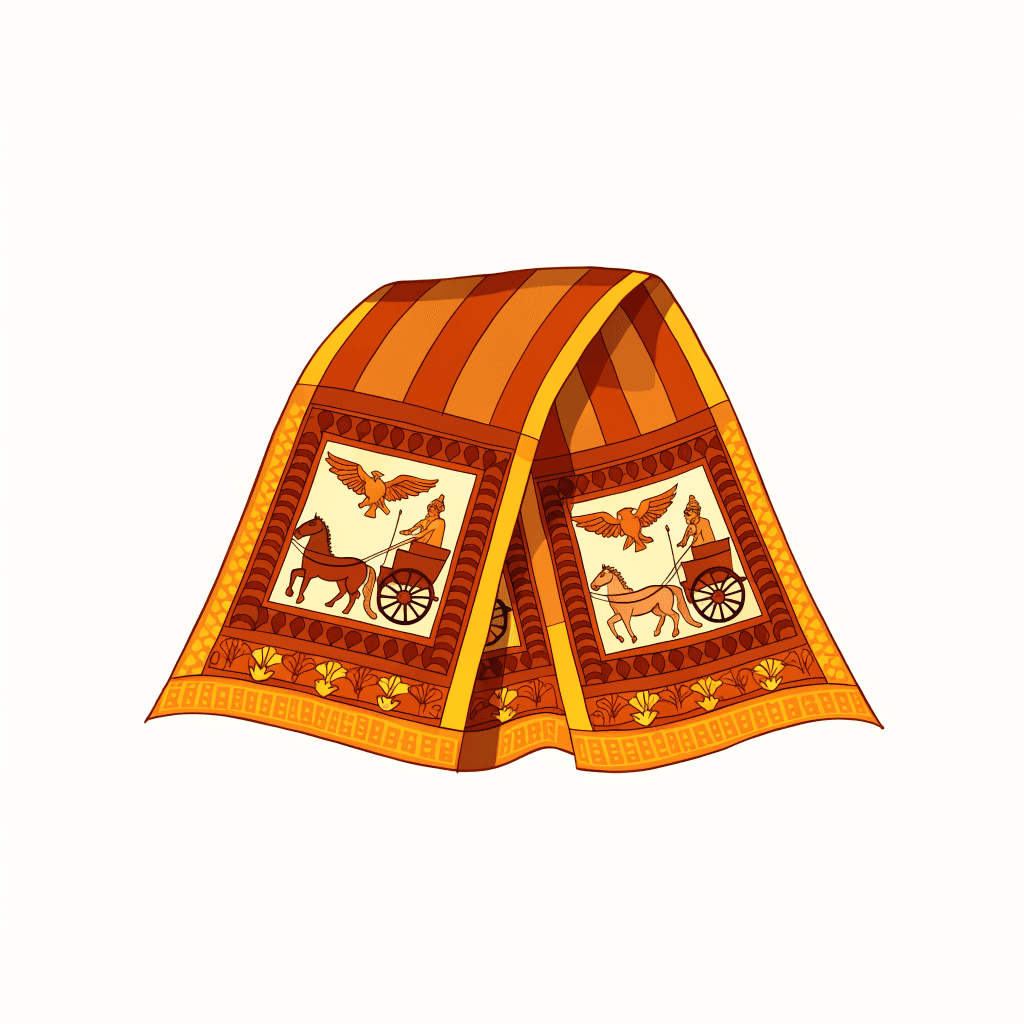
The Baluchari saree was born in the eighteenth century at Baluchar, a village on the banks of the Bhagirathi near Murshidabad, then the opulent capital of Bengal's nawabs. Under courtly patronage its weavers produced figured silks unlike anything else in India: pallus filled with narrative panels — nawabs on horseback, courtiers smoking hookahs, European traders aboard steamboats — a woven chronicle of a cosmopolitan age. The craft nearly died. River floods battered Baluchar, patronage collapsed under colonial rule, and by the early twentieth century the looms had fallen silent. Revival came in Bishnupur, the old temple town of the Malla kings in Bankura district, where twentieth-century revivalists retrained weavers and rebuilt the technique. Bishnupur gave the saree a new iconography: the terracotta panels of its famous temples, dense with scenes from the Ramayana and Mahabharata, moved almost directly onto silk. Today's Baluchari pallu unfurls like a storyboard — Krishna counselling Arjuna, wedding processions, chariots in battle — bordered by rows of repeating figures. The swarnachari variant weaves its stories in gold-toned zari. It remains one of India's great narrative textiles: a saree you can read.
How it is made
A Baluchari begins as fine mulberry silk, degummed and dyed in deep grounds — maroon, purple, indigo, crimson. The defining work happens in the figured weaving of the pallu and borders. Traditionally this used the jala technique, a lattice of hand-tied cords above the loom that lifts warp threads in sequence to build each figure; most Bishnupur looms now drive the same logic through jacquard punch cards, each design translated onto hundreds of cards before weaving can start. The narrative panels emerge line by line, a supplementary weft laying figures against the silk ground. A single saree occupies a weaver for days, and preparing a new design for the loom can take far longer than weaving it.
Buying guide
Study the pallu figures: in a genuine Baluchari they are woven into the cloth, visible as organised floating threads on the reverse — not printed or embroidered on. Classic grounds are deep maroons, purples and reds with figures in contrasting silk; swarnachari uses gold-toned zari. Check for the soft, dense hand of mulberry silk. Prices typically run from about ₹6,000 for simpler silk pieces to ₹90,000 for elaborate swarnachari sarees with fine, dense figuring.
Care
Dry clean only — the figured silk and its floating wefts are too delicate for home washing. Store wrapped in muslin, refolded every few months to prevent permanent crease lines through the pallu figures. Keep away from damp, direct sunlight and perfume sprays. Iron on low through a cotton cloth if needed, never directly on the zari.
Good questions, honest answers
What stories do Baluchari sarees depict?
Contemporary Bishnupur Balucharis favour epic scenes — episodes from the Ramayana and Mahabharata, Krishna's life, wedding processions and chariots — inspired by the terracotta temple panels of Bishnupur. Historic Murshidabad pieces portrayed their own world instead: nawabs, hookah-smoking courtiers and European traders on steamboats. The pallu carries the main narrative, with repeating figures in the borders.
What is the difference between Baluchari and Swarnachari?
The figuring thread. A classic Baluchari weaves its scenes in coloured silk against the ground — cream on maroon, for instance — while a swarnachari renders the same narrative work in gold- or silver-toned zari, making it heavier, more formal and usually more expensive. Technique and iconography are otherwise the same, so the choice is one of occasion and budget.
How do I verify a genuine Baluchari?
Turn the pallu over. Woven figuring shows organised floats of supplementary thread on the reverse, mirroring the design; printed imitations show a blank or faintly stained back, and embroidered copies show stitch knots. The saree should be pure mulberry silk with Bishnupur's dense, smooth hand. The GI registration means genuine pieces come from the Bishnupur weaving belt.
Explore the living traditions
We are onboarding Baluchari artisans. Meanwhile, explore every craft available on VedikCraft today.
Explore all crafts →
At a glance
- Region
- Bishnupur, West Bengal
- Community
- Bishnupur weavers
- Materials
- silk
- Techniques
- figured silk weaving (jala)
- Typical price band
- ₹6,000 – ₹90,000