Home Décor & Furnishings
Kashmir Hand-Knotted Carpets, from Talim to Heirloom
Also known as Kal Baffi
The story
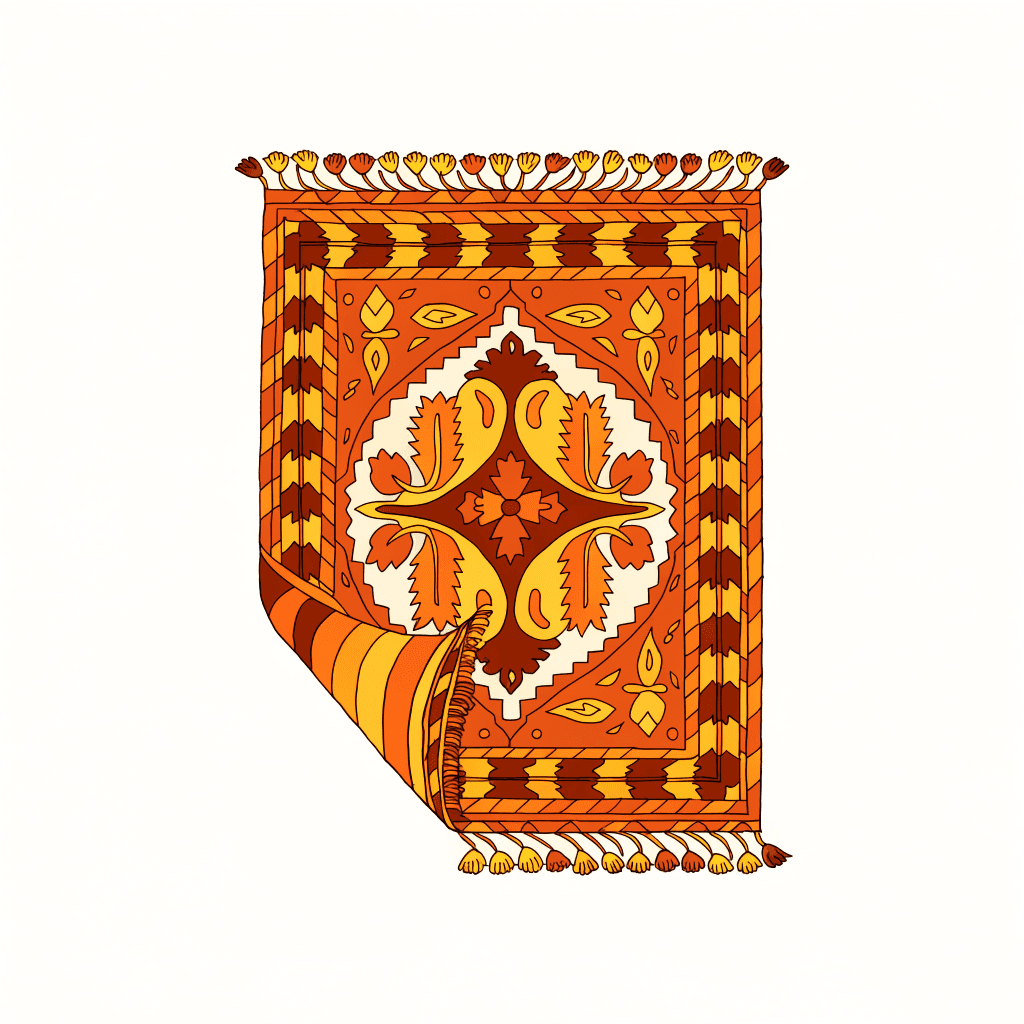
Kashmir's carpet story begins, by long tradition, with Sultan Zain-ul-Abidin, the fifteenth-century ruler who brought master weavers from Persia and Central Asia to Srinagar and seeded a court industry that never left. The local name for the craft, kal baffi, means hand-knotting, and that is precisely what distinguishes these carpets: each is built knot by individual knot — the asymmetrical Persian knot — on a loom-strung warp of cotton or silk, at densities that can run to several hundred knots per square inch in fine silk pieces. The Valley developed its own institution for transmitting designs: the talim, a coded script in which a master encodes every knot's colour, chanted line by line to the weavers at the loom — a system still in use. Kashmiri design absorbed the Persian canon and made it its own: the tree of life, flowering medallions, hunting scenes, and the paisley that Kashmir gave to the world. A fine carpet can occupy its weavers for a year or more, which is why these pieces have always been bought as heirlooms and passed down. The craft is protected today by a Geographical Indication for the Kashmir Hand Knotted Carpet.
How it is made
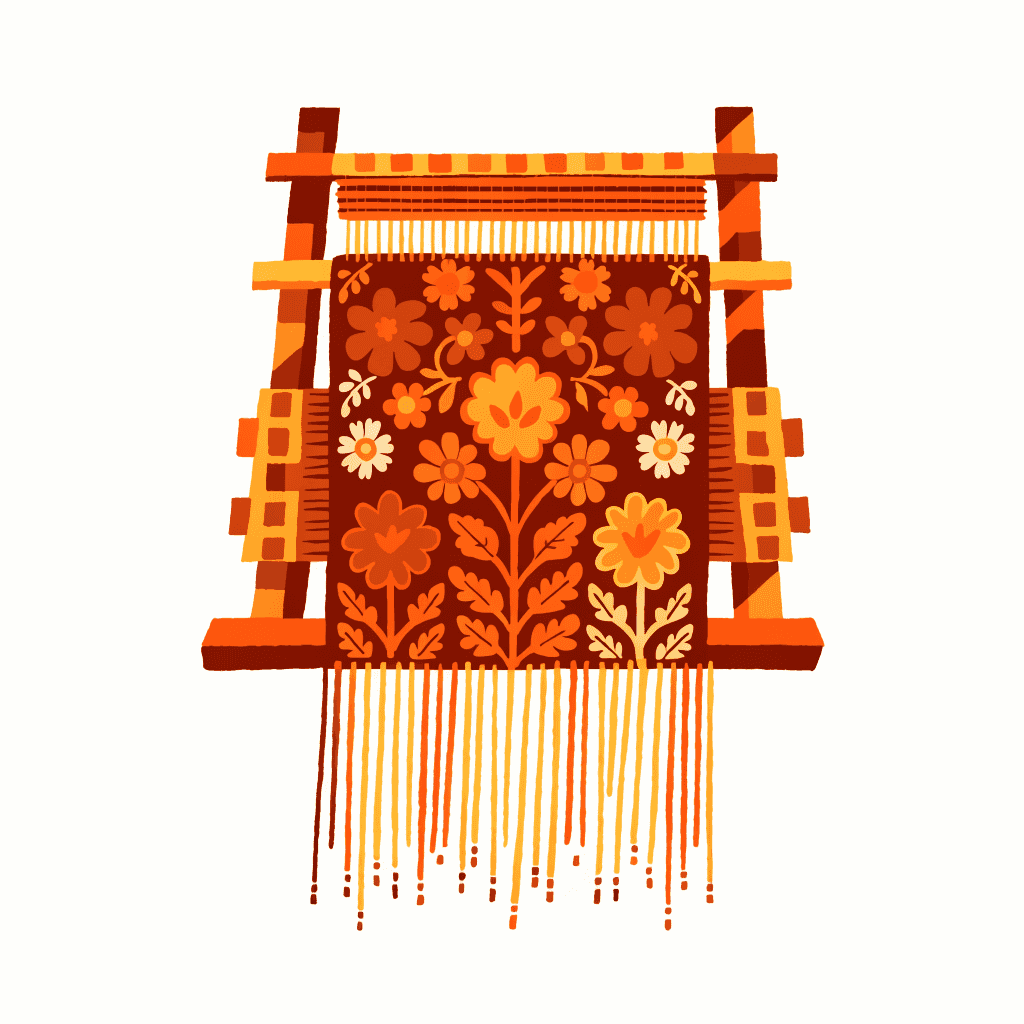
A carpet begins as a talim — the design translated into coded symbols specifying the colour of every knot. Warps of cotton or silk are strung on an upright loom, and weavers, often working in pairs or teams, tie individual Persian (asymmetrical) knots in dyed silk or wool, row upon row, as the talim is read out. Each completed row is beaten down with a comb-beater and secured with weft shots; the pile is scissored level as work climbs. Density is destiny: more knots per square inch means crisper drawing, finer curves and more months on the loom. When the carpet is cut free, it is clipped, washed to bring up the lustre, stretched square and finished. The fringe is simply the warp, knotted — never sewn on.
Buying guide
Turn the carpet over: in a genuine hand-knotted piece the design is nearly as sharp on the back as the front, and you can see individual knots in slightly irregular rows. The fringe must be a continuation of the warp, not stitched on — a sewn fringe means machine-made. Ask the knot count, the material (pure silk, silk-on-cotton or wool) and for the GI QR label. Small woollen rugs start around ₹8,000–₹25,000; fine silk carpets run into lakhs, with masterpieces approaching ₹10,00,000.
Care
Vacuum gently along the pile without a beater bar, and rotate the carpet twice a year for even wear. Keep it out of harsh direct sun, and blot spills immediately with a dry cloth — never rub. Use a thin underlay on hard floors. Every few years, entrust it only to a specialist hand-carpet cleaner; never machine-wash or steam it.
Good questions, honest answers
What is a talim?
A talim is the coded weaving script unique to Kashmir's carpet and shawl tradition: a grid of symbols recording the colour of every single knot in the design. At the loom, it is read or chanted aloud line by line while the weavers tie the knots — a remarkably precise way of transmitting complex designs across generations without pattern drawings.
Silk or wool — which should I buy?
Silk carpets achieve the highest knot densities, the finest detail and a luminous sheen that shifts with the light — they suit walls and low-traffic rooms and command the highest prices. Wool and wool-silk pieces are more forgiving underfoot, warmer, and better for living areas with regular traffic. Both, hand-knotted, are heirloom-grade; the choice is placement and budget.
How can I tell hand-knotted from machine-made?
Look at the back and the fringe. Hand-knotted carpets show the pattern clearly on the reverse, with small human irregularities in the rows of knots, and their fringe is the carpet's own warp. Machine-made carpets have a muddier back, perfectly uniform rows, and fringes sewn on as trim. The GI QR label on certified Kashmir carpets settles the question outright.
Explore the living traditions
We are onboarding Kashmir Hand-Knotted Carpet artisans. Meanwhile, explore every craft available on VedikCraft today.
Explore all crafts →
At a glance
- Region
- Srinagar, Kashmir
- Community
- Kashmiri knotters
- Materials
- silk, wool
- Techniques
- hand-knotting (Persian knot)
- Typical price band
- ₹8,000 – ₹10,00,000