Paintings & Folk Art
Kerala Mural Painting and Its Five Sacred Colours
The story
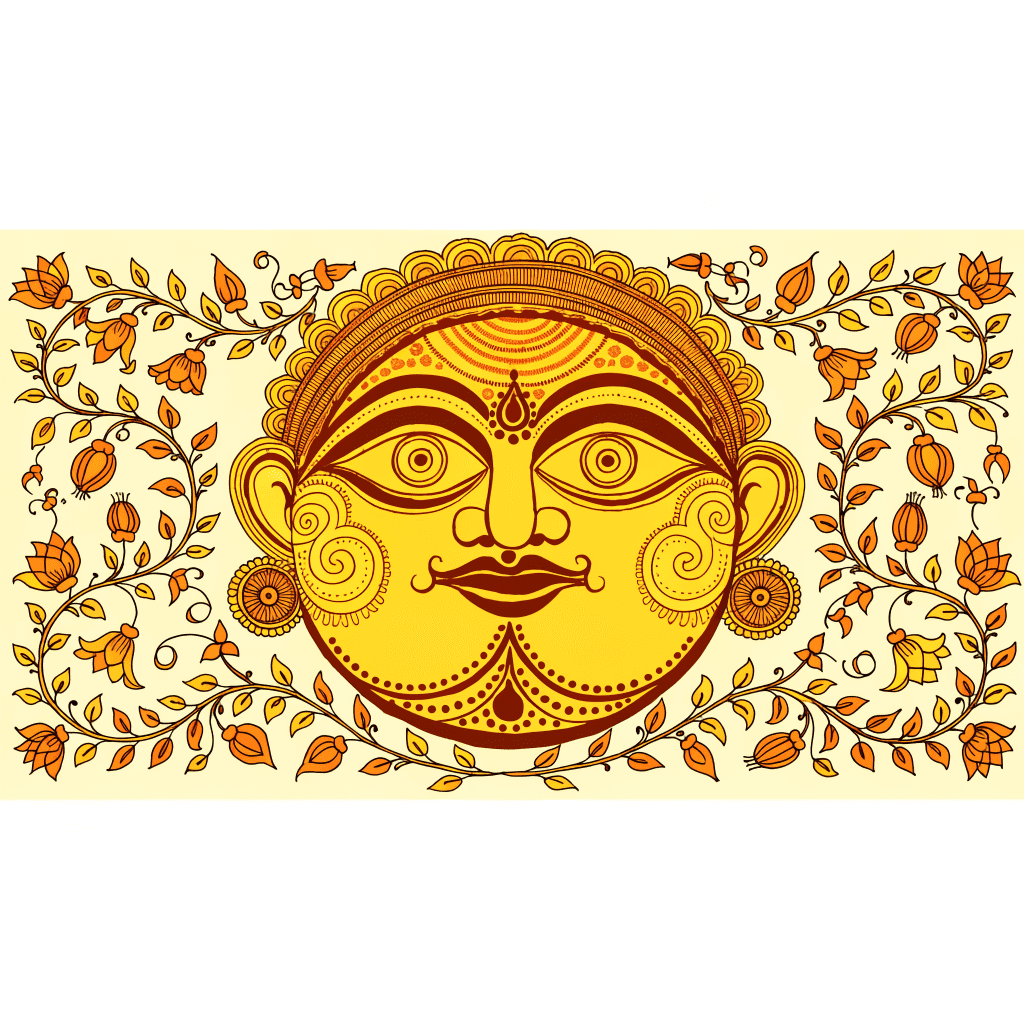
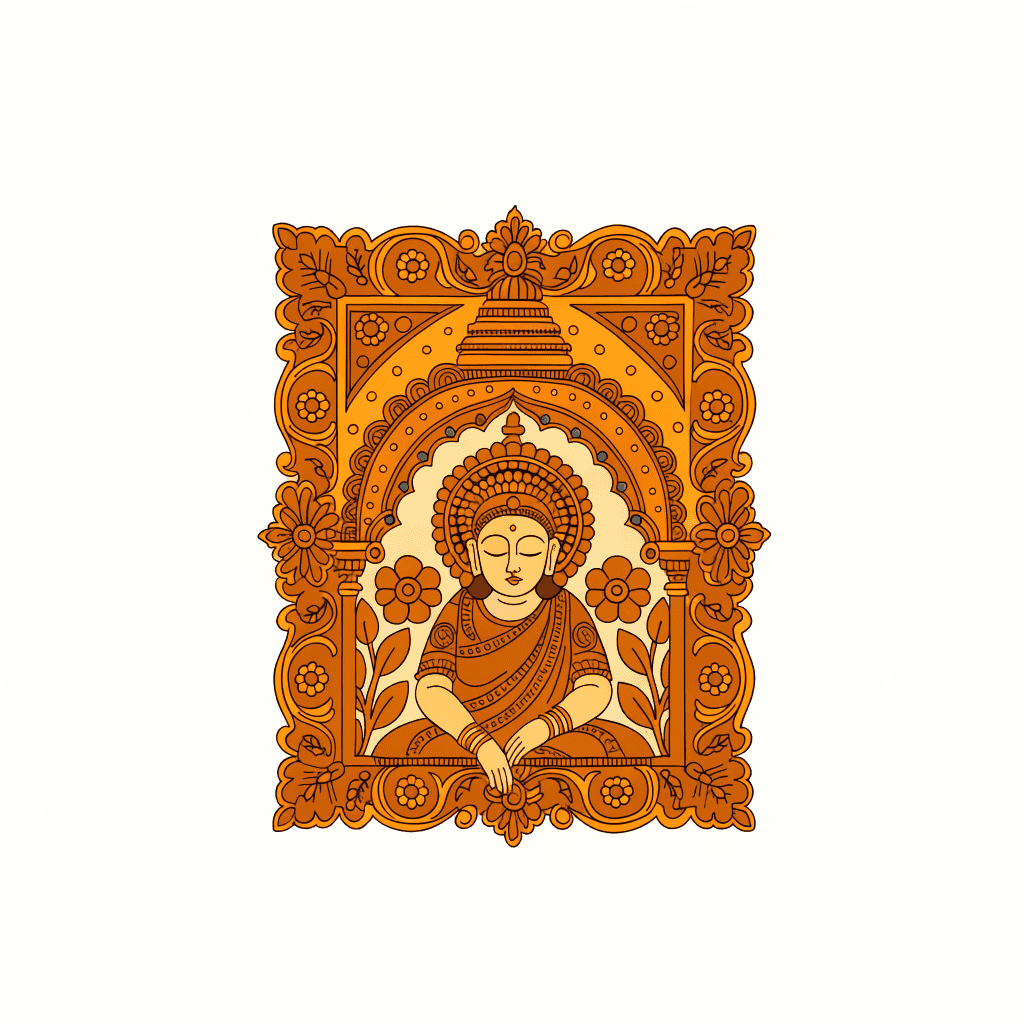
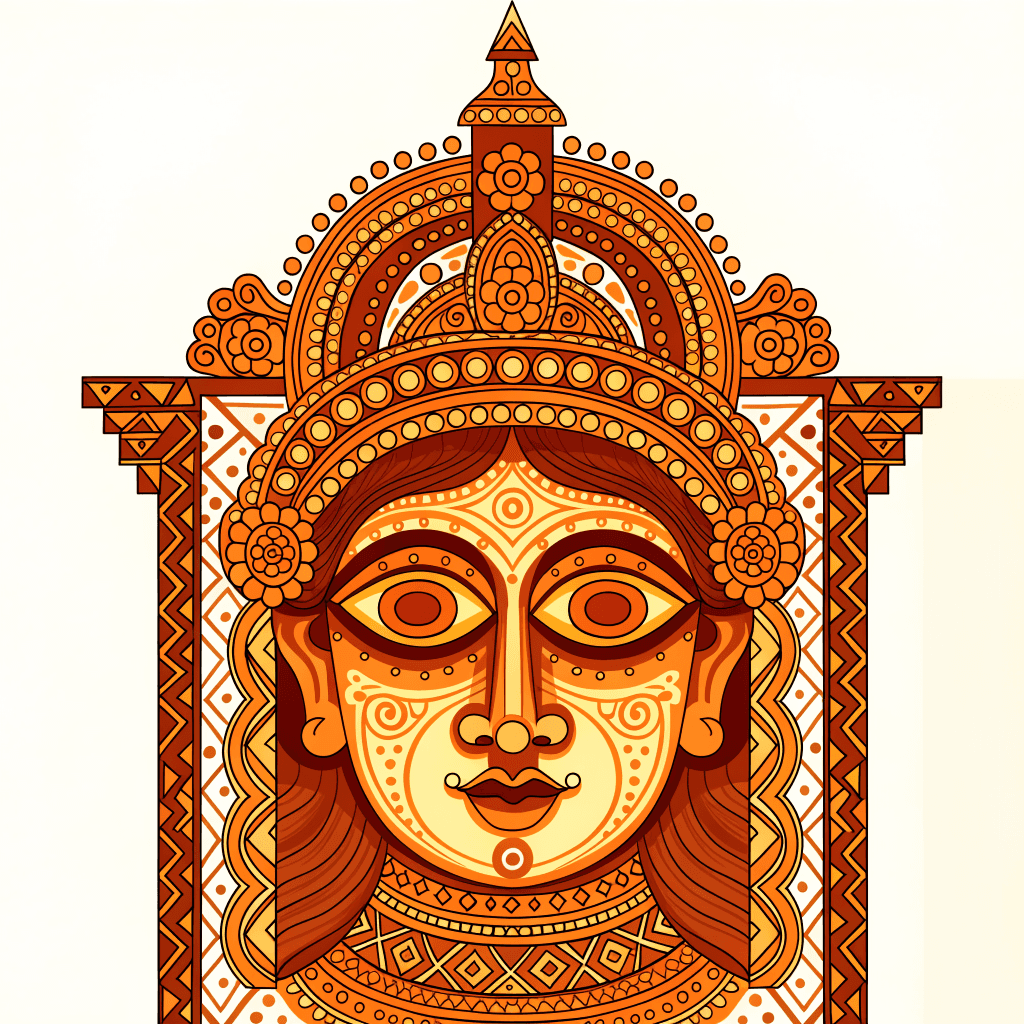
Kerala's mural tradition is temple art in the most literal sense: painting born on the walls of shrines and palaces, from temple sanctums like Ettumanoor's to the celebrated chambers of Mattancherry Palace in Kochi and the vast Gajendra Moksha panel at Krishnapuram Palace. The style is governed by the panchavarna, a palette of five colours — red, yellow, green, black and white — all drawn from minerals and plants. Iconography follows the Dhyanaslokas, Sanskrit meditation verses that fix each deity's posture, attributes and mood, and colour itself carries meaning: serene, sattvic beings wear green, worldly and heroic figures burn in reds and golds, and the demonic darkens toward black. Faces are rounded and heavy-lidded, ornament fills every span, and the whole surface moves with a slow, courtly rhythm. The tradition is rooted in kalamezhuthu, Kerala's ritual floor-drawing practice, and matured over centuries of temple patronage. It came close to extinction in the twentieth century before temple-linked mural institutes trained a new generation; today those artists paint on canvas and commission walls alike, keeping one of India's great classical styles vividly alive.
How it is made
On walls, the ground is prepared with layers of lime plaster, polished to a fine white sheen. The design is sketched first in yellow ochre, its lines then confirmed in red. Colour is built from light to dark — yellows, then reds and greens, with black reserved for the final, decisive outlines. The five pigments come from the earth and the garden: laterite stones for reds and yellows, plant extracts for green, lamp soot for black, lime for white, bound in plant gums. Brushes are made the old way, from blades of grass and animal hair, each suited to a line weight. Shading is done by fine stippling rather than blending. Canvas works follow the same sequence on a primed cotton ground, which is how most collectors now bring the style home.
Buying guide
Most works sold today are on primed canvas, which is authentic contemporary practice — what matters is technique. Look for the five-colour palette, stippled shading rather than airbrushed blends, crisp final black outlining, and ornament drawn, not stencilled. Ask whether pigments are traditional naturals or acrylics; natural-pigment works cost more and age with more character. Prices typically run from ₹2,000 for small panels to ₹1,20,000 for large, fully traditional compositions.
Care
Frame canvas works behind glass and hang them away from direct sunlight, kitchens and coastal damp — natural pigments and gum binders are sensitive to both UV and humidity. Dust the frame, never the paint surface. If a natural-pigment work needs cleaning or shows flaking, go straight to a professional conservator.
Good questions, honest answers
What are the five colours of Kerala murals?
Red, yellow, green, black and white — the panchavarna. Traditionally the reds and yellows come from laterite minerals, green from plant sources, black from lamp soot and white from lime. Nearly every figure, ornament and background in the classical tradition is orchestrated from just these five, which gives the style its unmistakable harmony.
Can I buy a Kerala mural for my home, or are they only on temple walls?
The living tradition paints on both. Trained mural artists work on primed canvas and board in exactly the classical sequence — ochre sketch, light-to-dark colour, stippled shading, black outline — so collectors can own the style without a wall commission. Full wall murals for homes are also commissioned, usually for pooja rooms and entrances.
What does the colour of a figure signify?
Character. Kerala murals colour-code temperament: divine, serene (sattvic) beings are painted in greens; power-driven, worldly (rajasic) characters take reds and golds; and dark, destructive (tamasic) figures go toward black and grey. Read the palette and you can often read the drama before you identify a single deity.
Explore the living traditions
We are onboarding Kerala Mural Painting artisans. Meanwhile, explore every craft available on VedikCraft today.
Explore all crafts →
At a glance
- Region
- Kerala
- Community
- Kerala mural artists
- Materials
- natural-pigment, canvas, wall
- Techniques
- five-colour temple mural
- Typical price band
- ₹2,000 – ₹1,20,000