Textiles & Handloom
Maheshwari Sarees — A Queen's Weave on the Narmada
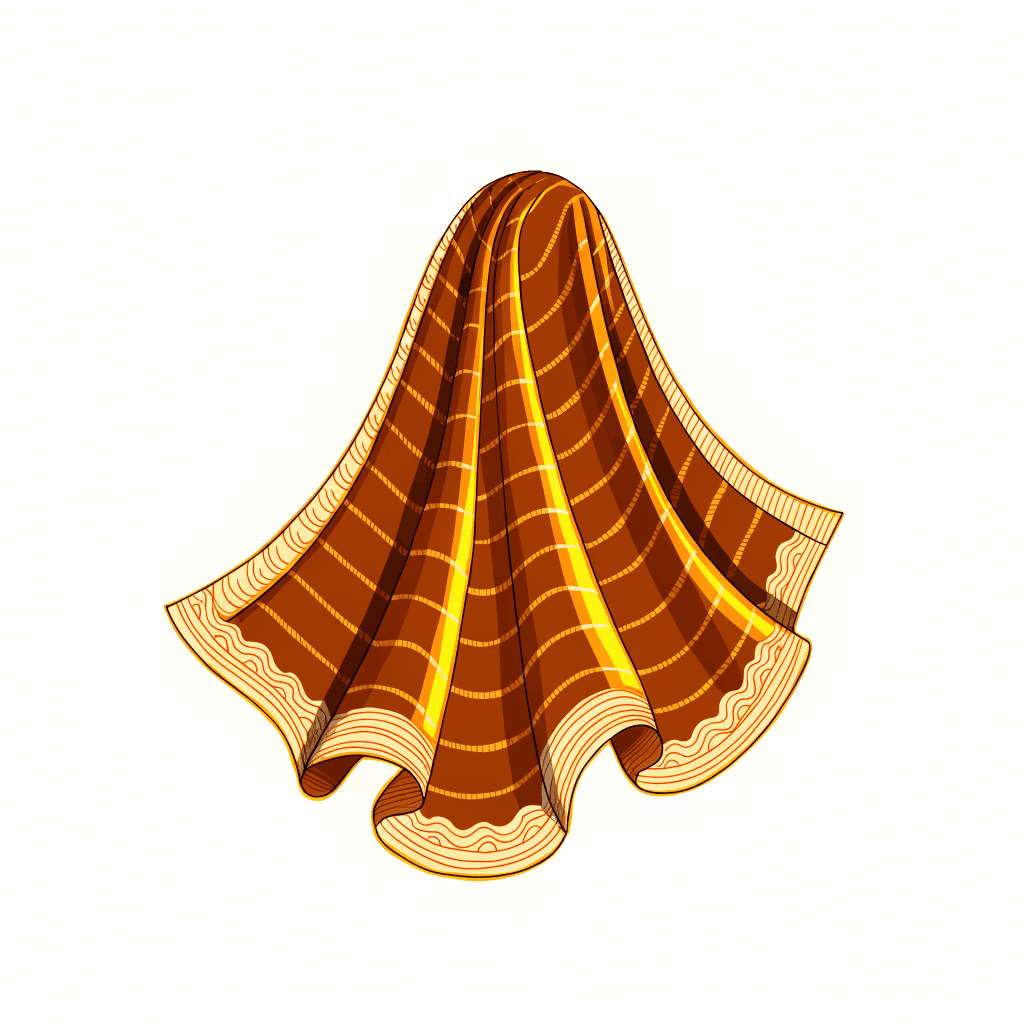
The story
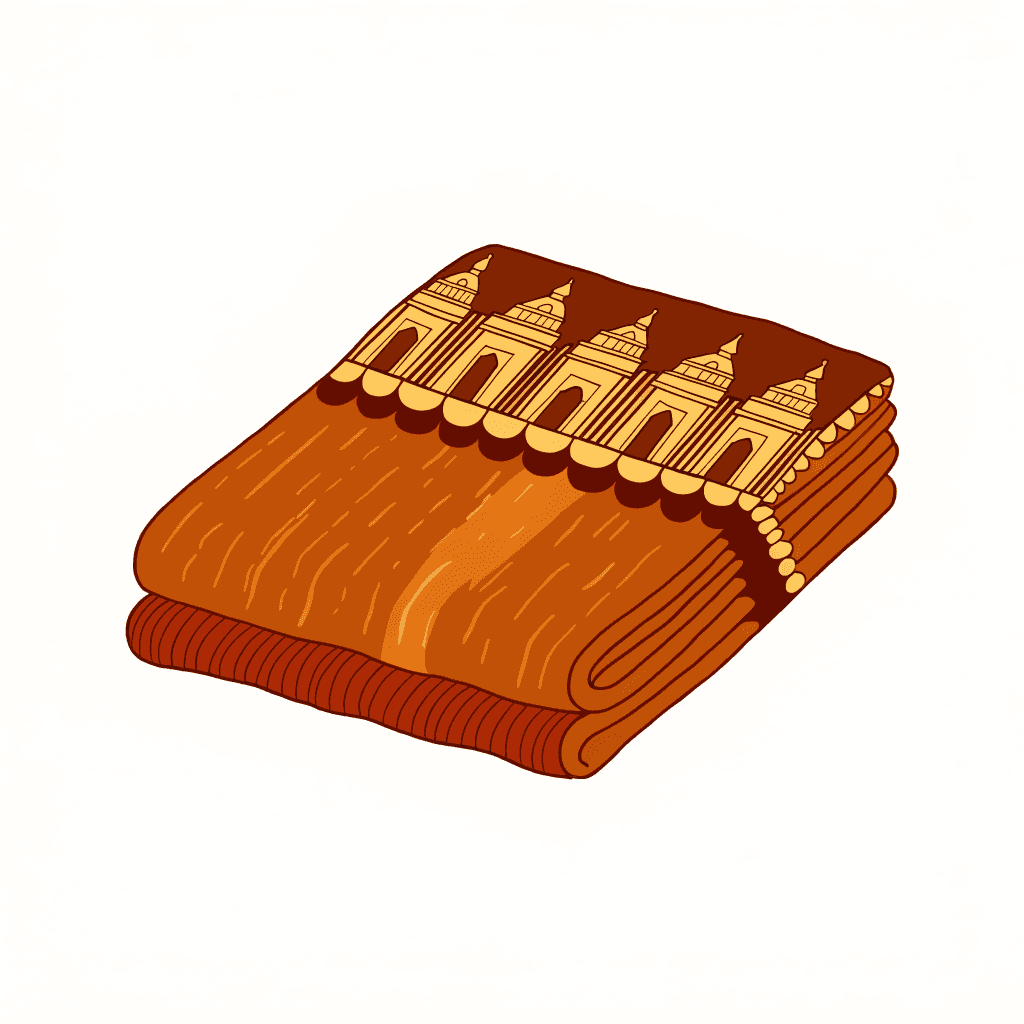
Maheshwari weaving begins with a queen. In the eighteenth century, Ahilyabai Holkar — the Holkar ruler who made the temple town of Maheshwar her capital on the banks of the Narmada — invited weavers to settle there and produce fine cloth for the court and as royal gifts. The sarees they created carried the town into their design: borders patterned after the carved walls of Maheshwar fort, along with mats, bricks and the ripple of the river below the ghats. The result is a distinctive silk-cotton of quiet elegance — lighter than most silks, more lustrous than cotton, patterned in stripes and checks rather than heavy figuring. Its best-known signature is the reversible border, woven so both faces are equally finished and the saree can be draped either way. Like many court crafts, Maheshwari declined once royal patronage ended, and by the mid-twentieth century the looms had dwindled. The revival came from the same family that started it: in 1979, descendants of the Holkars founded the Rehwa Society in Maheshwar, a weaving workshop that retrained artisans — many of them women — and restored the craft's reputation. Today Maheshwar's looms hum again beside the Narmada.
How it is made
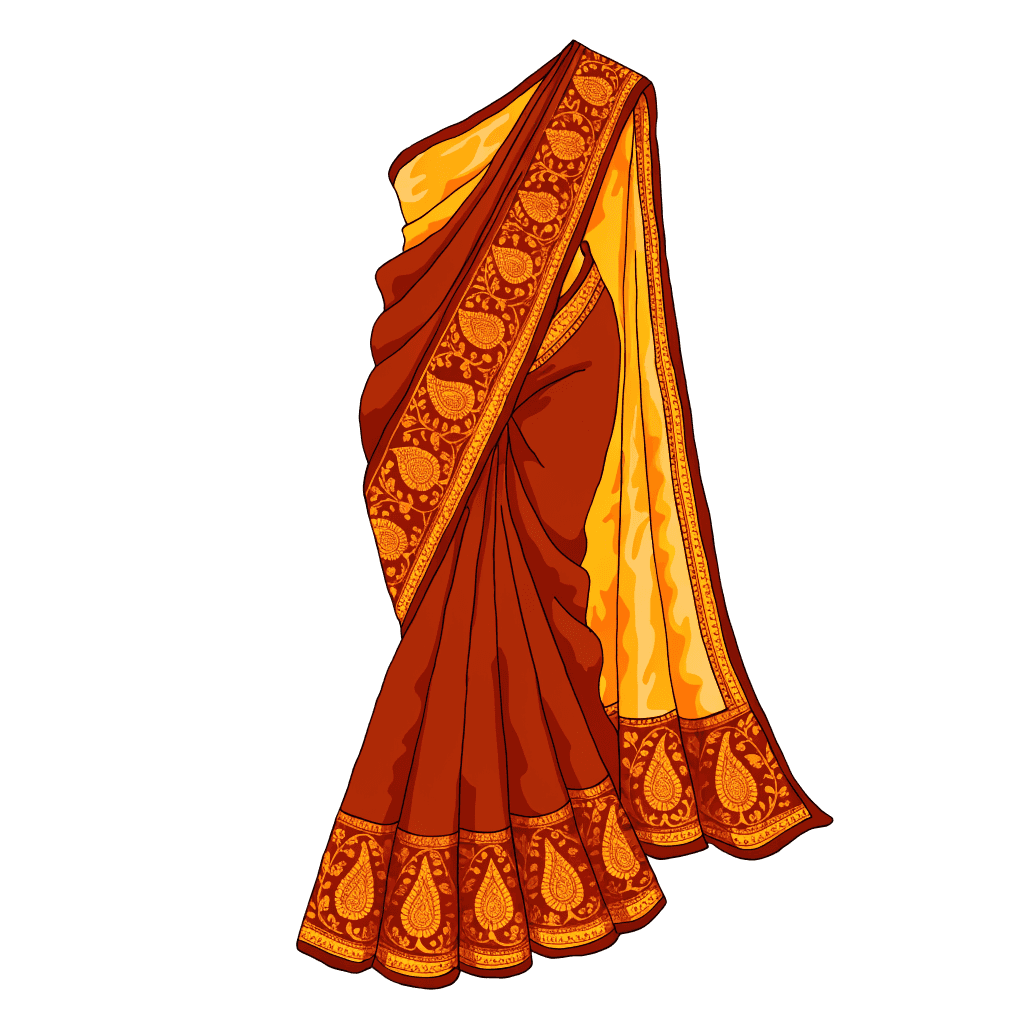
A Maheshwari is traditionally woven with a silk warp and fine cotton weft, giving it silk's sheen with cotton's breathability. The design vocabulary is architectural: chatai (mat), eent (brick), leheriya (wave) and chameli flower patterns run in disciplined stripes and checks across the body. The border, called bugdi, is the technical showpiece — woven to be fully reversible, with zari lines finished identically on both faces. Pallus typically carry bands of alternating colour and zari. Weavers work on pit and frame looms, and a single saree takes several days depending on the fineness of the checks and the weight of zari. The finish is light, faintly crisp, and softens beautifully with wear.
Buying guide
Flip the border: a genuine Maheshwari's bugdi border looks finished on both faces — that reversibility is the craft's fingerprint. The body should feel light and faintly crisp, with the gentle irregularities of handloom weaving visible against light. Stripes and checks should be woven, not printed. Expect roughly ₹1,800–₹8,000 for everyday cotton-silk sarees and up to ₹40,000 for fine pieces with heavy zari. Buying from Maheshwar-based weaver societies or GI-tagged sellers is the surest route.
Care
Hand-wash light silk-cottons separately in cold water with a mild, non-alkaline detergent; dry-clean anything with substantial zari. Dry in shade and iron on a low-to-medium setting, ideally on the reverse. Store in breathable cotton or muslin rather than plastic, and air the saree out for a few hours every couple of months.
Good questions, honest answers
What is special about the Maheshwari border?
The bugdi border is woven to be completely reversible — the zari and colourwork look equally finished on both sides, so the saree can be draped with either face out. It's a demanding weaving feat and the quickest way to recognise a genuine Maheshwari against printed or powerloom lookalikes.
Where do Maheshwari motifs come from?
From the town itself. Weavers translated the carved stone walls of Maheshwar fort and the landscape around it into cloth: chatai (woven mat), eent (brick), leheriya (the ripple of the Narmada) and chameli flowers. The patterns stay geometric and restrained — stripes and checks rather than dense figuring.
Is Maheshwari pure silk?
Classically no — it's a silk-cotton blend, with a silk warp for lustre and a cotton weft for comfort, which is why it wears so well in Indian weather. Pure silk and pure cotton versions are woven today too, but the silk-cotton remains the definitive Maheshwari.
Explore the living traditions
We are onboarding Maheshwari artisans. Meanwhile, explore every craft available on VedikCraft today.
Explore all crafts →
At a glance
- Region
- Maheshwar, Khargone, Madhya Pradesh
- Community
- Maheshwar weavers (Rehwa)
- Materials
- silk-cotton
- Techniques
- reversible border, striped/checked weaving
- Typical price band
- ₹1,800 – ₹40,000