Textiles & Handloom
Naga Shawls: Rank and Story on a Loin-Loom
Also known as Chakhesang Shawl, Tsungkotepsu
The story
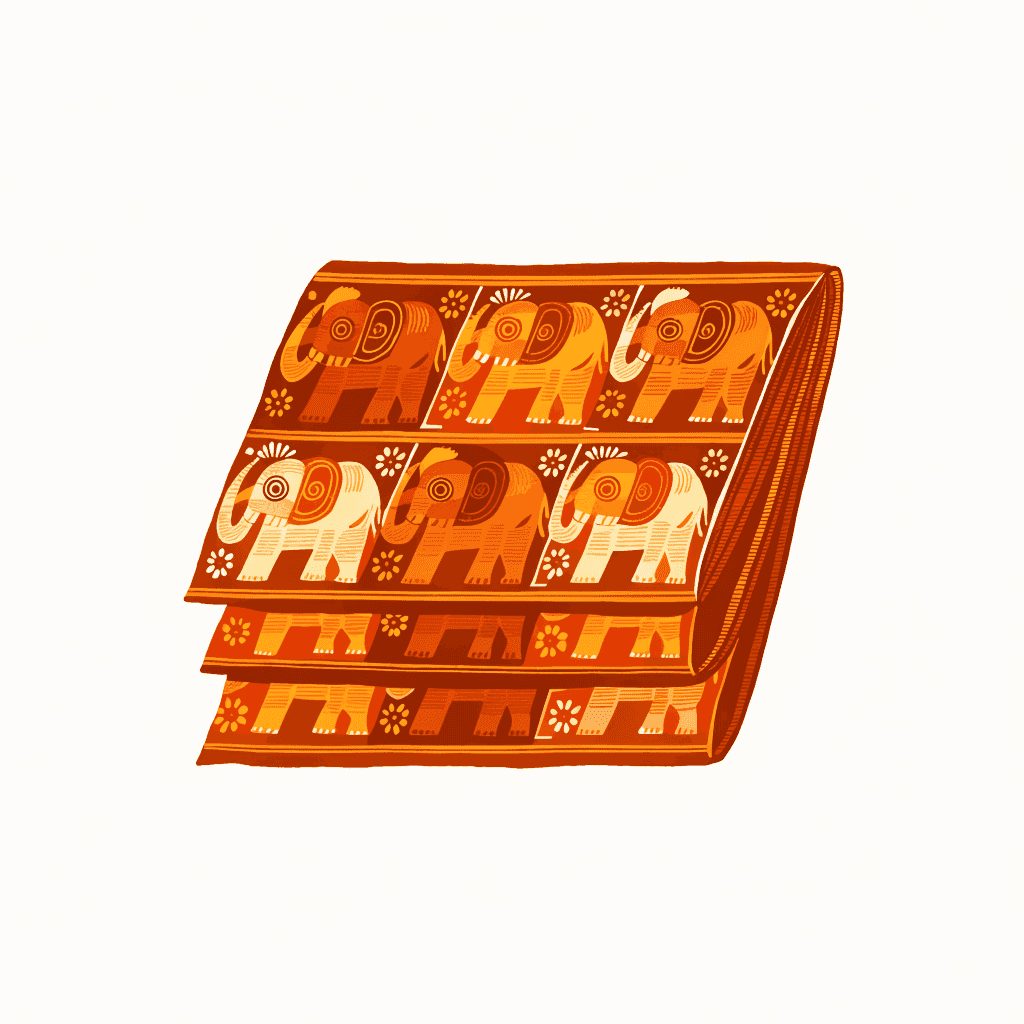
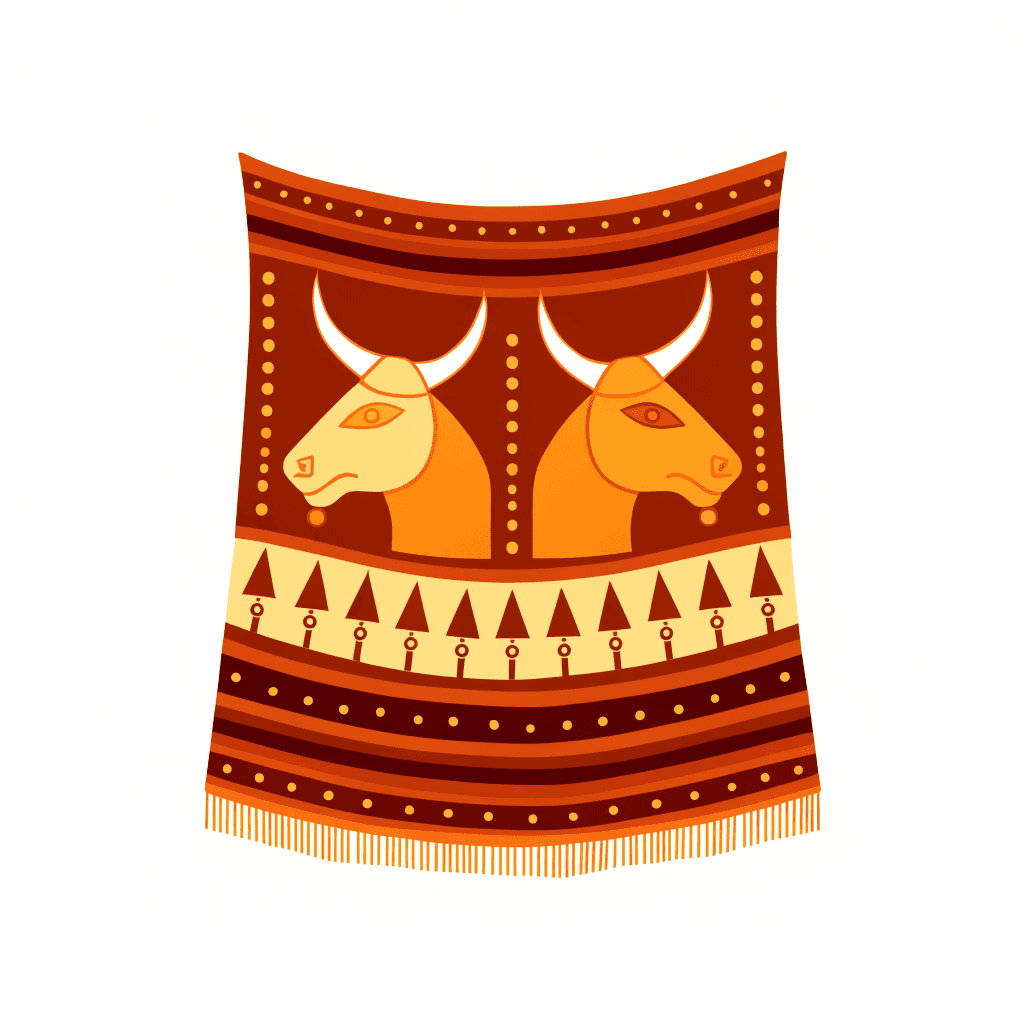
In Nagaland, cloth is a document. Each tribe — Chakhesang, Ao, Angami and more — weaves shawls whose stripes, bands and motifs declare precisely who the wearer is: tribe, clan, gender and what they have achieved in life. Historically, the right to wear certain shawls had to be earned — among several tribes, hosting lavish feasts of merit conferred the privilege of particular patterns, so a shawl announced generosity and standing before its wearer spoke a word. The Tsungkotepsu of the Ao tribe is among the most storied: a dark shawl whose painted median white band carries mithun, tiger, spear and warrior figures, traditionally reserved for men of proven valour. The mithun, the great semi-domesticated bovine of the Naga hills, stands for wealth and open-handedness wherever it appears. Chakhesang shawls, with their own disciplined banding and motifs, carry the tradition's formal recognition today. All of this is women's weaving, done on the loin-loom — a portable backstrap loom whose tension runs through the weaver's own body. The cloth comes off in narrow panels, stitched together into shawls and wraps. Worn at festivals like the Hornbill and at every important gathering, Naga shawls remain what they have always been: identity you can wrap around your shoulders.
How it is made
The loin-loom — a backstrap loom with one end fixed and the other strapped to the weaver's lower back — is the engine of all Naga weaving, its warp tension controlled by the weaver's own body as she leans. Cloth comes off it in narrow panels, usually three to a shawl, hand-stitched together so the bold stripes align across the seams. Yarn was traditionally hand-spun cotton in natural dyes; wool and mill-spun cotton are common today, with the strong reds, blacks and blues holding to each tribe's prescribed banding. Motifs are laid in as extra-weft patterning or embroidery, and on the Ao warrior shawl the central white band is painted by hand with mithun, tigers and spears.
Buying guide
A genuine Naga shawl is built from narrow loin-loom panels — look for the hand-stitched seams joining them and the slight, honest irregularities in the stripes. The cloth is dense, firm and heavier than it looks. Machine-made copies come as single seamless widths with printed bands. Buy with respect: motifs carry tribal meaning, so a good seller can tell you which tradition a design follows. Prices typically run from about ₹1,500 for simple wraps to ₹25,000 for finely patterned ceremonial shawls.
Care
Hand-wash in cold water with mild detergent, or dry clean woollen pieces. Do not bleach or tumble-dry; strong reds and blacks should be washed separately at first. Dry flat in shade to keep the panels from distorting, and iron on low. Store folded with cedar or neem against moths, and let the shawl air regularly.
Good questions, honest answers
What do the patterns on a Naga shawl mean?
They are a social code. Stripe colours, band arrangements and motifs identify the wearer's tribe and clan, and historically signalled achievements — warrior status or the hosting of feasts of merit. The Ao Tsungkotepsu, with its painted band of mithun and tigers, marked proven valour. Buying respectfully means asking which tradition a design belongs to rather than treating it as a generic ethnic print.
What is a loin-loom?
Also called a backstrap loom, it is a simple, portable loom with no frame: the warp stretches between a fixed point and a strap around the weaver's lower back, so she tensions the cloth with her own body. It weaves narrow, dense panels that are stitched together into shawls. Across Nagaland it is traditionally women's equipment and women's expertise.
Can anyone wear a Naga shawl?
Contemporary shawls woven for sale are meant to be worn and enjoyed, and buying them supports weaving households. That said, certain ceremonial designs still carry status meaning within tribes, and Naga weavers themselves distinguish everyday patterns from earned ones. A trustworthy seller will steer you toward designs appropriate for general wear — ask, and you honour the tradition.
Explore the living traditions
We are onboarding Naga Shawl artisans. Meanwhile, explore every craft available on VedikCraft today.
Explore all crafts →
At a glance
- Region
- Nagaland
- Community
- Naga tribes (Chakhesang, Ao, Angami)
- Materials
- cotton, wool
- Techniques
- loin-loom weaving, symbolic banding
- Typical price band
- ₹1,500 – ₹25,000