Textiles & Handloom
The Kunbi Saree, Goa's Oldest Weave
The story
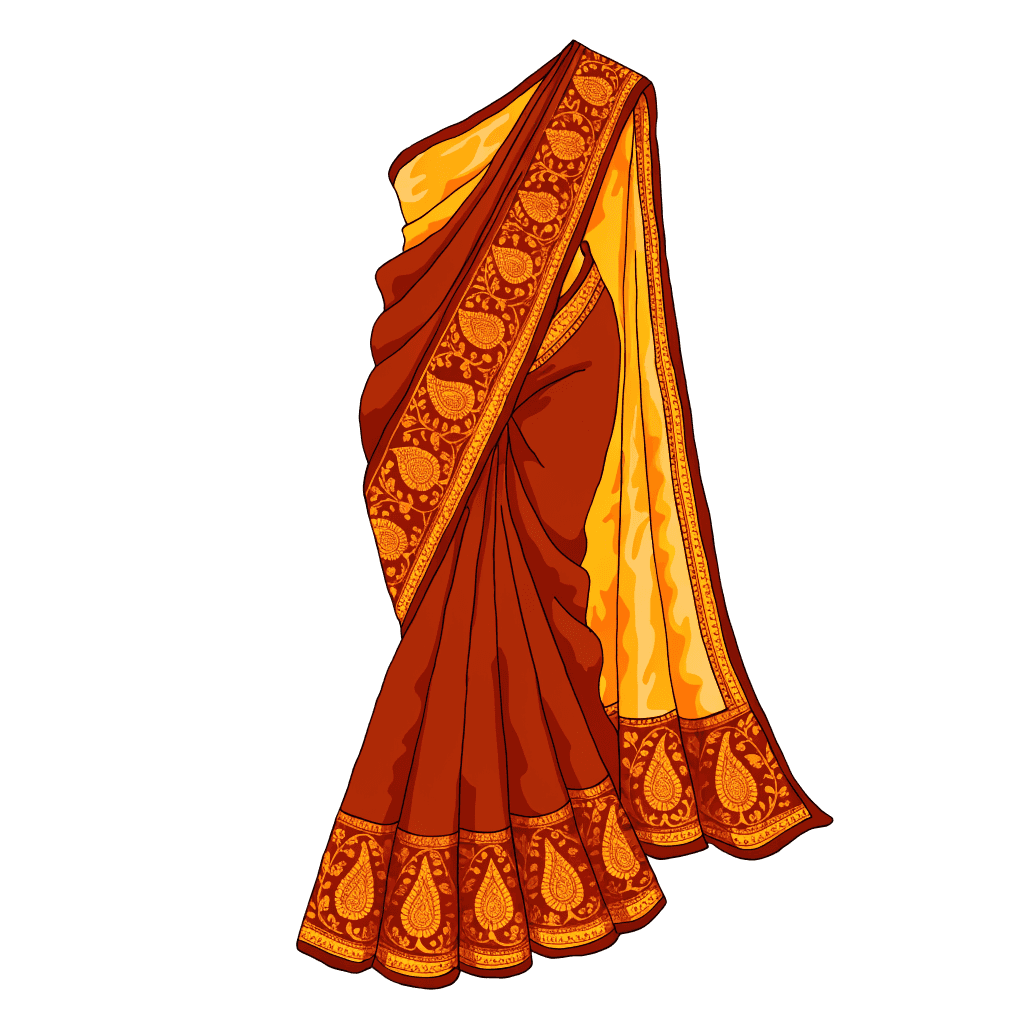
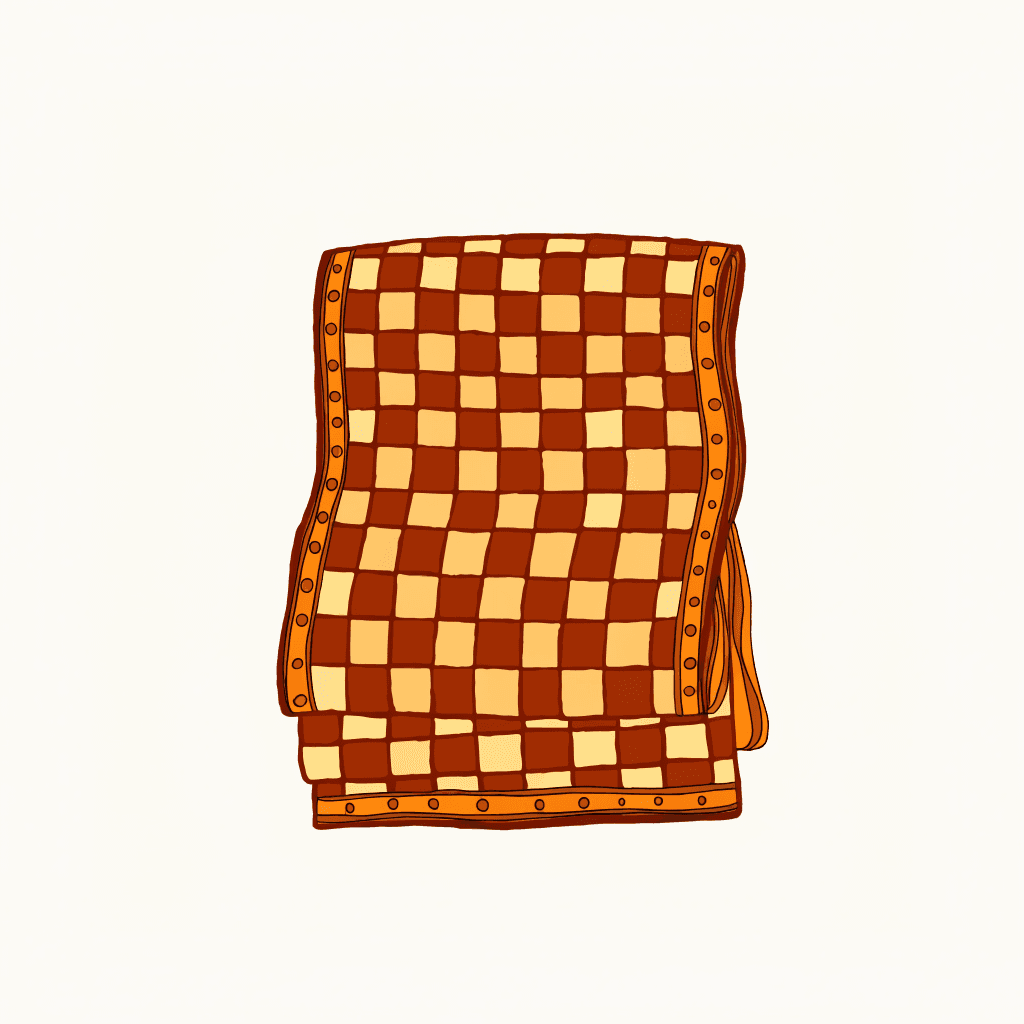
Before Goa meant beaches, there was the Kunbi saree. The Kunbi and Gawda communities are counted among Goa's earliest inhabitants, agrarian people who worked the paddy fields, and their women dressed for that work: a sturdy checked cotton saree, characteristically red with white checks, woven short so it fell above the ankle and tied with a distinctive knot at the shoulder, traditionally worn without a blouse. Nothing about it was decorative accident — the length kept hems out of mud and standing water, the dense weave survived daily labour, and the check pattern could be woven quickly and reliably on simple looms. Colonial centuries and then modern mill cloth pushed the weave to the edge of extinction; by the late twentieth century the saree survived mostly on elderly shoulders and in ritual use. Its revival came when Goan designers — most famously Wendell Rodricks — put the check back on the runway and looms back to work, recasting the Kunbi as a statement of Goan identity rather than a relic. Today it is worn with pride at festivals and weddings, and increasingly as everyday handloom, its red grid instantly recognisable as Goa's own.
How it is made
The Kunbi is a plain-weave cotton saree whose identity lives in the checks: dyed yarn — classically deep madder-family reds — is alternated with undyed white in both warp and weft, so the grid forms in the loom rather than in printing. Weavers use coarse-to-medium cotton counts for a dense, hard-wearing cloth with a matte, breathable hand suited to Goa's humidity. Traditional pieces were shorter than the standard modern saree and finished simply, with narrow borders or none; revival weaves keep the check but extend the length for contemporary draping. There is no zari and no embroidery — the discipline of the grid and the depth of the red are the whole aesthetic.
Buying guide
Handloom Kunbi sarees typically cost between ₹1,500 and ₹12,000 depending on cotton quality and weave density. Check that the pattern is woven, not printed: on true Kunbi cloth the checks read identically on both faces, with yarn-dyed depth at the intersections rather than surface ink. The classic palette is red and white; respectful contemporary variants exist, but wildly off-palette 'Kunbi-style' prints are souvenirs. There is no GI tag yet, so buy from Goan handloom initiatives or weavers with documented provenance.
Care
Wash as you would good handloom cotton: cold water, mild detergent, and the first few washes done separately in case the red releases dye. Line-dry in shade to protect the colour. Starch lightly if you like the traditional crisp fall. Iron on medium-high while damp. The cloth is built for hard use and grows softer, not weaker, with age.
Good questions, honest answers
Why is the Kunbi saree shorter than other sarees?
Because it was working dress. Kunbi women wore it in paddy fields, so the saree was woven and draped to end above the ankle, out of mud and standing water, and knotted firmly at the shoulder so it stayed put through labour. Modern revival weaves often add length for conventional draping while keeping the signature check.
Is the Kunbi saree really older than Portuguese Goa?
Yes — it is generally regarded as Goa's oldest surviving weave, worn by the Kunbi and Gawda communities before Portuguese rule began in the sixteenth century. That pre-colonial pedigree is exactly why its revival carries such weight: it represents a Goan identity older than the colonial image of Goa.
How do I style a Kunbi saree today?
Treat it as a bold graphic cotton. The red-and-white check pairs naturally with plain blouses in white, black or mustard, silver jewellery, and minimal styling that lets the grid speak. Shorter traditional pieces work as everyday drapes; revival lengths handle formal occasions. Many buyers also repurpose worn heirloom pieces as home textiles.
Explore the living traditions
We are onboarding Goa Kunbi Saree artisans. Meanwhile, explore every craft available on VedikCraft today.
Explore all crafts →
At a glance
- Region
- Goa
- Community
- Kunbi community
- Materials
- cotton
- Techniques
- checked handloom weaving
- Typical price band
- ₹1,500 – ₹12,000