Textiles & Handloom
How Bandhani Turns a Thousand Knots into Cloth
Also known as Bandhej, Tie-dye
The story
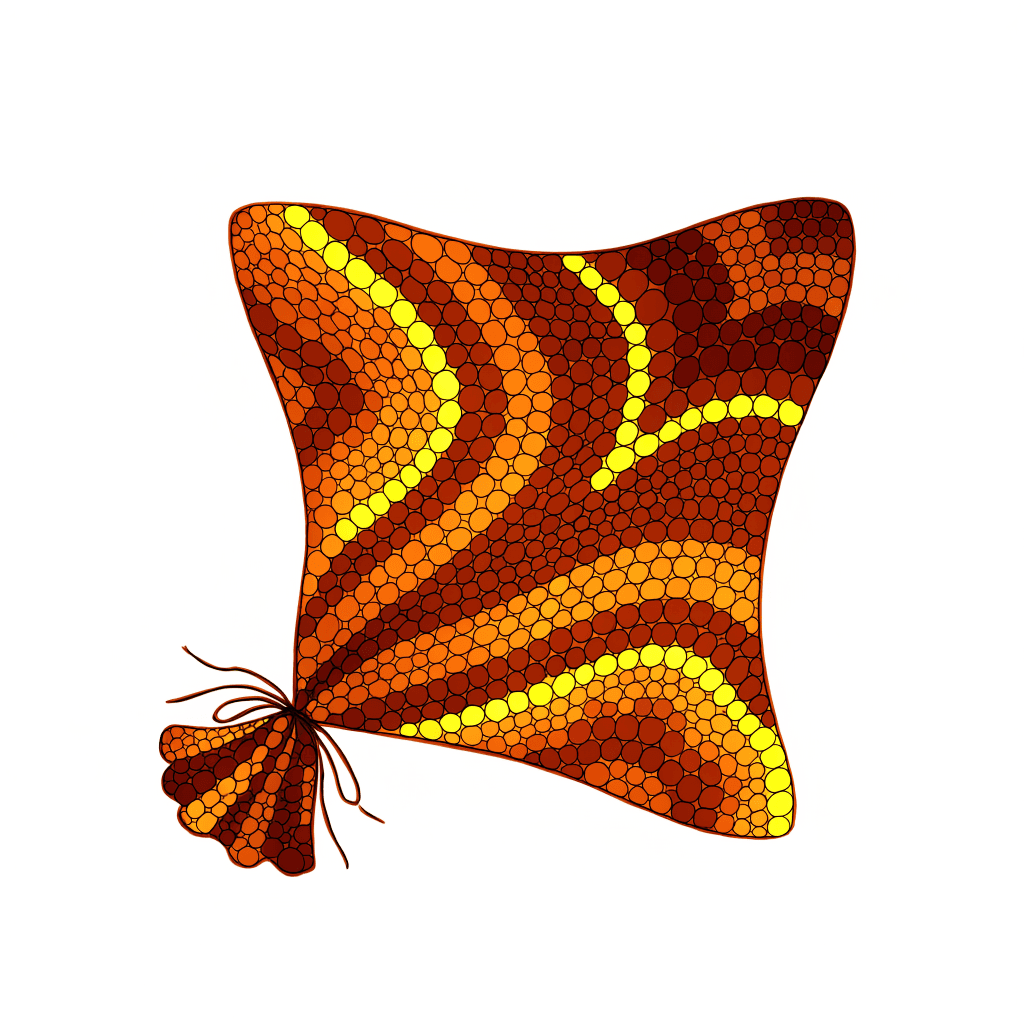
Bandhani may be India's oldest surviving resist technique. Dotted, tie-resisted patterns appear in the ancient wall paintings of Ajanta, and early Sanskrit literature describes cloth patterned by binding before dyeing — evidence of a practice that has run unbroken for well over a millennium. The word comes from bandhan, 'to tie', and tying is the entire craft: thousands of minute points of cloth lifted, often with a grown fingernail or a small metal spike, and bound tightly with thread before the cloth ever meets dye. In Gujarat, the Khatri communities of Kutch and Jamnagar became its masters — Jamnagar's water is famously credited with producing the brightest reds. Rajasthan developed its own bandhej alongside, colouring the turbans and odhnis of the desert with dots, waves and grids. For centuries bandhani has been the cloth of auspicious moments. A Gujarati bride traditionally wears the gharchola, its red-and-gold grid seeded with bandhani dots; specific colours and patterns mark weddings, births and festivals across both states. The finest pieces are still sold with their knots intact, for the buyer to open — proof, dot by dot, that every point was tied by hand.
How it is made
Bandhani begins with fine cotton or silk, folded in layers and marked with the pattern in washable pigment. Then the tying starts: each future dot is a pinch of cloth lifted on a fingernail or a small pointed ring and bound in tight turns of thread. A single dupatta can carry several thousand such knots; the tightness of each one decides how crisply the dot resists the dye. Dyeing runs light to dark — yellows first, then reds, greens or the deep black-maroon of classic pieces — with fresh ties added between immersions to preserve each colour. When the last dye dries, the knots are pulled open and the cloth springs into its characteristic puckered texture, scattered with constellations of dots.
Buying guide
Real bandhani puckers: because every dot was physically tied, the cloth carries a crinkled, three-dimensional texture, and the dots themselves are slightly irregular rings, often with a tiny raised point at the centre. Printed 'bandhani' lies flat with perfectly uniform dots. Unopened knots on a corner are a traditional mark of authenticity. Expect prices from roughly ₹800 for cotton dupattas to ₹60,000 for fine silk gharcholas and densely knotted heirloom sarees.
Care
Dry clean silk bandhani; hand-wash cotton pieces separately in cold water with mild detergent, as deep reds and maroons may release colour at first. Do not wring hard — you will flatten the signature puckered texture. Dry in shade. Iron lightly on low, or not at all if you want to keep the crinkle. Store silk pieces wrapped in muslin.
Good questions, honest answers
How can I tell real bandhani from printed dots?
Feel the cloth. Genuine bandhani is puckered and springy because every dot was physically tied before dyeing, and the dots vary subtly in size and spacing, often with a raised point at the centre. Printed imitations lie perfectly flat and uniform. Traditionally, fine pieces are even sold with some knots still tied, so the buyer opens them and verifies the work.
Why is bandhani considered auspicious?
Across Gujarat and Rajasthan, bandhani has long marked life's high points. Red-and-yellow odhnis are classic bridal wear, the Gujarati gharchola is a wedding essential, and particular colours and dot patterns are associated with births, festivals and specific communities. Gifting bandhani carries blessings with it — the cloth itself is understood as a carrier of good fortune.
How long does a bandhani piece take to make?
It depends entirely on knot count. A simple cotton dupatta with a few hundred ties may be finished in days, while a densely worked silk saree carrying many thousands of knots — tied, dyed, retied and dyed again through several colours — can take weeks to months. Traditionally the tying is done by women working at home and the dyeing by master dyers, so each piece passes through many hands.
Explore the living traditions
We are onboarding Bandhani artisans. Meanwhile, explore every craft available on VedikCraft today.
Explore all crafts →
At a glance
- Regions
- Kutch & Jamnagar, Gujarat · Rajasthan
- Community
- Khatri tie-dyers
- Materials
- cotton, silk
- Techniques
- tie-dye (thousands of tiny knots)
- Typical price band
- ₹800 – ₹60,000