Textiles & Handloom
Lucknow Chikankari — White-on-White Embroidery
The story
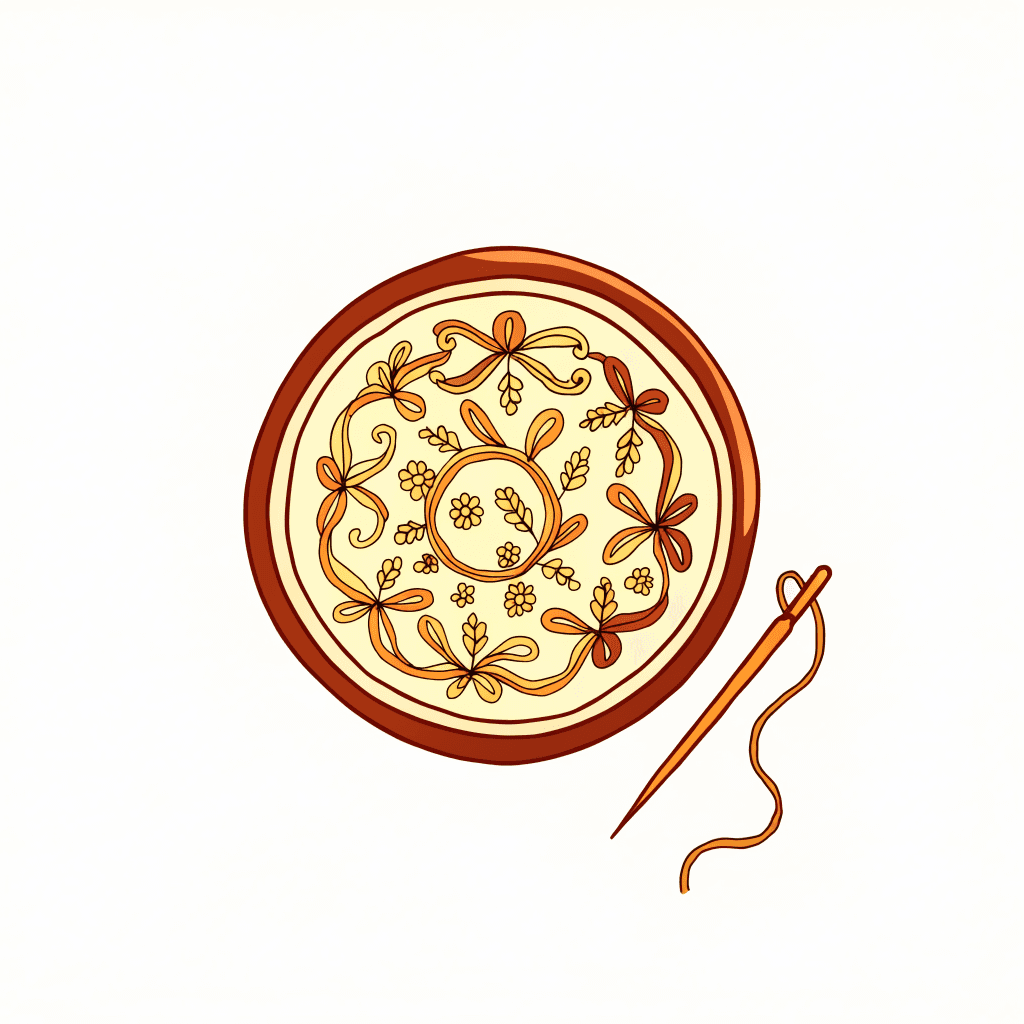
Chikankari is Lucknow's needle art: white thread on white cloth, worked so finely that the pattern reads as texture and shadow rather than decoration. Court tradition credits the Mughal empress Nur Jahan with introducing the craft, and it flowered under the Nawabs of Awadh, whose taste for understatement suited an embroidery that whispers. On fine muslin, the classic white-on-white produced garments of almost aristocratic restraint — cool, weightless, and elaborately worked without a single loud note. The craft's vocabulary is unusually rich: over thirty distinct stitches, each with its own name and job. Tepchi runs in long lines; phanda and murri build tiny grain-like knots; bakhiya — the celebrated shadow work — is stitched on the reverse so a soft herringbone haze glows through the sheer cloth; and jaali creates delicate net-like openwork without cutting a single thread. Generations of artisans, most of them women working from homes in and around Lucknow, have carried the repertoire forward. Today chikankari ranges across kurtas, sarees and yardage in pastels and georgettes as well as the classic whites, and remains one of India's largest living hand-embroidery traditions — protected by a GI as Lucknow Chikan Craft.
How it is made
Chikankari moves through three hands. First the design is block-printed onto the fabric in washable dye, laying a temporary map for the needle. Then the embroidery: artisans work the named stitches — flat tepchi outlines, knotted phanda and murri centres, bakhiya shadow work stitched from the reverse of sheer cloth, and jaali, where warp and weft threads are teased apart with the needle to form fine openwork mesh, never cut. Different specialists often handle different stitches on the same piece. Finally the finished cloth is washed to remove every trace of the printed pattern, leaving only thread on fabric. A simple kurta takes days; a densely worked saree can absorb months of collective needlework.
Buying guide
Study the stitches: hand chikankari shows subtle variation between motifs, tiny knots (phanda, murri) that stand proud of the cloth, and jaali mesh formed by parting threads — not cut or machine-punched holes. Machine embroidery looks flawless, flat and identical motif to motif. Shadow work should glow softly through from the reverse. Prices typically run ₹1,000–₹4,000 for everyday kurtas and climb toward ₹40,000 for finely worked sarees and densely jaali-ed pieces. The GI tag identifies genuine Lucknow work.
Care
Hand-wash gently in cold water with mild detergent and no bleach — harsh whiteners yellow fine cottons over time. Don't wring; press water out in a towel. Dry in shade, iron on the reverse to keep knotted stitches raised, and store cottons dry and breathable. Dry-clean georgette and heavily worked pieces.
Good questions, honest answers
What is shadow work in chikankari?
Bakhiya, chikankari's most famous stitch, is worked on the reverse of sheer fabric in a closed herringbone. From the front you see the motif as a soft shadow glowing through the cloth, outlined by tiny surface stitches. It only works on translucent fabrics — which is why fine muslin and georgette suit chikankari so well.
How can I tell hand chikankari from machine embroidery?
Look for humanity. Hand work varies slightly from motif to motif, its knotted stitches sit raised on the surface, and jaali openwork is made by parting the weave with a needle, leaving no cut edges. Machine versions are flat, perfectly uniform, and often stiff behind the embroidery.
Is chikankari always white on white?
Classically yes — white untwisted cotton thread on white muslin was the courtly ideal. Modern chikankari embraces pastel and jewel-toned fabrics, coloured threads, and additions like mukaish metal-strip work. The stitch vocabulary stays the same; the palette has simply widened with contemporary taste.
Explore the living traditions
We are onboarding Lucknow Chikankari artisans. Meanwhile, explore every craft available on VedikCraft today.
Explore all crafts →
At a glance
- Region
- Lucknow, Uttar Pradesh
- Community
- Lucknow embroiderers
- Materials
- cotton, muslin, georgette
- Techniques
- shadow-work white embroidery, jaali
- Typical price band
- ₹1,000 – ₹40,000