Textiles & Handloom
Pashmina Shawls of Kashmir — The Kani Weave Explained
Also known as Pashmina, Kani
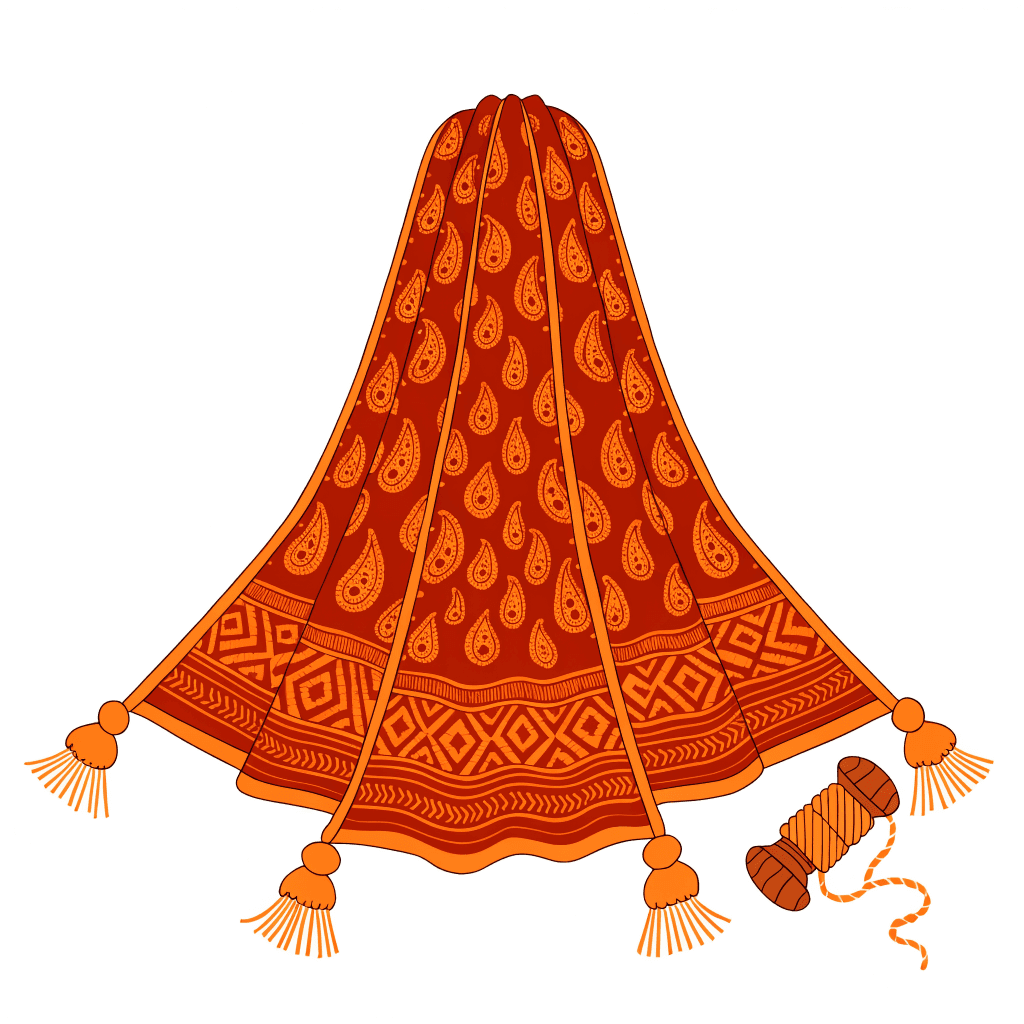
The story
Pashmina begins on the Changthang plateau of Ladakh, where Changthangi goats grow a downy underfleece against winters at 4,000 metres. Combed out each spring, that fleece travels to the Kashmir Valley, where it has been hand-spun and woven for centuries. Tradition credits the fifteenth-century sultan Zain-ul-Abidin with nurturing the valley's shawl industry, and under the Mughals Kashmiri shawls became imperial currency — gifted, hoarded and copied. When they reached Europe in the eighteenth and nineteenth centuries they set off a craze; the Scottish town of Paisley grew famous imitating the Kashmiri buta motif, which is why the world calls it paisley. The Kani shawl is the tradition's summit. Woven in and around the village of Kanihama, it dispenses with the shuttle: patterns are built in twill tapestry using dozens of small wooden bobbins called kanis, following a talim — a coded script that tells the weaver how many warp threads each colour must cover. A fine Kani advances a few centimetres a day and can take months, sometimes years. Alongside it lives sozni, the valley's fine needle embroidery, which covers plain pashmina in painterly detail. Together they make Kashmir's shawls the most storied textiles in India.
How it is made
Authentic pashmina is defined by fibre and hand. The Changthangi underfleece — finer than 16 microns — is too delicate for machines in its purest form, so it is hand-spun on the yinder, Kashmir's spinning wheel, into a soft, faintly uneven yarn, then handwoven into twill cloth of remarkable warmth-to-weight. For a Kani shawl, the weaver works from the talim script, interlocking coloured wefts wound on small kani bobbins to build the motif row by row — tapestry inside a twill. Sozni embroidery takes a different route: a needleworker covers the woven shawl in fine, flat stitches, sometimes so dense the base disappears. Both paths are slow by design; a masterpiece can absorb a year or more of a single artisan's working life.
Buying guide
Genuine pashmina feels weightless, warms within seconds, and looks slightly irregular — hand-spun yarn is never machine-perfect. Ignore the folklore 'ring test'; fine machine-made shawls pass it too. Instead look for the GI label backed by fibre testing, ask whether the yarn is hand-spun, and examine Kani work closely: woven-in colour, not embroidery, with a tapestry-like reverse. Plain stoles start around ₹6,000–₹15,000; sozni-embroidered pieces run well into five figures; museum-grade Kani shawls can reach several lakhs. Never buy shahtoosh — it is illegal.
Care
Dry-clean fine shawls, or hand-wash cautiously in cold water with a drop of mild shampoo, pressing — never wringing — the water out. Dry flat in shade. Store folded in breathable muslin with cedar or dried neem leaves against moths; never hang, and never seal in plastic. Air gently each season.
Good questions, honest answers
Is pashmina the same as cashmere?
Pashmina is cashmere at its finest and most handmade. Both come from goat underfleece, but Kashmir Pashmina under the GI must come from Changthangi goats, measure finer than 16 microns, and be hand-spun and handwoven in Kashmir. Most commercial cashmere is machine-processed from coarser fibre.
What makes a Kani shawl different from an embroidered one?
A Kani's pattern is woven, not stitched. The weaver builds motifs with small wooden bobbins in twill tapestry, following the coded talim script — so the colour is part of the cloth's structure. Sozni shawls are woven plain and then embroidered by needle. Both are prized; Kani is the rarer, slower art.
Why do pashmina prices vary so wildly?
Because labour varies wildly. A plain handwoven stole takes days; a densely embroidered sozni shawl takes months; a full Kani masterpiece can take a year or more of one artisan's time. Fibre grade, hand-spinning and pattern density all compound — with pashmina, price tracks hours honestly.
Explore the living traditions
We are onboarding Kashmir Pashmina & Kani Shawl artisans. Meanwhile, explore every craft available on VedikCraft today.
Explore all crafts →
At a glance
- Region
- Kashmir Valley
- Community
- Kashmiri weavers & embroiderers
- Materials
- pashmina (changthangi goat wool)
- Techniques
- hand-spinning, kani twill-tapestry, sozni embroidery
- Typical price band
- ₹6,000 – ₹8,00,000