Pottery & Ceramics
Larnai Black Pottery from Meghalaya's Jaintia Hills
The story
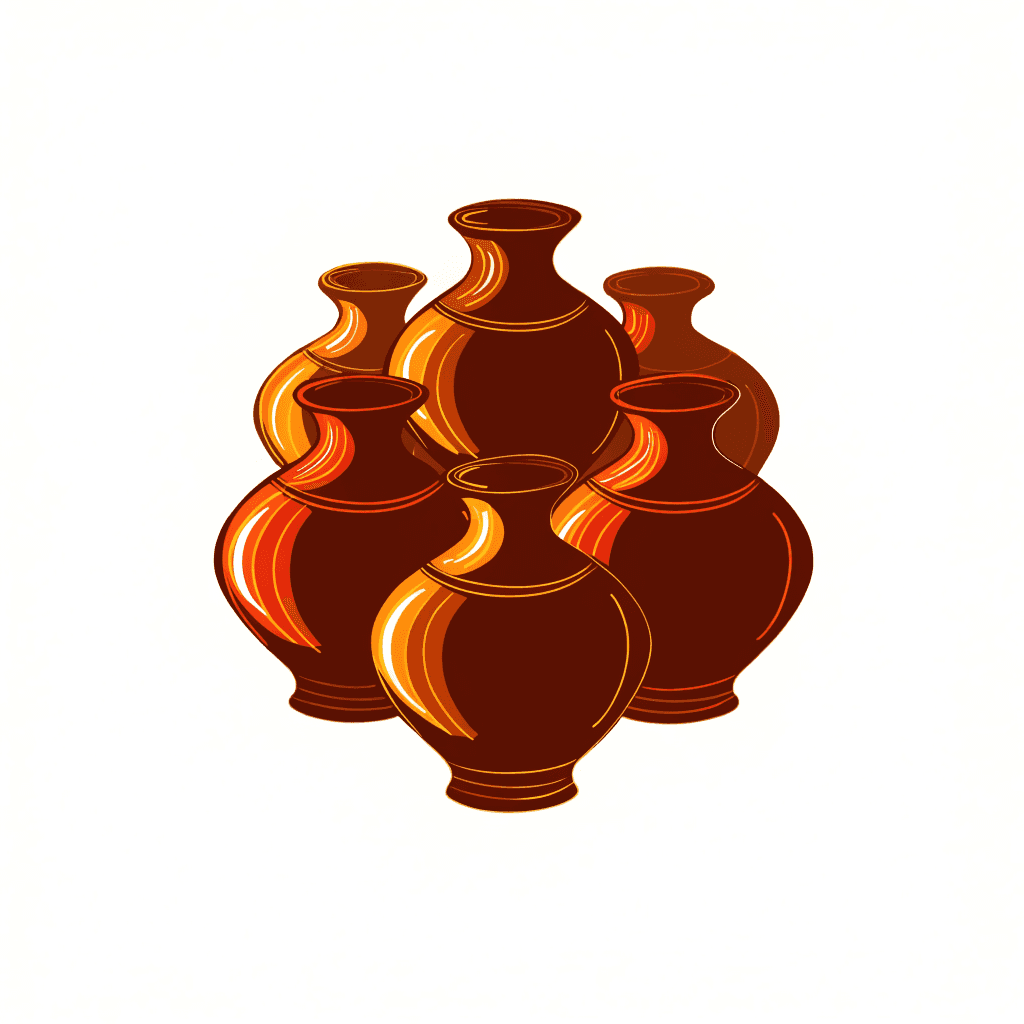
High in the Jaintia Hills of Meghalaya, the village of Larnai makes a pottery unlike anything else in India: matte-black vessels built entirely by hand, without a potter's wheel. The makers are Pnar (Jaintia) potters — many of them women — who inherited the craft through families rather than workshops. The colour is no glaze or paint but the clay itself: local sticky clay is blended with crushed serpentine stone gathered nearby, and the mineral-rich body fires to a deep, soft black in the open flame. For generations these pots have been the working vessels of Jaintia kitchens — cooking rice, brewing, serving — and they still appear in local rituals and festivals, tying the ware to the ceremonial life of the hills. Each pot carries the marks of its making: walls raised by hand, shaped with a wooden paddle against a smooth river stone, no two exactly alike. As metal and plastic displaced everyday earthenware, Larnai's potters kept firing, and their black ware has lately drawn new attention from cooks and collectors taken by its quiet finish and food-first purpose. It remains a village craft in the truest sense — local clay, local stone, open fire.
How it is made
Larnai potters begin with two ingredients: a sticky local clay and serpentine stone, crushed and kneaded into the clay to strengthen the body and give the fired ware its black tone. There is no wheel. The potter raises each vessel by hand, pinching and coiling the walls upward, then refines the form by beating the outside with a wooden paddle while holding a smooth river stone against the inside — an ancient technique that compacts the clay and evens the walls. After slow drying, the pots are fired in the open on a wood fire rather than in a kiln, emerging with the deep matte black surface that defines the ware. The whole process uses no glaze, no paint and no machinery.
Buying guide
Look for the signs of hand-building: gently uneven walls, subtle paddle facets, and a matte black surface that comes from the clay itself rather than paint or glaze. These are working pots as much as decor, traditionally used for cooking. Prices typically run ₹400–₹6,000, from small bowls to large cooking and storage vessels. Buy from sellers who name the village; Larnai is the craft's only home.
Care
If you cook in Larnai ware, season it first as the seller advises, heat it gradually, and avoid sudden shocks like cold water into a hot pot. Wash by hand with mild soap — no dishwasher — and dry completely before storing. For display pieces, an occasional wipe with a dry or barely damp cloth keeps the black surface at its best.
Good questions, honest answers
Can I actually cook in Larnai black pottery?
Yes — that is its original job. Jaintia households have cooked and served in these pots for generations, and the dense serpentine-clay body handles flame well when heated gradually. Season a new pot before first use, avoid thermal shock, and it will develop character with every meal.
Why is the pottery black?
The colour comes from the material and the fire, not from any coating. Crushed serpentine stone is kneaded into the local clay, and open firing on a wood flame turns the mineral-rich body a deep matte black. Because the colour runs through the pot, it will not chip or peel like a glaze.
What does 'no wheel' mean for the pots?
Every vessel is raised entirely by hand — coiled, pinched and then beaten into shape with a wooden paddle against a river stone. Wheel-thrown pots are perfectly symmetrical; Larnai pots are gently, honestly irregular. That slight unevenness is not a flaw but the proof of the technique.
Explore the living traditions
We are onboarding Larnai Black Pottery artisans. Meanwhile, explore every craft available on VedikCraft today.
Explore all crafts →
At a glance
- Region
- Larnai, Jaintia Hills, Meghalaya
- Community
- Jaintia (Pnar) potters
- Materials
- serpentine clay
- Techniques
- hand-building (no wheel), open firing
- Typical price band
- ₹400 – ₹6,000