Textiles & Handloom
Phulkari: Punjab's Flower Work in Floss Silk
The story
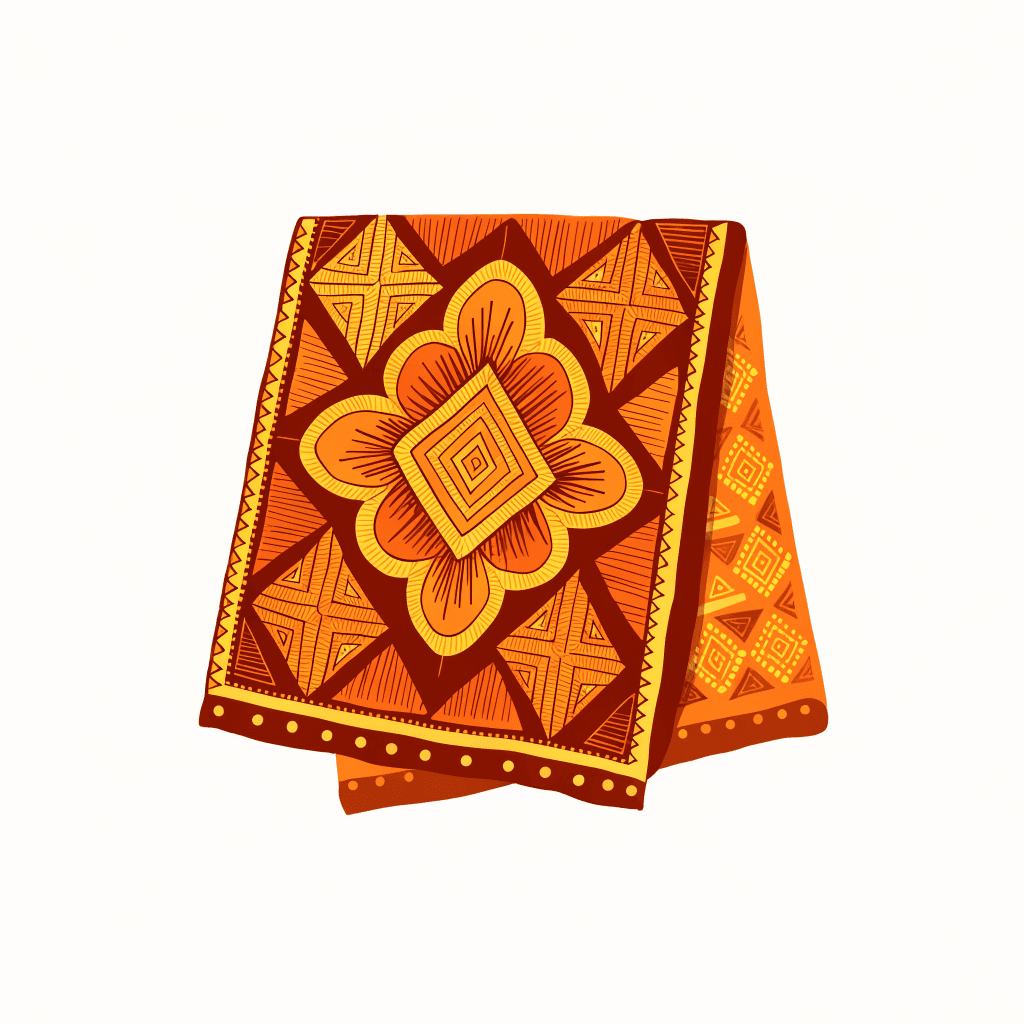
Phulkari — literally 'flower work' — is the domestic embroidery of Punjab, and for most of its history it was never for sale. Women stitched it for the household and the trousseau: a grandmother might begin embroidering when a granddaughter was born, so the girl would marry under a canopy of her family's own handwork. The craft is woven into Punjabi literature — Waris Shah's eighteenth-century telling of Heer-Ranjha mentions it — and into every ritual of rural life, from births to weddings. The technique is the signature. Working from the reverse of coarse hand-spun khaddar, women counted threads and filled the cloth with darning stitch in pat — glossy, untwisted floss silk — so that blooms of colour spread across the front, catching light differently with each change of stitch direction. A piece with scattered motifs is a phulkari; when the embroidery covers the ground entirely, it becomes a bagh — a garden — the most labour-intensive and treasured form. Partition in 1947 scattered communities and dispersed countless heirloom pieces, and the tradition faded from daily life. Revival efforts since have returned phulkari to wardrobes — on dupattas, shawls and stoles — and old baghs now command collector reverence.
How it is made
Classic phulkari starts with khaddar — coarse, hand-spun cotton, most often dyed rust-red — and pat, the untwisted silk floss that gives the embroidery its liquid sheen. The embroiderer works from the back of the cloth in long darning stitches, counting warp and weft threads rather than following a drawn design, so the pattern emerges on the front as she goes. Direction is everything: by angling blocks of stitches horizontally, vertically and diagonally, a single golden thread reads as several shades, and the surface shimmers as it moves. Motifs range from stylised flowers and wheat stalks to, in narrative sainchi pieces, whole village scenes. A full bagh, covering every inch of ground, represents months — often years — of leisure-hour stitching.
Buying guide
Turn the piece over: hand phulkari shows disciplined rows of darning stitch on the reverse, because that's the side it was worked from; machine embroidery shows dense, uniform stitching and often a stiff backing. Real pat floss has a soft, deep sheen that shifts with the light, unlike flat synthetic thread. Prices typically run ₹1,200–₹5,000 for contemporary hand-embroidered dupattas, rising toward ₹60,000 for densely covered bagh-style work; genuine old baghs are collector territory.
Care
Floss silk snags easily, so dry-cleaning is safest for dense pieces. If hand-washing lighter work, use cold water and mild detergent, keep it brief, and never rub the embroidered surface. Dry flat in shade, iron on the reverse over a soft cloth, and store folded in muslin away from rough fabrics and zips.
Good questions, honest answers
What is the difference between phulkari and bagh?
Coverage. In a phulkari, embroidered motifs are scattered across the cloth and the base fabric shows between them. In a bagh — literally 'garden' — the floss silk covers the ground completely, so no khaddar is visible at all. Baghs took years of stitching and were reserved for weddings and the most important occasions.
Why is phulkari embroidered from the reverse?
It's a counted-thread technique: working from the back lets the embroiderer count warp and weft threads precisely and keep the long darning stitches even, without a drawn pattern. The reward appears on the front — unbroken fields of floss whose sheen shifts with every change in stitch direction.
Is the thread real silk?
Traditionally yes — pat, an untwisted silk floss whose loose fibres give phulkari its famous glow. Contemporary pieces may use silk, cotton or synthetic threads at different price points. Ask what the floss is; genuine silk pat has a depth and softness of shine that synthetics don't quite match.
Explore the living traditions
We are onboarding Phulkari artisans. Meanwhile, explore every craft available on VedikCraft today.
Explore all crafts →
At a glance
- Region
- Punjab
- Community
- Punjabi women
- Materials
- khadi-cotton, silk-floss (pat)
- Techniques
- darning-stitch embroidery (from the reverse)
- Typical price band
- ₹1,200 – ₹60,000