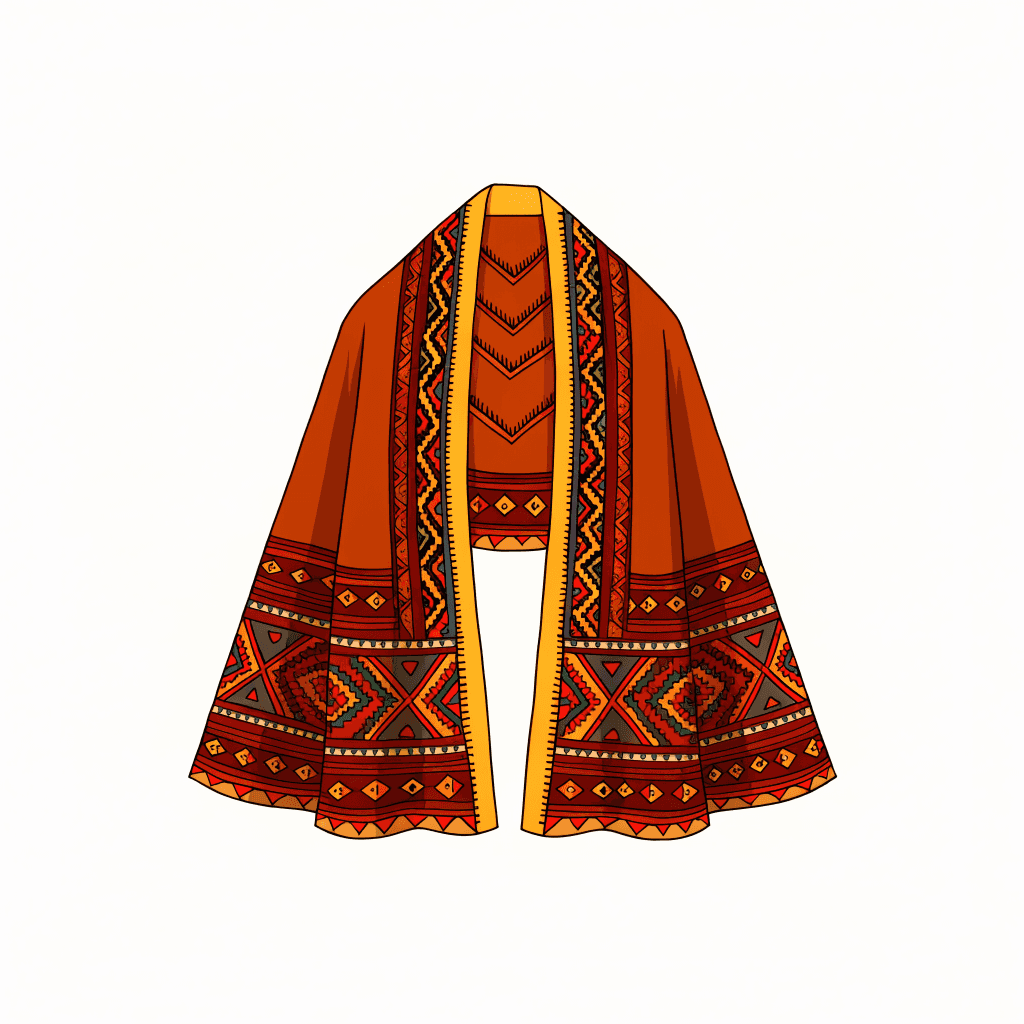
The Kinnauri shawl carries bands of intricate geometric and Buddhist-influenced patterns woven into its borders, each colour and symbol carrying meaning in the high Himalayan valleys of Kinnaur.
- Region of origin:
- Himachal Pradesh
- GI registration:
- Kinnauri Shawl
- Materials:
- wool; pashmina; yak-wool
- Techniques:
- geometric tapestry border weaving
- HS code (customs):
- 6214
Products
The first Kinnauri Shawl pieces are on their way
We onboard artisans craft by craft so every piece stays genuinely handmade and one of a kind.
Do you make Kinnauri Shawl? Sell on VedikCraft →
About Kinnauri Shawl
The Kinnauri shawl carries bands of intricate geometric and Buddhist-influenced patterns woven into its borders, each colour and symbol carrying meaning in the high Himalayan valleys of Kinnaur.
- Region of origin
- Himachal Pradesh
- GI registration
- Kinnauri Shawl
- Materials
- wool; pashmina; yak-wool
- Techniques
- geometric tapestry border weaving
- HS code (customs)
- 6214
How it’s made
The makers
Crafted by Kinnauri weavers of Himachal Pradesh.
Why “GI-tagged” matters
Kinnauri Shawl is registered under India’s Geographical Indication (GI) Act as “Kinnauri Shawl”. A GI tag legally certifies that a piece genuinely originates from its traditional region and is made by its rightful artisan community — your guarantee of authenticity.
Buying Kinnauri Shawl — questions, answered
- Are VedikCraft's Kinnauri Shawl pieces hand-painted or prints?
- Every Kinnauri Shawl piece is genuinely handmade by a named artisan — one of a kind, never a print or machine copy.
- Is this Kinnauri Shawl authentic and GI-certified?
- Yes. Kinnauri Shawl is a GI-protected craft (registered as “Kinnauri Shawl”). Every order ships with a signed Certificate of Authenticity and a QR code to verify its maker, region and GI status.
- What does an authentic Kinnauri Shawl piece cost?
- Handmade Kinnauri Shawl typically ranges from ₹2,000 to ₹30,000, depending on size, detail and the artisan.
- How do I care for a Kinnauri Shawl piece?
- Keep Kinnauri Shawl out of prolonged direct sunlight and damp, and dust it gently. Because each piece is handmade from natural materials, slight variations are part of its character.
GI-certified authenticity
Rooted in India’s registered craft traditions
Artisan-direct
Made by the makers — fair, direct earnings
Traceable provenance
Every piece carries its maker, region & origin