Stone Craft
Agra Marble Inlay: Pietra Dura of the Taj City
Also known as Parchin Kari
The story
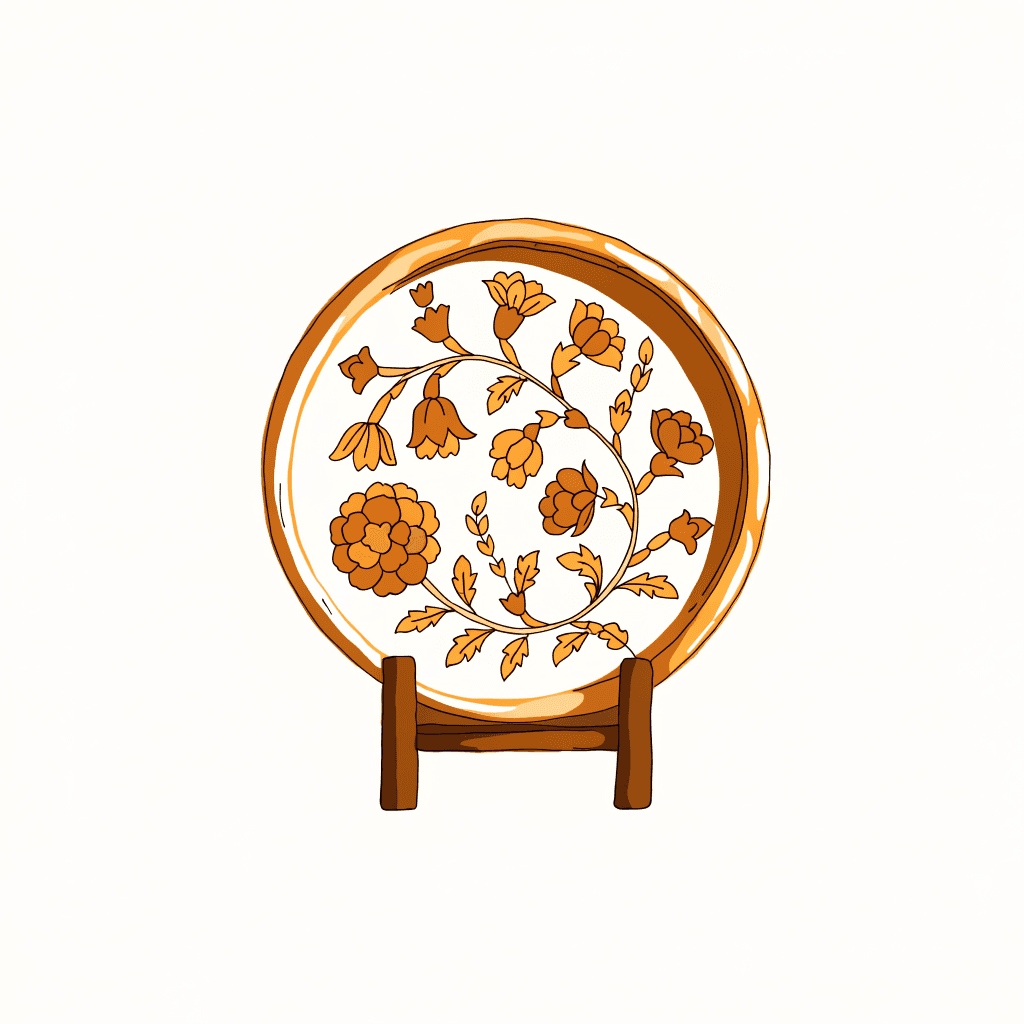
When Shah Jahan's builders raised the Taj Mahal in the seventeenth century, its white marble was made to bloom: lilies, poppies and vines of carnelian, jasper and lapis lazuli set so precisely into the stone that no joint can be felt. That technique — parchin kari, often called by its Italian cousin's name, pietra dura — became Agra's defining craft. When the great imperial commissions ended, the stoneworkers stayed, settling in the lanes around Tajganj, and today's inlay families trace their descent from those Mughal ateliers. The repertoire moved from monuments to objects: tabletops, plates, boxes and wall panels carrying the same floral vocabulary the emperor's designers drew. What has not changed is the discipline. Each flower is still assembled from individually cut slivers of semi-precious stone — carnelian that glows when backlit, malachite banded in green, mother-of-pearl for highlights — chosen so the natural shading of the stone does the work of a painter's brush. A single blossom can hold dozens of pieces. It is slow, exacting, luminous work, and Agra remains the place in India where it is practised at this depth.
How it is made
The artisan begins with a slab of white marble, its surface rubbed with henna so scribed lines show clearly. Brass templates of each petal and leaf are traced on, and the outlines are chiselled into shallow, precise cavities. Meanwhile, slivers of semi-precious stone — carnelian, lapis, malachite, turquoise, mother-of-pearl — are shaped against a grinding wheel, each piece filed until it drops into its cavity with no visible gap. The stones are set with a heated adhesive, then the whole surface is ground flat and polished until marble and inlay read as one unbroken skin. Quality is judged by touch: run a fingertip across a fine Agra tabletop and you should feel nothing — no ridge, no seam, only cool stone.
Buying guide
Genuine pieces are true marble: cool to the touch, heavy for their size, with faint natural veining. Hold carnelian sections to the light — real stone glows softly; painted or resin work stays flat. Run a fingernail across the inlay: it should be perfectly flush, with no adhesive halo around the stones. Small plates and boxes typically start around ₹800–₹2,500; serious tabletops climb from ₹20,000 into the lakhs, with large, dense-inlay commissions reaching ₹3,00,000. Cheap 'marble' souvenirs are usually soapstone — softer, warmer, easily scratched.
Care
Marble is durable but chemically delicate. Keep acids away — lemon, vinegar, wine and harsh cleaners etch the polish — and use coasters on inlaid tabletops. Clean with a soft cloth wrung out in plain water or a mild soap solution, then buff dry. Avoid dragging objects across the surface, and lift pieces rather than sliding them. Indoors, away from constant direct sun, an inlaid piece will outlast its owner.
Good questions, honest answers
Is this the same craft used on the Taj Mahal?
Yes. The floral inlays on the Taj Mahal were made with the same parchin kari technique — cavities chiselled into marble, filled flush with shaped semi-precious stones. Agra's inlay families trace their descent from the Mughal-era stoneworkers, and the motifs on a fine tabletop today are drawn from the same vocabulary of lilies, poppies and scrolling vines.
Are the stones in genuine Agra inlay real?
In authentic work, yes: carnelian, lapis lazuli, malachite, turquoise, jasper and mother-of-pearl, each sliver cut and ground by hand. A quick test is to hold the piece to a bright light — real carnelian transmits a warm glow, while painted or resin 'inlay' stays opaque. Flush joints you cannot feel with a fingernail are the other signature of the real thing.
Can I use a marble inlay tabletop every day?
Yes, with sensible habits. Marble handles daily use well but is etched by acids, so keep coasters under drinks, wipe spills of lemon, wine or vinegar immediately, and clean with plain water rather than harsh sprays. Avoid dragging heavy or rough objects across the inlay. Treated this way, a tabletop remains a working heirloom rather than a display piece.
Bring Agra Marble Inlay (Pietra Dura) home
Authentic Agra Marble Inlay (Pietra Dura) pieces, artisan-direct with provenance on every listing.
Shop authentic Agra Marble Inlay →
At a glance
- Region
- Agra, Uttar Pradesh
- Community
- Agra inlay artisans
- Materials
- marble, semi-precious-stones
- Techniques
- pietra dura stone inlay (parchin kari)
- Typical price band
- ₹800 – ₹3,00,000