Stone Craft
Mahabalipuram Stone Sculpture, Carved to Ancient Canon
Also known as Mamallapuram carving
The story
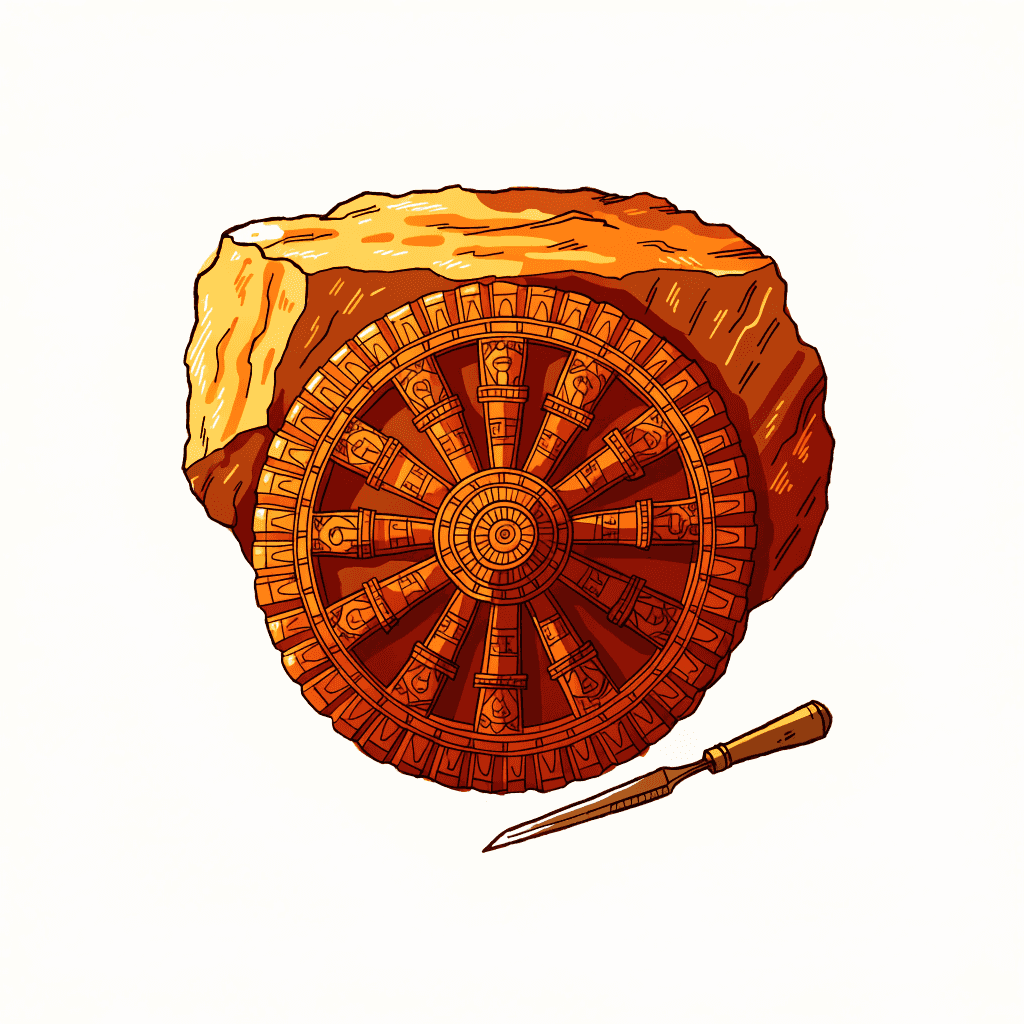
On the Coromandel coast south of Chennai, the town of Mahabalipuram — ancient Mamallapuram — has been a school of stone for some thirteen centuries. Under the Pallava kings in the seventh century, its sculptors cut whole temples from living rock: the Shore Temple facing the sea, the five monolithic rathas, and the vast open-air relief known as Arjuna's Penance. Those monuments now hold UNESCO World Heritage status, but what makes the town remarkable is that the workshop never closed. Along its streets the ring of chisel on granite continues from dawn, as hereditary sthapathis — temple sculptor-architects — carve deities, panels and architectural pieces to the same canon their ancestors used. That canon is the Shilpa Shastra, the classical treatises that fix the proportions, postures and attributes of every sacred image; a Nataraja or a Ganesha from Mamallapuram is not a free composition but a precisely governed one. The town also trains new generations formally, alongside the family workshops. The result is a rare thing: a living, GI-tagged tradition where a buyer can commission work in an unbroken line from the artists of one of India's greatest monuments.
How it is made
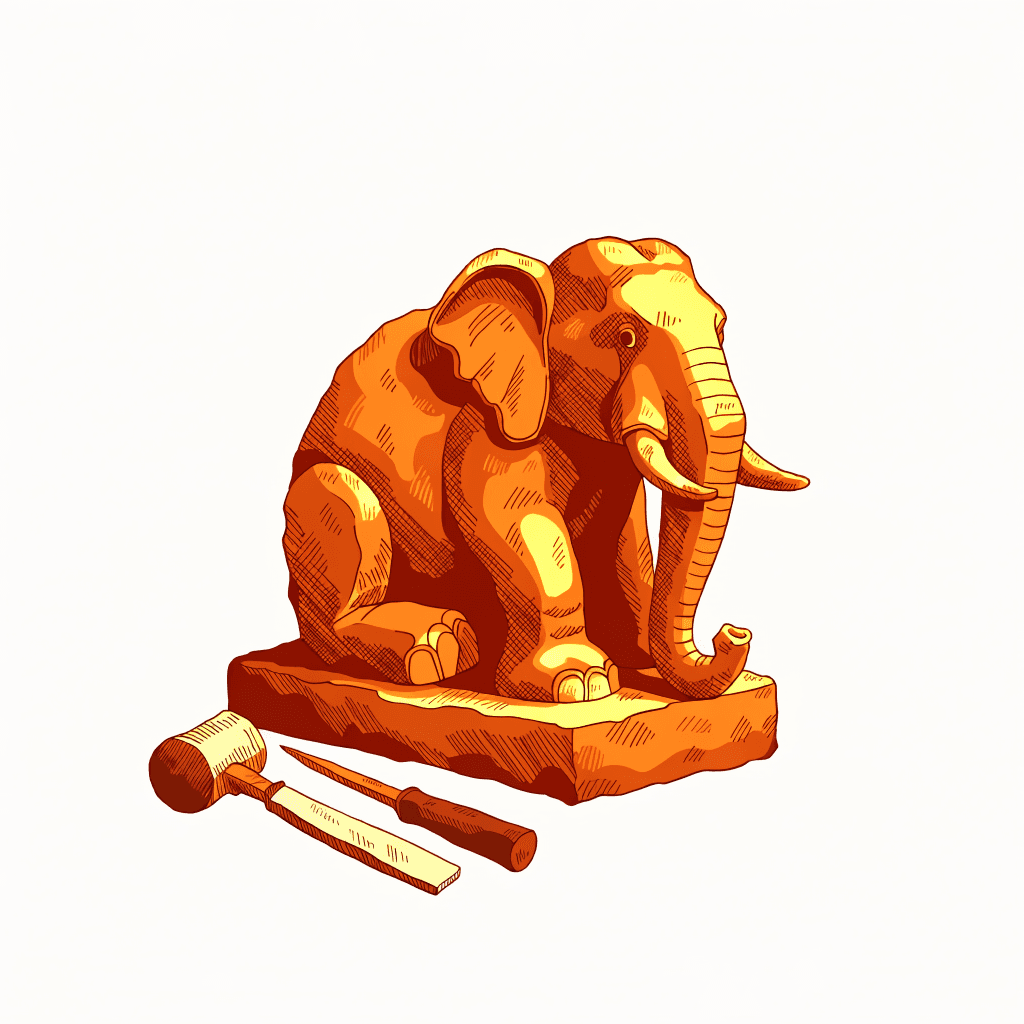
A sthapathi starts by selecting stone — dense granite for durability, softer stone for fine tabletop pieces — testing blocks by striking them and listening for a clear, bell-like ring that signals sound, crack-free rock. The image is laid out with a proportional grid drawn from the Shilpa Shastra, which dictates the ratios of face, torso and limb for each deity. Rough form is opened up with heavy point chisels and hammers; features emerge through progressively finer chisels; final detail — eyes, ornaments, drapery — is cut with tools hardly wider than a pencil line. Granite yields slowly, and a metre-tall idol can occupy a carver for months. Finishing ranges from a matte dressed surface to a hand-rubbed polish, depending on the piece's purpose.
Buying guide
Prices track stone, size and detail: small soft-stone deities begin around ₹2,000–₹5,000, granite figures rise steeply with scale, and temple-grade commissions can run to ₹10,00,000. Look for crisp hand-tooled detail — slight tool-mark variation is a good sign, while glassy uniformity suggests machine finishing. Check iconographic correctness (attributes, posture, base) and ask whether the piece was carved in Mahabalipuram itself. Granite is heavy; factor freight into any large purchase.
Care
Granite asks almost nothing: dust it, wash occasionally with plain water and a soft brush, and it will stand outdoors for generations — as the Shore Temple has, in salt air. Avoid acid or abrasive cleaners, which dull the surface. Softer stone pieces belong indoors, protected from knocks and falls. For polished idols, an occasional buff with a dry cloth keeps the finish alive.
Good questions, honest answers
Should I choose granite or soft-stone?
Granite is the temple-grade material: extremely hard, slow to carve, effectively permanent, and suited to large idols and outdoor placement. Soft-stone pieces cost less, show very fine detail, and suit indoor shelves and pooja rooms, but they chip more easily. If the sculpture will live outside or be handled often, choose granite; for delicate detail at a gentler price, soft-stone serves beautifully.
Can I commission a custom sculpture from Mahabalipuram?
Yes — commissioning is the tradition's normal mode. Workshops regularly carve specific deities, sizes and postures to order, working from the Shilpa Shastra canon that governs proportions and attributes. Large granite commissions take months, so agree on timeline, stone, finish and shipping up front. Temple-scale work is a serious logistics project; established workshops will guide freight and installation.
Are these sculptures suitable for outdoor display?
Granite pieces are, unreservedly — the Pallava monuments at Mahabalipuram have stood in coastal salt air for around thirteen centuries. Rain, sun and temperature swings pose no structural threat; just rinse off grime occasionally with water and a soft brush. Soft-stone sculptures, by contrast, should stay indoors or under cover, protected from impact and constant weathering.
Explore the living traditions
We are onboarding Mahabalipuram Stone Sculpture artisans. Meanwhile, explore every craft available on VedikCraft today.
Explore all crafts →
At a glance
- Region
- Mahabalipuram, Tamil Nadu
- Community
- Sthapathis of Mamallapuram
- Materials
- granite, soft-stone
- Techniques
- temple-grade carving (Shilpa Shastra)
- Typical price band
- ₹2,000 – ₹10,00,000