Textiles & Handloom
Banarasi Silk Sarees — Varanasi's Woven Gold
Also known as Benares brocade
The story
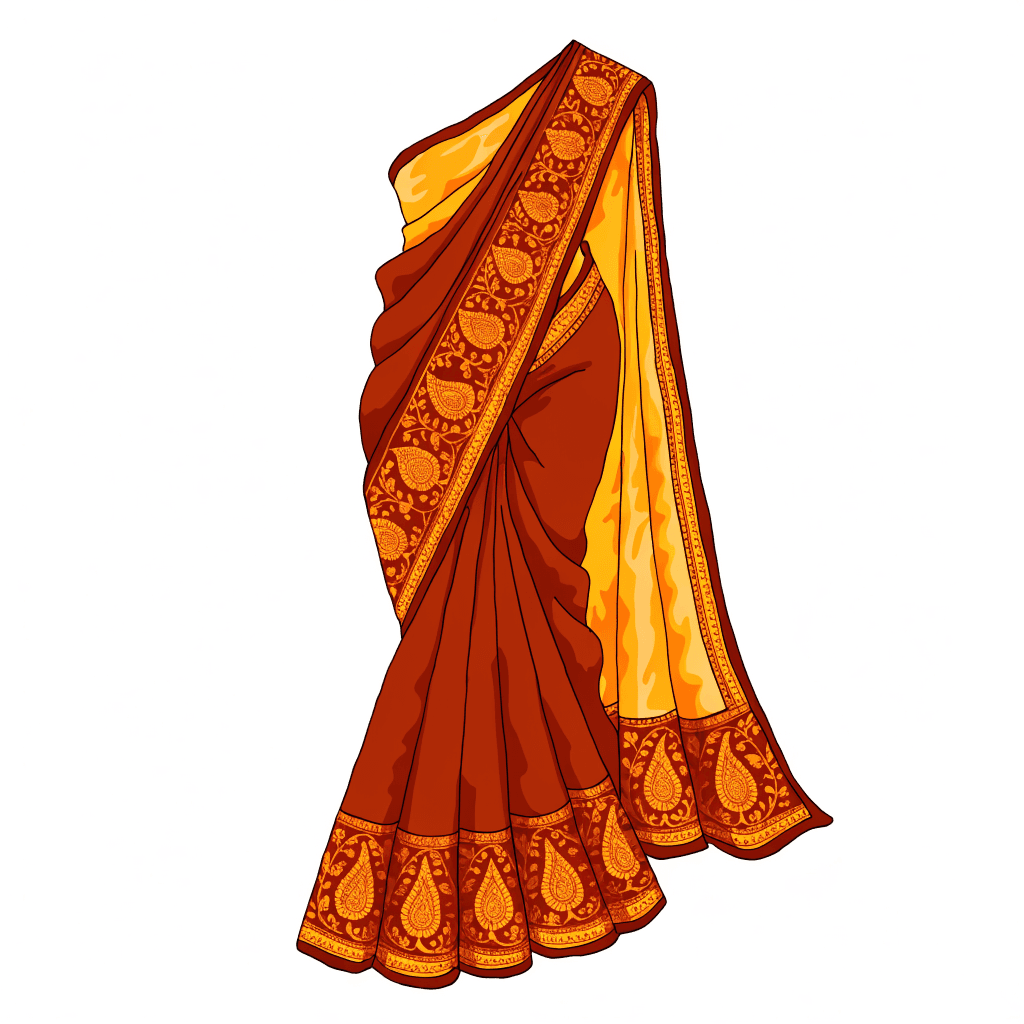
Banaras has been synonymous with fine cloth for as long as travellers have written about the city, and its weaving quarters remain among the most storied in India. The brocade tradition took its classic form in the Mughal era, when Persian floral vocabulary met the Indian drawloom: flowering butis, trailing jangla vines and elaborate borders rendered in silk and gold. The craft lives in the weaving mohallas of Varanasi, sustained largely by Momin Ansari families in whose households loom skills pass through generations, often with several family members working a single sari. The repertoire spans the airy to the opulent — from lightly scattered motifs to jangla saris crawling with vines, to kadhwa brocades in which every motif is woven individually rather than carried across the fabric's back. For much of India, the Banarasi is not one wedding option among many; it is the bridal sari, folded into trousseaus and passed from mothers to daughters. Depending on the density of the brocade, a single sari can take weeks — the grandest, up to a year — on the handloom. The name is protected today by the Banaras Brocades and Sarees Geographical Indication.
How it is made
Every Banarasi begins as a drawing. The design is plotted on graph paper — the naksha — and translated into punched cards for the jacquard mechanism that lifts warp threads in exact sequence. Dyed mulberry silk is wound, warped and mounted on a pit loom, and the pattern grows from supplementary wefts of zari — a silk core wrapped in flattened, gilded silver — and coloured silk. In kadhwa work, the weaver builds each motif individually with small shuttles, leaving no floating threads on the back, which is why kadhwa saris cost more and last longer than cutwork, where floats are woven across and trimmed away. Border, body and pallu are orchestrated as one composition, row by row, thread by thread.
Buying guide
Turn the sari over. Handloom brocade shows small human irregularities, and kadhwa work has a clean back with no cut float threads. Real zari is a silk core wrapped in gilded silver — it has weight and a warm tone, where plastic-film zari looks brassy and feels slick. Look for Silk Mark and GI labels, and be realistic about price: genuine handloom Banarasis typically start around ₹3,000–₹5,000 for lighter pieces and climb past ₹1,00,000 — up to ₹3,00,000 — for dense kadhwa heirlooms.
Care
Dry-clean only, and rarely. Between wearings, wrap the sari in unbleached muslin — never plastic — and store it flat, refolding along different lines every few months so the zari does not crack at the creases. Keep perfume and deodorant off the fabric, air the sari in shade once or twice a year, and store away from damp.
Good questions, honest answers
How do I know a Banarasi sari is genuine handloom?
Inspect the reverse: handloom work shows slight, human irregularities in the weave, and in kadhwa saris the back is clean, with no floating threads cut away. Check for Silk Mark and GI labelling, ask whether the zari is real — silk core, gilded silver — and be wary of prices that seem too good. A dense brocade simply cannot be woven fast enough to sell cheap.
What is kadhwa, and why does it cost more?
Kadhwa is a brocading technique in which every motif is woven individually, as if embroidered on the loom, instead of carrying the pattern thread across the width and cutting away the excess. It is far slower, but the result has no floats to snag, a neat reverse, and greater durability — which is why kadhwa saris command a premium and make the best heirlooms.
What exactly is real zari?
Traditional zari is a fine silk core wound with flattened silver wire that is then gilded, giving gold work with genuine metal content, real weight and a tone that mellows beautifully with age. Modern metallic-film zari substitutes coated plastic or copper — lighter, shinier and cheaper. Real zari is a large part of a Banarasi's cost, so always ask which the sari carries.
What is the price of an authentic Banarasi silk saree?
An authentic handloom Banarasi silk saree typically costs ₹3,000–₹3,00,000, depending on the silk, the zari used and the intricacy of the weave. The craft is GI-protected as 'Banaras Brocades and Sarees' and woven in Varanasi, Uttar Pradesh.
Bring Banarasi Silk home
Authentic Banarasi Silk pieces, artisan-direct with provenance on every listing.
Shop authentic Banarasi Silk →
At a glance
- Region
- Varanasi, Uttar Pradesh
- Community
- Varanasi weavers
- Materials
- silk, zari (gold/silver thread)
- Techniques
- brocade weaving, kadhwa, jangla
- Typical price band
- ₹3,000 – ₹3,00,000