Cane, Bamboo & Basketry
Japi to Sorai: Assam's Cane and Bamboo Craft
Also known as Jaapi, Sorai
The story
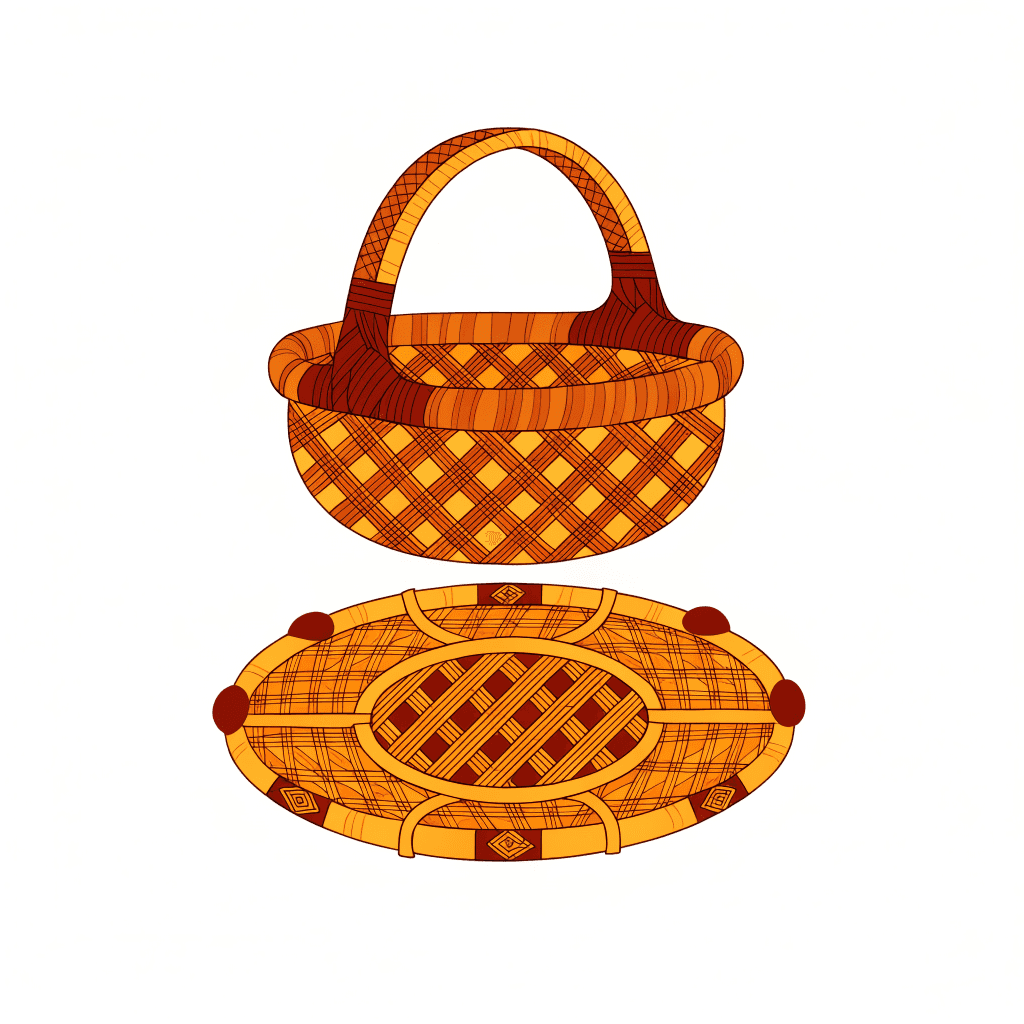
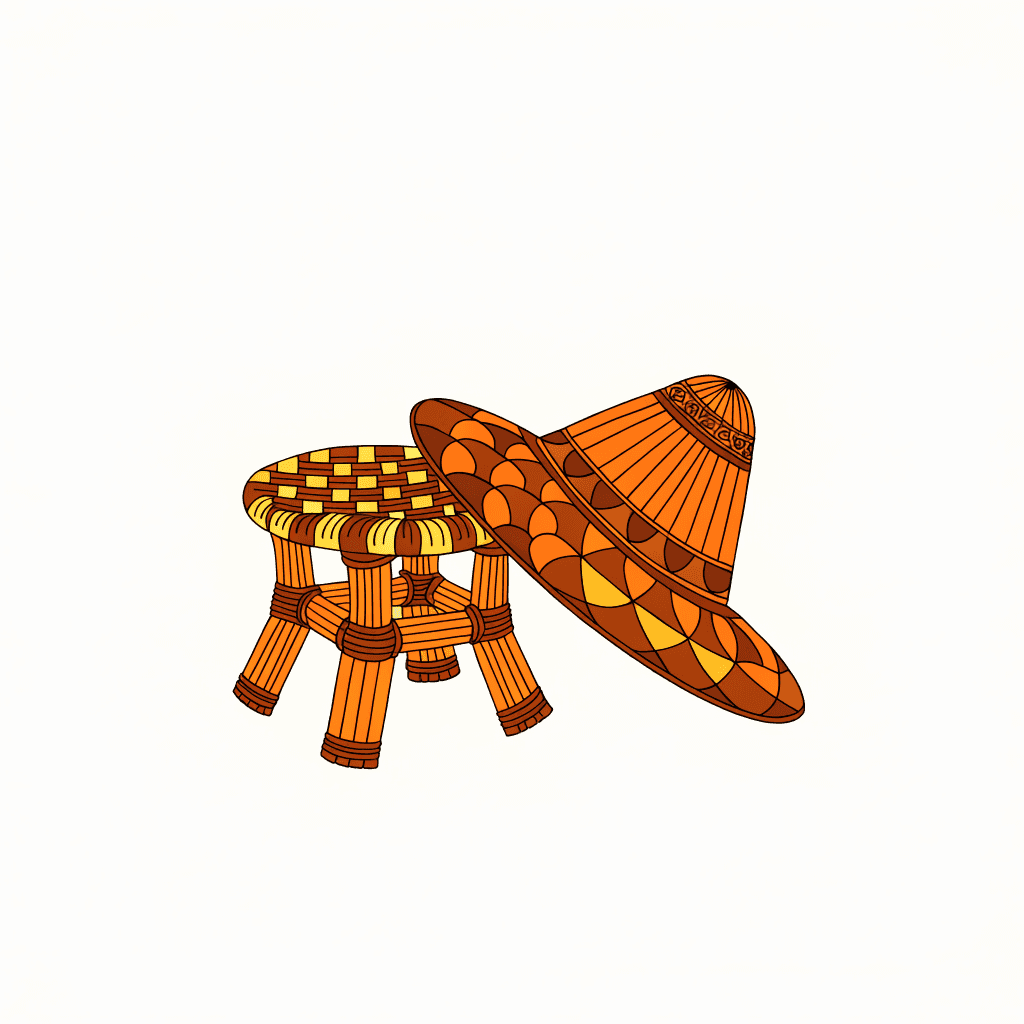
In Assam, bamboo is less a material than a habitat. Houses are framed with it, fish are trapped in woven jakoi and khaloi baskets, bridges and fences and cradles all begin as green culms cut from village groves. Out of this everyday fluency come the state's two most iconic crafted objects. The first is the japi, the conical sunhat that shades farmers in paddy fields; its decorated cousin, the phulam japi, bright with cloth and pattern, is hung on walls, danced with at Bihu and presented to honoured guests as Assam's signature gesture of welcome. The second is the sorai, the pedestal offering tray on which tamul-paan — areca nut and betel leaf — is presented in courtesy and ritual; artisans render its form in finely woven cane as well. Around these icons runs a whole economy of murha stools, trays, baskets and furniture, worked by village weavers across the Brahmaputra valley. The craft's virtues are the plant's own: light, strong, fast-growing and wholly biodegradable — qualities that have carried Assamese basketry from rural necessity to design shelf without changing what it fundamentally is.
How it is made
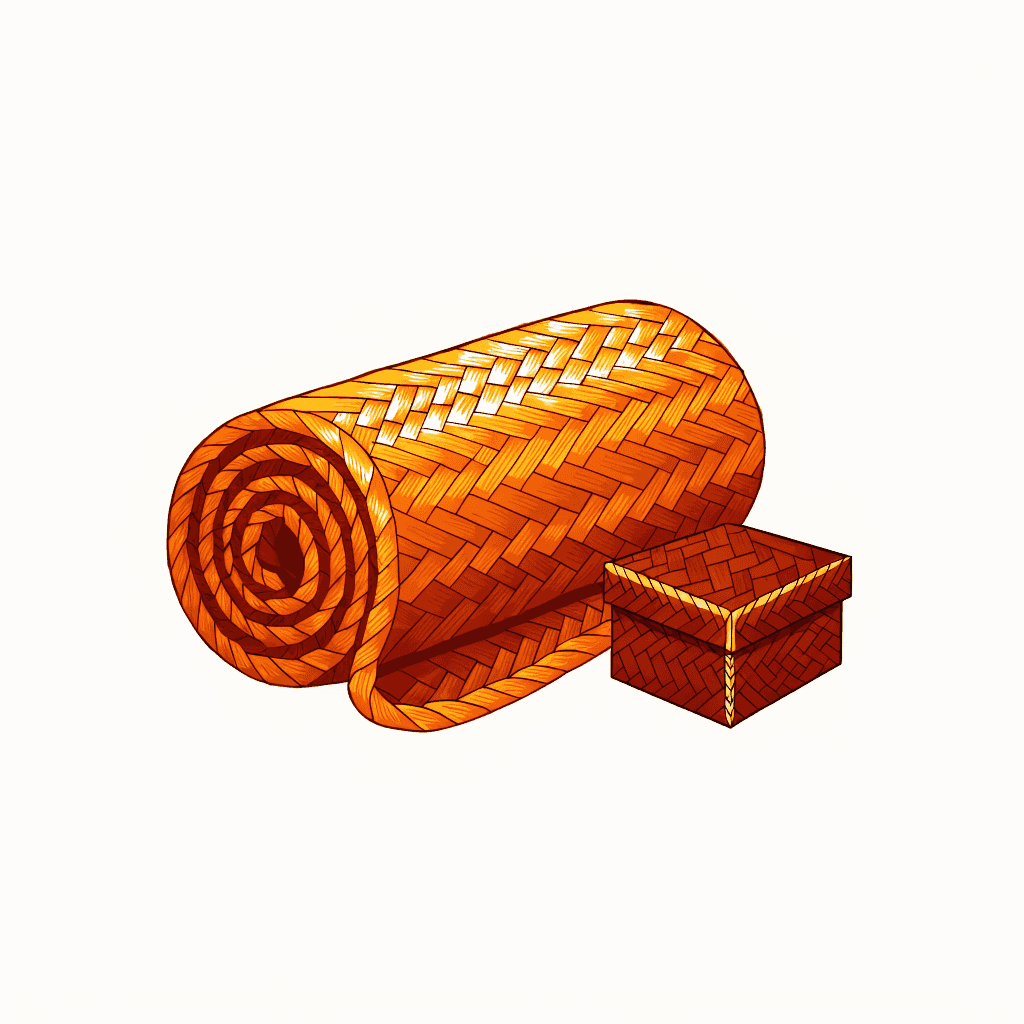
Mature culms are cut, seasoned, and split along the grain with a dao, the heavy Assamese blade — first into strips, then into progressively finer slivers, some supple enough to bend around a fingertip. Weavers work these into open hexagonal weaves, tight twills and coiled forms depending on the object. A japi is built as a wide bamboo lattice frame sandwiching layers of dried palm leaf, bound at the rim and crowned at the peak; decorated versions are then overlaid with coloured cloth and trim. Cane — rattan — supplies the flexible binding and the frames of furniture, wrapped and lashed at every joint without a single nail. Finishing is minimal: trimming, smoking or oiling against insects, and sometimes lacquer for sheen.
Buying guide
Look for tight, even weaving with no gaps or cracked strands, and rims that are firmly bound — the rim is where cheap work fails first. Well-seasoned bamboo has a warm straw colour; greenish tones suggest immature culms that may split as they dry. Ask whether the piece has been treated against borers. Small baskets, trays and decorative japis typically run ₹300–₹1,500; murha stools and mid-size pieces sit in the low thousands; substantial cane furniture reaches ₹15,000–₹20,000.
Care
Bamboo and cane want to stay dry and ventilated. Keep pieces off wet floors, out of rain and away from long hours of direct sun, which bleaches and embrittles the fibre. Dust regularly; wipe with a barely damp cloth and dry at once. If the weave loosens in very dry weather, a light misting restores flexibility. Watch for powder trails — the sign of borer beetles — and treat promptly.
Good questions, honest answers
What is a japi actually used for?
The plain japi is working headgear — a wide conical bamboo-and-leaf hat that shields farmers from sun and rain in the paddy fields. The decorated phulam japi is ceremonial: it is presented to honour guests, danced with during Bihu, and hung on walls as a symbol of Assam itself. Most buyers today use ornamental japis as striking wall decor.
Will cane and bamboo pieces survive humid climates?
Yes — they evolved in one. Assam is among India's most humid regions, and its weaves are built for it. The requirements are airflow and drainage: keep pieces off wet floors, let them dry if they get damp, and air them occasionally. Persistent trapped moisture, not humidity itself, is what invites mould.
Is bamboo craft genuinely eco-friendly?
About as genuinely as craft gets. Bamboo is one of the fastest-growing plants on earth, regenerates from the root after cutting, and needs no replanting or chemical input in village groves. The making uses hand tools and little energy, and at the end of a long life the product simply biodegrades. Cane binding even replaces nails and adhesives.
Explore the living traditions
We are onboarding Assam Cane & Bamboo artisans. Meanwhile, explore every craft available on VedikCraft today.
Explore all crafts →
At a glance
- Region
- Assam
- Community
- Assamese weavers
- Materials
- cane, bamboo
- Techniques
- weaving, splitting & coiling
- Typical price band
- ₹300 – ₹20,000