Kartik Purnima Deep Daan: How to Do It at a Ghat or at Home
Kartik Purnima is Tuesday 24 November 2026. How to do deep daan at a river ghat or at home: how many diyas, which oil, and where each lamp goes.
Kartik Purnima is on Tuesday 24 November 2026, and deep daan is done that evening after sunset. You light an odd number of lamps, place them at the river steps or around the house, and offer one lamp on water. Eleven lamps at home is the common count. A ghat is not required.
What deep daan is and why Kartik Purnima
Deep daan means the offering of a lit lamp. Through the month of Kartik many families light a lamp each evening at the tulsi. The full moon closes the month, and the offering that night is the largest. The same evening is Dev Deepawali, when the ghats of Varanasi are lined with lamps from the top step to the water. Families away from the Ganga belt keep the day at a local river, a temple tank or at home. Customs differ by region and by family, so follow what your elders do where it differs from this page.
When to light: date and evening window
The date is Tuesday 24 November 2026. Lamps are lit after sunset, in pradosh kaal. That window shifts from city to city, so check the panchang for your own city rather than a time copied from another one. Have the lamps filled and the wicks set before sunset so that lighting takes a few minutes.
Deep daan at a ghat, in 6 numbered steps
- Prepare at home. Fill the lamps with oil and set the wicks before you leave. Carry them upright in a tray.
- Reach before sunset. Pick a clean, dry step away from the crowd’s path.
- Greet the river. Offer a few flowers and some akshat at the water’s edge.
- Light the lamps. Light one lamp first, then light the rest from a taper or a long lighter. Set them in a row on the step.
- Offer one lamp on the water. Place a clay or leaf lamp in a leaf bowl and let it go gently. This is the deep daan itself.
- Clear up. Take back your tray, matchbox and wrappers. Leave only the clay lamps where the ghat allows it.
Deep daan at home: tulsi, entrance, water vessel or urli
If there is no river near you, the whole observance fits in a flat.
- Tulsi: one lamp at the plant. If you have no tulsi, use a balcony or window that faces open sky.
- Entrance: one lamp on each side of the main door.
- Mandir: one or two lamps before the deities.
- Water: fill an urli or a wide bowl with clean water, add petals, and float one small lamp in it. This stands in for the lamp offered on the river.
- The rest: the kitchen, the place where drinking water is kept, and the balcony rail.
How many diyas and which oil
| Where | Usual count | Oil |
|---|---|---|
| Home | 11 | Ghee or sesame oil for the mandir and tulsi lamp |
| Ghat or temple | 21 or 51 | Mustard oil is common outdoors |
The count is kept odd by custom. No single number is fixed for everyone. Use cotton wicks and soak them in the oil first so they catch on the first try. Mustard oil holds a flame well in a breeze, which is why it is preferred outside.
Brass or clay diyas, and what to do with them after
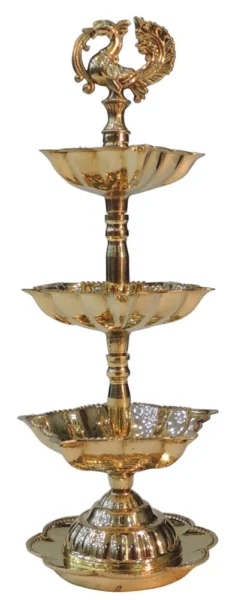
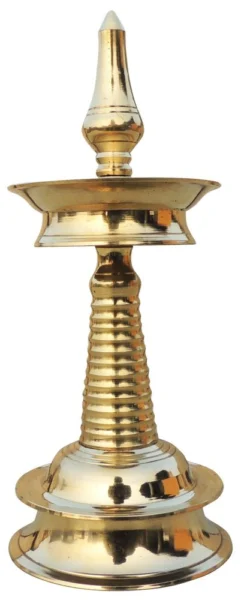
Use both. Clay or leaf lamps go on the water, because they are the only ones that should be left behind. Brass diyas are for the mandir, the tulsi, the doorway and the ghat steps, and they come home with you. A brass diya with a deep cup burns longer between refills, which matters if you want a lamp to last the evening.
Afterwards, let the brass cool, pour out leftover oil, wash the cup in warm water with a drop of dish liquid and dry it fully before storing. Collect spent clay lamps from your own home and reuse them or return them to soil.
The diyas category on Vedikcraft has 447 pieces from ₹90, of which 199 are single diyas from ₹90. See the Dev Deepawali diyas picked for this evening and the deep-cup akhand diyas for a lamp that stays lit. If you want the placement logic room by room, read how many diyas to light on Diwali.