Textiles & Handloom
Bagh Print — The River-Washed Craft of Madhya Pradesh
The story
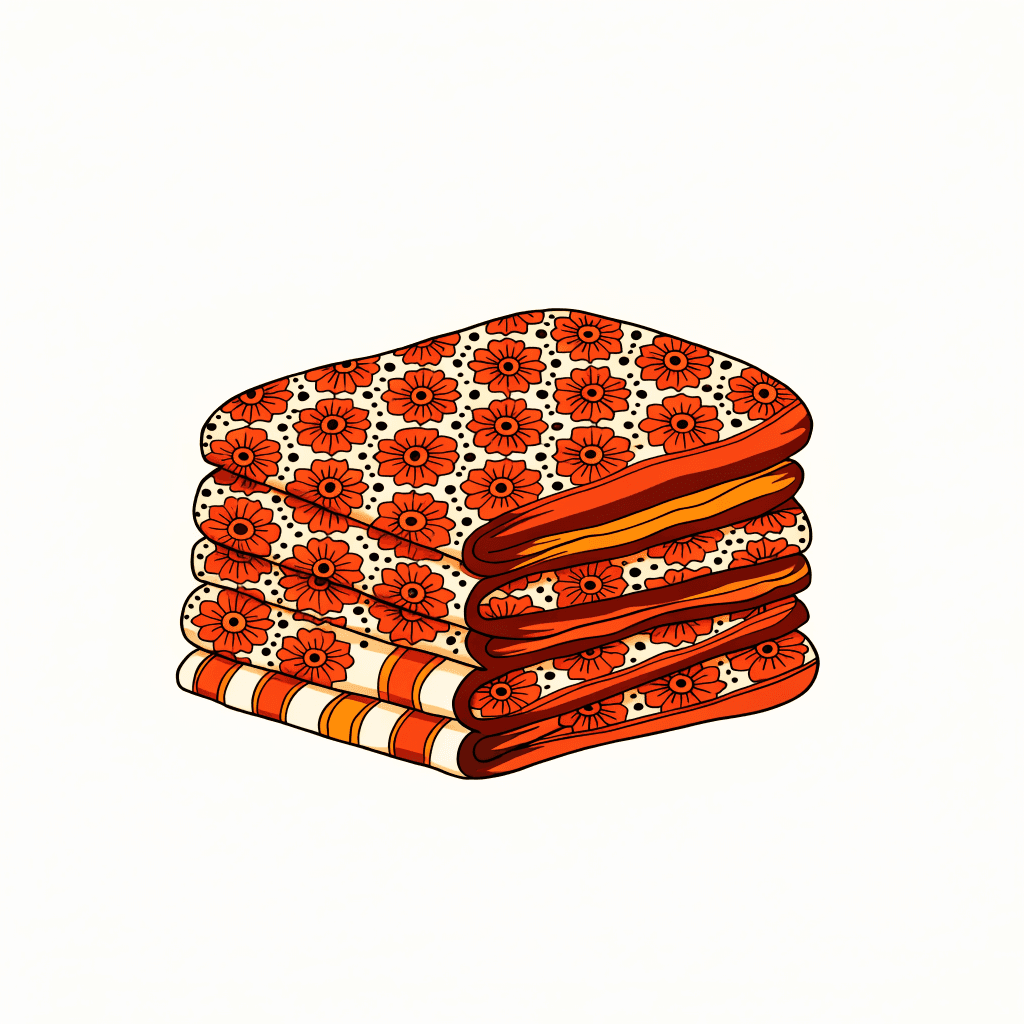
Bagh print takes its name from a small town in Dhar district, Madhya Pradesh, and owes its character to the Baghini river that runs beside it. The Khatri printers who work here trace a long migration — from Sindh through Rajasthan and across Madhya Pradesh — before settling at Bagh, drawn in part by the river itself: its mineral-rich water deepens the alizarin reds and iron blacks that define the craft. The printing tradition it belongs to is ancient. Local printers speak of motifs handed down through a lineage some fifteen centuries deep, and several classic patterns echo the ornament of the region's early monuments and the celebrated ancient cave paintings near Bagh. For generations the cloth was printed for local communities — Bhil and Bhilala women wore Bagh-printed lugdas and odhnis, with specific patterns marking specific occasions. What sets Bagh apart from other Indian block-printing centres is its insistence on the full natural process: vegetable and mineral dyes, long boiling in copper vats, and the final wash in the flowing river, cloth beaten against stones and spread on the banks to bleach in the sun. The result is a red that seems lit from within.
How it is made
Bagh printing begins before any block touches cloth. The cotton is washed in the river, trampled, and treated with a paste that includes myrobalan (harada), giving the fabric its ivory base and preparing it to bond with dye. Printers then stamp the cloth with carved teak blocks — some patterns in use for generations — using two principal pastes: an alum-based mixture that will turn red, and a ferrous solution made from rusted iron that will turn black. The printed cloth rests for days, then is boiled in a copper vat with alizarin and dhavda flowers, where the reds finally bloom. Last comes the river: repeated washing in the flowing Baghini, which fixes the colour, clears excess dye and brightens the ground to a clean white.
Buying guide
Genuine Bagh print carries its palette proudly: alizarin red, iron black and ivory, with colour that has penetrated the cloth rather than sitting on top — check the reverse. Look for the faint texture of hand-stamping, where block edges meet with tiny overlaps or gaps. The fabric should feel washed-soft, not stiff with pigment. Stoles and dress fabric typically start around ₹1,200, with sarees and fine yardage rising toward ₹25,000.
Care
Wash gently in cold water with mild detergent, separately for the first wash or two, since natural dyes may release a trace of colour. Avoid bleach and prolonged soaking. Dry in shade to protect the alizarin red, and iron on the reverse. Bagh-printed cotton grows softer and more comfortable with every wash while the pattern holds fast.
Good questions, honest answers
What makes Bagh print different from Sanganeri or Bagru printing?
The process and the palette. Bagh works almost exclusively in alizarin red and iron black on an ivory ground, fixed by boiling in copper vats and washing in the Baghini river, whose mineral-rich water deepens the colours. Sanganer favours fine multicoloured florals on white; Bagru leans on mud-resist and indigo. All three stamp by hand, but each is unmistakable once you know its colours.
Are Bagh prints really made with natural dyes?
Yes — that is central to the tradition and to the GI. The red comes from an alum mordant developed with alizarin, the black from a fermented rusted-iron solution, and the base is prepared with myrobalan. No screen printing or synthetic pigment is involved in authentic work, which is why colour runs deep through the cloth instead of sitting on the surface.
Why is the river so important to Bagh print?
Washing in the flowing Baghini river is a fixing stage, not just cleaning. The repeated rinsing carries away unbonded dye, the water's mineral content is credited with enriching the reds and blacks, and sun-bleaching on the riverbanks whitens the ground. Printers consider the river's role so essential that the craft is inseparable from its geography.
Explore the living traditions
We are onboarding Bagh Print artisans. Meanwhile, explore every craft available on VedikCraft today.
Explore all crafts →
At a glance
- Region
- Bagh, Dhar, Madhya Pradesh
- Community
- Khatri printers of Bagh
- Materials
- cotton, natural-dye
- Techniques
- hand block resist printing, river-washing
- Typical price band
- ₹1,200 – ₹25,000