How to Clean Brass at Home Before Diwali: Idols, Diyas and Utensils
Lemon and salt, tamarind, Pitambari or vinegar: which one to use on brass idols, diyas, thalis and utensils before Diwali, and what never to do to lacquered brass.
Brass darkens because the copper in it reacts with air, oil and the sulphur in ghee smoke. The tarnish is a thin layer; anything mildly acidic lifts it. The job is choosing the right acid for the piece, and knowing which pieces should not be scrubbed at all. We cast brass in Moradabad and clean thousands of pieces a year. This is how.
First, is it lacquered?
Most brass sold in the last ten years, including everything on this site, is lacquered: a clear coat baked on after polishing so the piece stays bright without cleaning. Lacquered brass looks glassy, water beads on it, and it does not change colour over months. Do not use lemon, tamarind or Pitambari on lacquered brass. The acid clouds the coat. Wipe it with a soft dry cloth, or a damp cloth with a drop of dish liquid, and dry at once.
Raw (unlacquered) brass goes dull in weeks, feels slightly rough, and is what the methods below are for. Old family pieces, temple pieces, most diyas that have been burned, and anything whose lacquer has worn off in patches count as raw.
The four cleaners, and when to use each
| Cleaner | Best for | How | Avoid on |
|---|---|---|---|
| Lemon and salt | Thalis, lotas, glasses, plain idols; light to medium tarnish | Cut a lemon, dip in salt, rub in circles, rinse, dry | Engraved faces (salt scratches), lacquer |
| Tamarind (imli) pulp | Idols with fine engraving, diyas with oil stains, heavy tarnish | Soak imli 20 min, rub pulp on with fingers or a soft cloth, leave 5 min, rinse, dry | Lacquer |
| Pitambari or any brass powder | Fast all-over shine on utensils and plain pieces | Wet, sprinkle, rub with a soft scrubber, rinse well | Lacquer, antique finish, very thin sheet |
| Vinegar, flour and salt paste | Stubborn green spots | Equal parts into a paste, apply 10 min, rub, rinse | Lacquer, engraved detail |
By item
Idols
Lacquered idols: dry cloth only, a soft brush for the crevices. Raw idols: tamarind pulp, worked into the engraving with an old toothbrush, rinsed in a bowl rather than under a tap so small parts are safe, and dried with a hairdryer on low or in the sun for ten minutes. Never use steel wool or a metal scrubber on a face.
Diyas
Oil residue first: soak in hot water with dish liquid for ten minutes, scrub the cup with a soft brush, then lemon and salt for the shine. Mustard oil residue is the hardest; tamarind pulp left for ten minutes dissolves it. Dry the cup fully before storing or the wick will not light next year.
Thalis and lotas
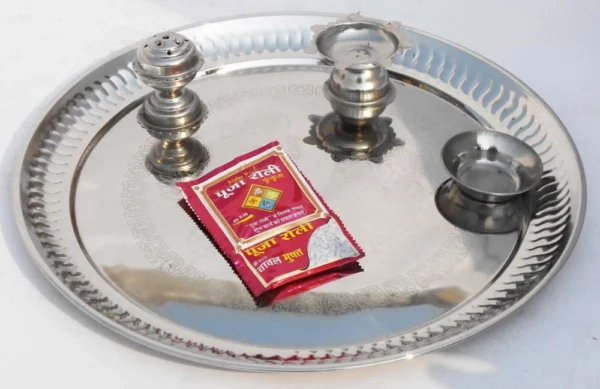
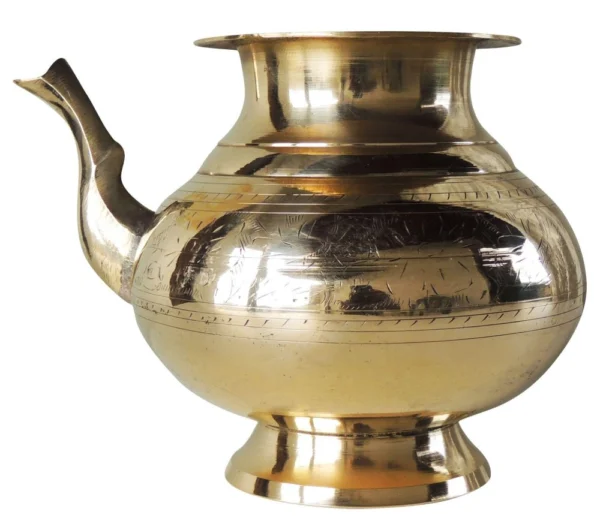
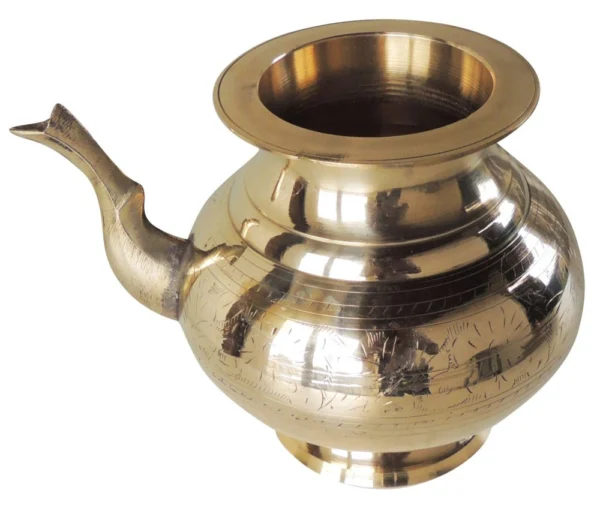
Lemon and salt, or Pitambari. Engraved thalis: tamarind instead of salt so the grooves are not scratched. Rinse, dry, and store in cloth, not in plastic, which traps moisture.
Kadhai and cooking brass
Clean the outside like a thali. The inside should have a kalai (tin lining); if the grey lining has worn through to yellow brass, do not cook acidic food in it until it is re-tinned. Kalai wallahs still work in most towns before Diwali.
Antique-finish pieces
The dark patina is deliberate. Dust it, wipe with a barely damp cloth, and leave it. Any acid strips the finish and it cannot be put back at home.
What not to do
- No bleach, no toilet cleaner, no dishwasher. All three pit brass permanently.
- No steel wool or green scourer on polished or engraved surfaces.
- Do not leave brass soaking in lemon or vinegar for hours. Ten minutes is the limit.
- Do not store brass in plastic bags or near the kitchen smoke. Cloth, a dry shelf.
A timing plan for Diwali
- A week before: utensils and thalis, because they take the longest and dry overnight.
- Three days before: diyas, so they are dry for Dhanteras.
- The day before or Diwali morning: idols, then they are bathed with panchamrit in the puja itself.