Which Oil Is Best for Lighting a Diya? Ghee, Til, Mustard, Coconut
Ghee is traditional for the mandir diya, sesame oil is the common daily oil, mustard suits outdoor diyas. Burn, soot on brass and wick type compared.
Ghee is the traditional choice for the diya in the home mandir, and sesame (til) oil is the most widely used oil where ghee is not. Mustard oil is the usual pick for outdoor diyas in North India, and coconut oil for lamps in Kerala and along the coast. Customs vary by region and family, so follow your own household’s practice and ask your family priest if you are unsure.
The four common choices compared
| Fuel | Where families traditionally use it | Flame and soot | Good to know |
|---|---|---|---|
| Ghee | Mandir diya, aarti, akhand diya in many North Indian homes | Steady, bright flame with little soot | Sets hard in cold weather. Costs the most per diya. |
| Sesame (til) oil | Daily lamp in South Indian homes and temples. Also common across India. | Calm flame, light soot | Stays liquid in winter. A sensible daily oil. |
| Mustard oil | Outdoor diyas on Diwali, doorway and courtyard lamps in the North | Strong flame, more smoke and a sharp smell | Low cost for large counts. Leaves the hardest residue on brass. |
| Coconut oil | Kerala lamps and coastal households | Clean flame, mild smell | Turns solid in a cold room, so warm it first. |
Ghee or oil for the daily diya
Many families keep ghee for the mandir and use oil everywhere else. Others light sesame oil every day and bring out ghee only on festivals. Both are common practice. The practical difference is cost and weather. Ghee burns with a clean flame but goes solid in winter, and then the wick starves. Push a little ghee up around the wick, or melt it before pouring.
For a single small diya lit morning and evening, either works well. Use a diya with a deep cup, so you are not refilling it mid prayer.
What to use for an akhand diya
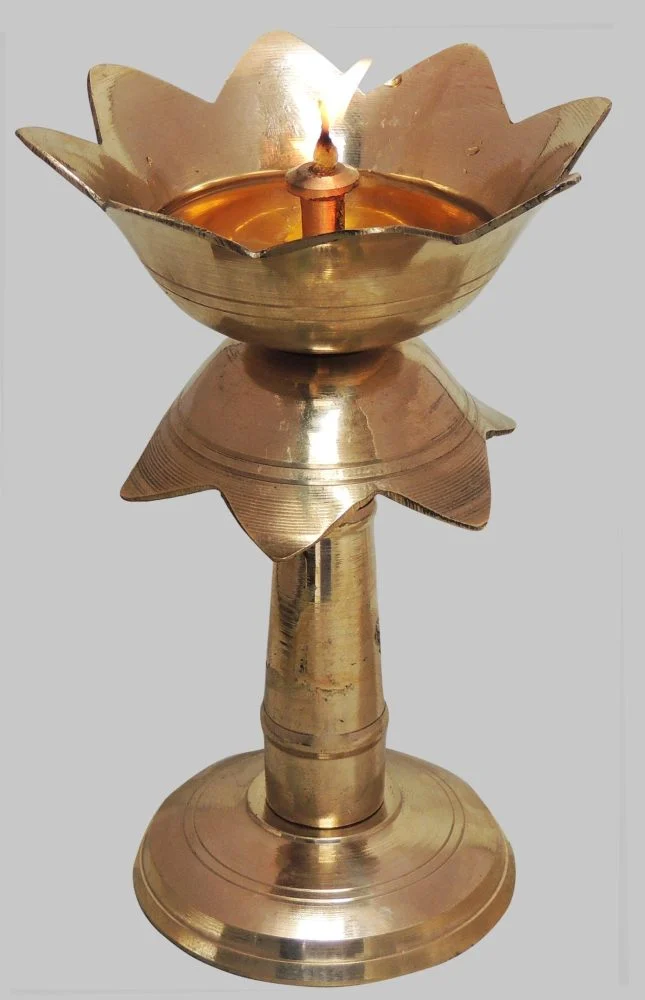
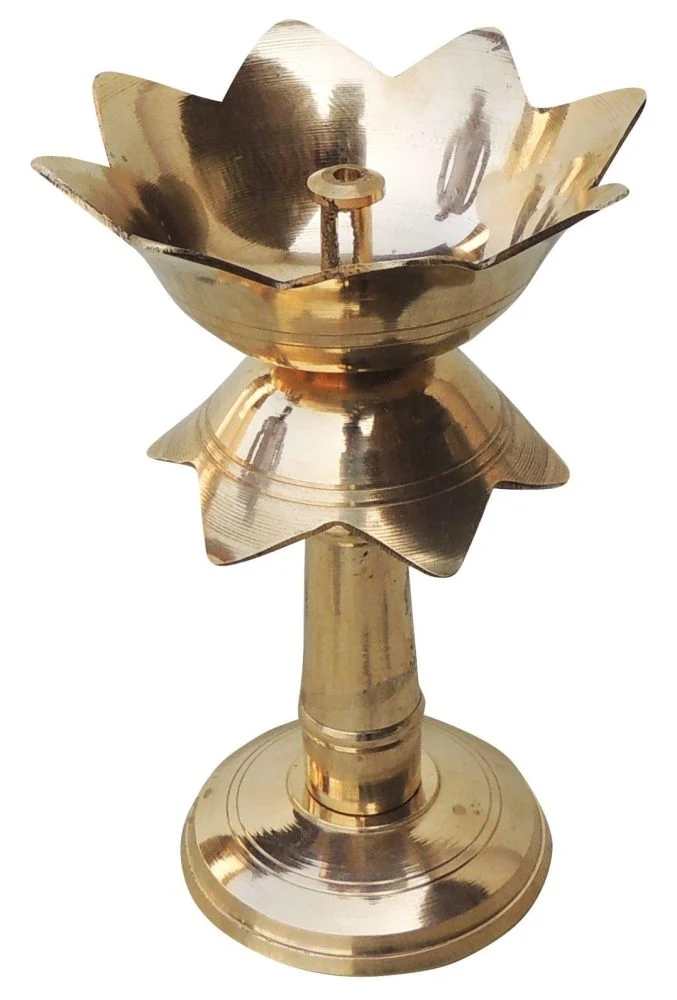
An akhand diya is kept burning for hours or days, so the fuel has to feed the wick evenly. Ghee is traditional in many homes. Sesame oil is the common alternative, since it stays liquid and is easy to top up. The lamp matters as much as the fuel: a deep cup holds more, and a long wick lasts between refills. Our akhand diyas run from 2.2 to 6.7 inch for this reason. Never leave a burning lamp unattended overnight near curtains or paper.
Wick type matters more than people think
- Round cotton wick (phool batti). Stands upright in the middle of the cup. Suits ghee and small diyas.
- Long cotton wick (lambi batti). Lies along the spout of the diya. Suits oil, and it is the wick for an akhand diya.
- Thickness. A thick wick gives a big flame, drinks fuel fast and makes more soot. A thin, tightly rolled wick burns longer and cleaner.
- Soak first. Dip the wick in the fuel for a minute before lighting. A dry wick chars at the tip and smokes.
Soot and residue on brass
Every fuel leaves something behind. Ghee and sesame oil leave a soft film that washes off in hot water with dish liquid. Mustard oil leaves a dark, sticky layer that needs more work. Trim the burnt tip of the wick before each lighting, and soot drops sharply.
Wipe the cup while it is still slightly warm. Old oil left in a diya turns gummy, and then the next wick will not draw. The full method for burnt diyas is in our guide on how to clean brass.
Oil for Diwali diyas
Diwali needs many lamps at once, so most North Indian homes use mustard oil outdoors and keep ghee for the diya in front of the idols. Sesame oil is a good choice if you dislike the smell of mustard. Fill each diya about three quarters, so oil does not spill when you carry it. For counts and placement, see how many diyas to light on Diwali, and for lamps that come out every year, our brass diya sets.