Which Buddha Statue Is Good for Home: Types, Placement and Size
Which Buddha statue suits a home: meditating, blessing, earth-touching or Laughing Buddha. What each pose means, where to place it and which size to buy.
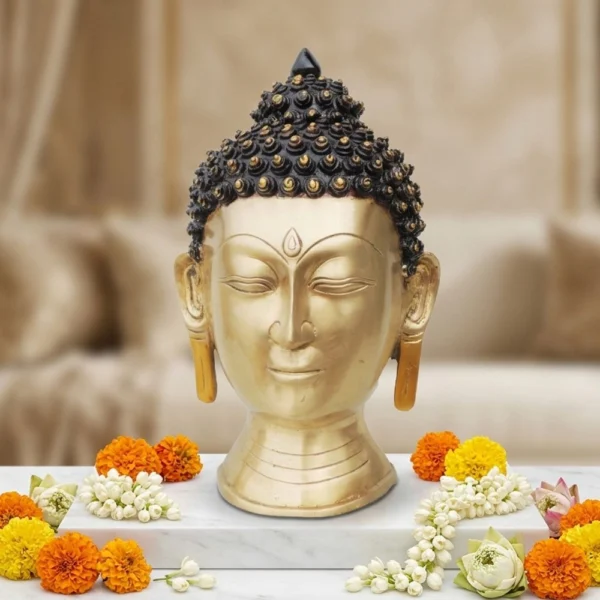
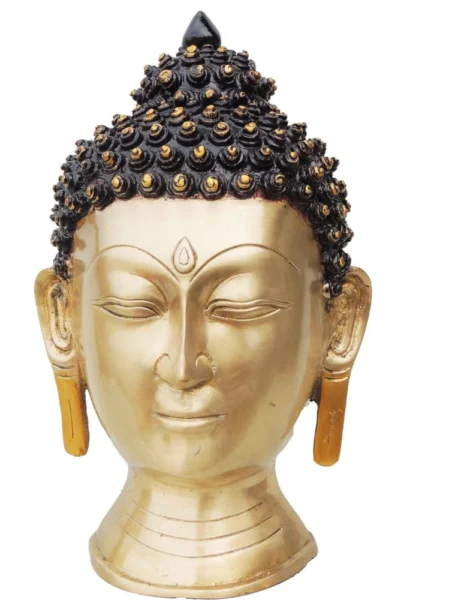
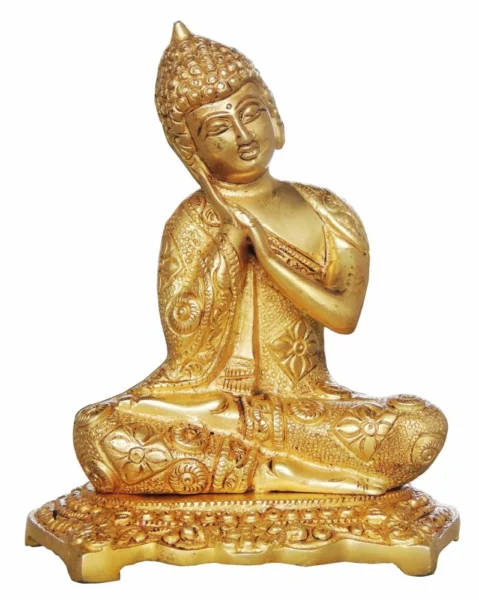
For most homes a meditating Buddha is the safe choice: seated, eyes half closed, hands resting in the lap. It suits a quiet corner, a study or a meditation space. A blessing Buddha with one hand raised is the usual pick for an entrance or living room. The Laughing Buddha is a different figure and is chosen for cheer and as a gift.
The poses and where each goes
| Statue | How to recognise it | Meaning | Usual place |
|---|---|---|---|
| Meditating Buddha (dhyana) | Both hands in the lap, palms up | Calm, concentration | Meditation corner, study, bedroom shelf away from the feet |
| Blessing Buddha (abhaya) | Right hand raised, palm out | Protection, fearlessness | Entrance or living room, facing the door |
| Earth-touching Buddha (bhumisparsha) | Right hand reaching to the ground | The moment of enlightenment | Living room or altar, traditionally facing east |
| Teaching Buddha (dharmachakra) | Both hands at the chest | Wisdom, learning | Study or library |
| Reclining Buddha | Lying on the right side | Peace at the end of life | Living room; by custom the head points north or the figure faces west |
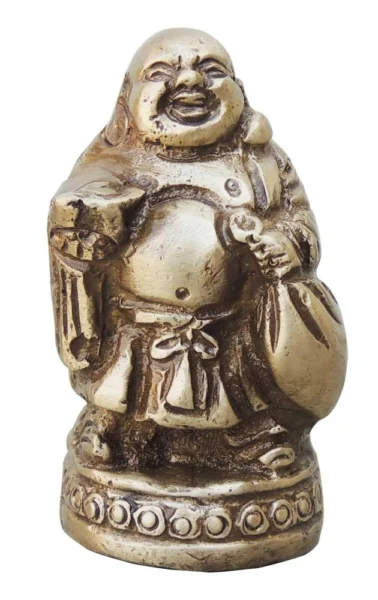
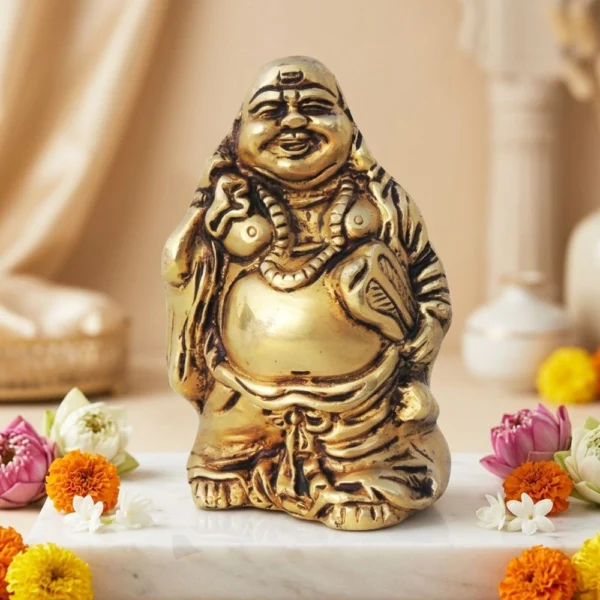
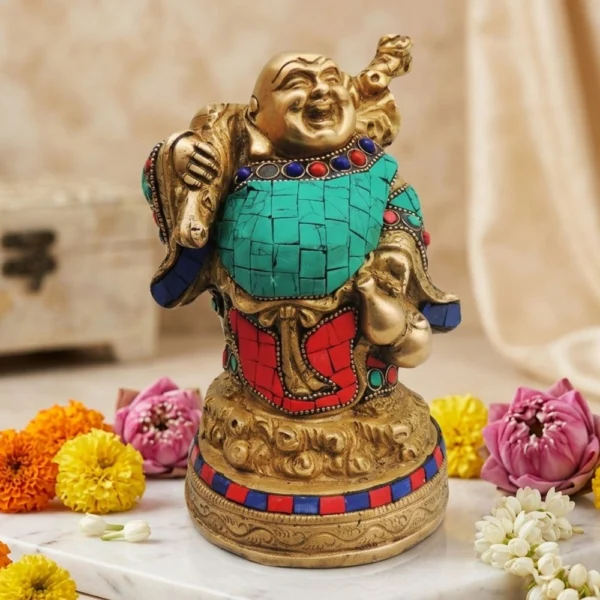
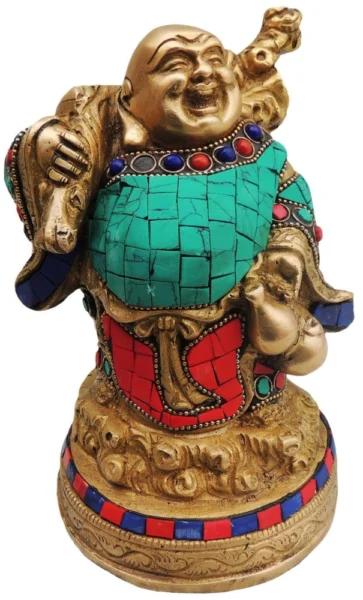
| Laughing Buddha (Budai) | Round belly, wide smile, often a sack | Contentment and plenty | Living room, facing the main door |
The Laughing Buddha is Budai, a Chinese monk of folklore, not Gautama Buddha. Both are respected; they are simply not the same person.
Placement customs
- Keep the statue at eye level or higher, on a table, shelf or pedestal. Never on the floor.
- Avoid the bathroom, the kitchen and a spot where feet point at it.
- Give it a clean, uncluttered surface. Do not use it as a paperweight or keep keys and coins on it.
- In a garden, place it on a raised stone, facing the house.
These are customs of respect and vastu or feng shui practice. They differ by tradition, and none promises a result.
Which size
- Desk or shelf: 3 to 6 inches.
- Console, entrance table or altar: 7 to 12 inches.
- Floor pedestal or garden: 15 inches and above. A brass Buddha of this size can weigh 5 kg or more, so check the weight and the strength of the table.
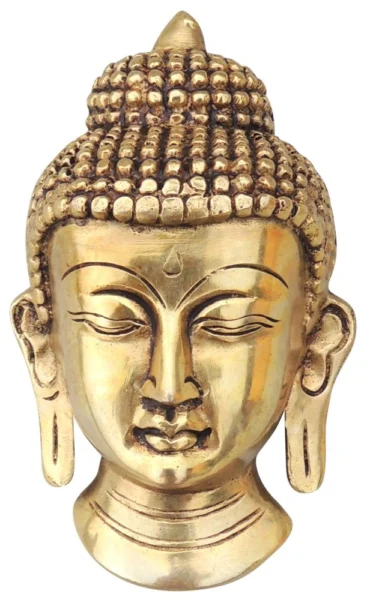
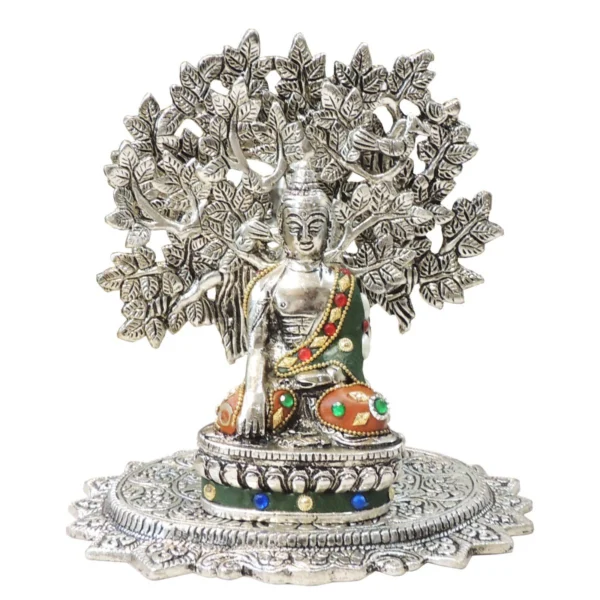
Brass with an antique or two-tone finish is common for Buddha statues; it needs only dusting. See lacquered and raw brass for care by finish.