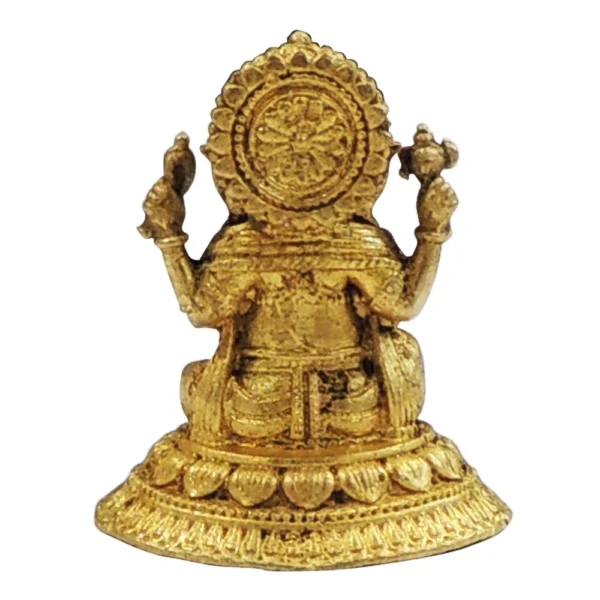
How a Brass Idol Is Made: Sand Casting Step by Step
How a brass idol is cast in Moradabad: pattern, sand mould, molten brass, filing, chasing, polishing and lacquer. Why weight and seams show quality.
A brass idol is made by pouring molten brass into a sand mould formed around a master pattern, then filing, chasing and polishing the casting by hand. Two idols of the same height can differ widely in weight and price because of how thick the casting is and how much hand finishing it gets. Here is the process as it is done in Moradabad, and what each step tells you as a buyer.
From pattern to idol in seven steps
- Pattern. A master model of the idol is made, usually in metal.
- Mould. Damp sand is packed around the pattern in a two-part box, then the pattern is lifted out.
- Melt. Brass is melted in a crucible in the furnace.
- Pour. The molten metal is poured into the mould and left to set.
- Fettle. The casting is broken out, the gates are cut off and the seams are filed.
- Chase. Detail is sharpened and engraved by hand.
- Finish. The piece is polished, and may get an antique finish, colour work or lacquer.
The pattern and the sand mould
Everything starts with the pattern. It is the master the mould copies, so any softness in the pattern shows up in every idol cast from it.
The mould is made in a two-part moulding box, called a darza in the Moradabad trade. The moulder packs fine damp sand tightly around one half of the pattern, turns the box, and packs the other half. The box is opened, the pattern is lifted out, and a cavity in the shape of the idol is left behind. Channels are cut in the sand for the metal to enter and for air to leave. For a hollow idol, a sand core is set inside the cavity so the metal forms a wall around it.
The mould is used once. It is broken or opened after each pour and the sand is made up again for the next piece.
Melting and pouring
Brass is an alloy of copper and zinc. It is poured at roughly 900 to 1,000°C. The metal is melted in a crucible, skimmed, and poured into the mould in one steady stream. The mould is then left for the metal to set before it is opened.
Fettling: gates, seams and filing
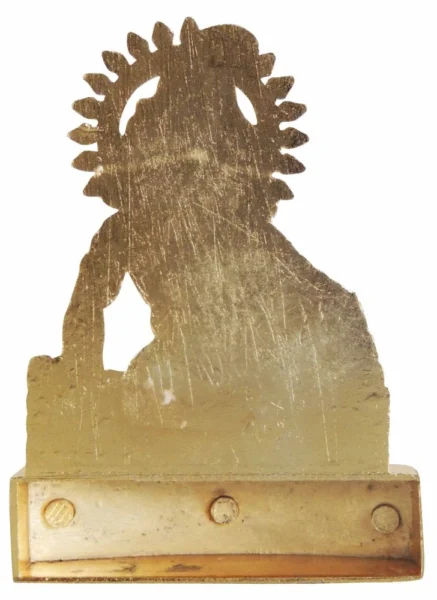
The raw casting is rough and dull, with sand stuck in the detail. It carries extra metal where the channels were, called gates, and a thin raised line where the two halves of the mould met. Fettling removes all of this. The gates are cut off, the seam is filed down, and the surface is cleaned. How carefully this is done decides whether a seam line is still visible on the finished idol.
Chasing and engraving the face and ornaments
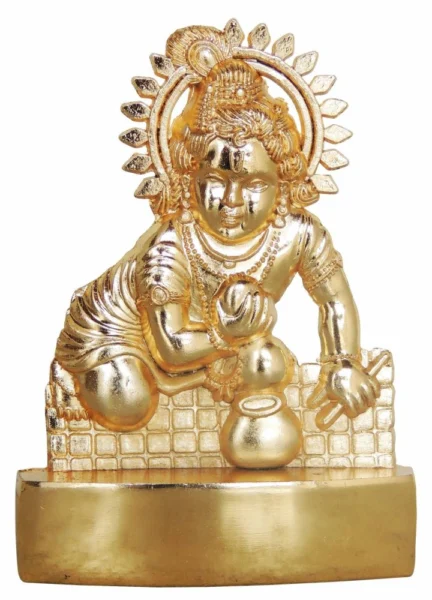
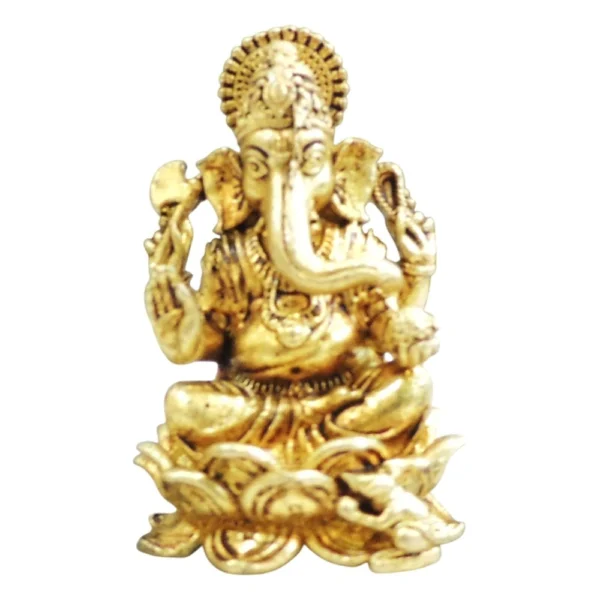
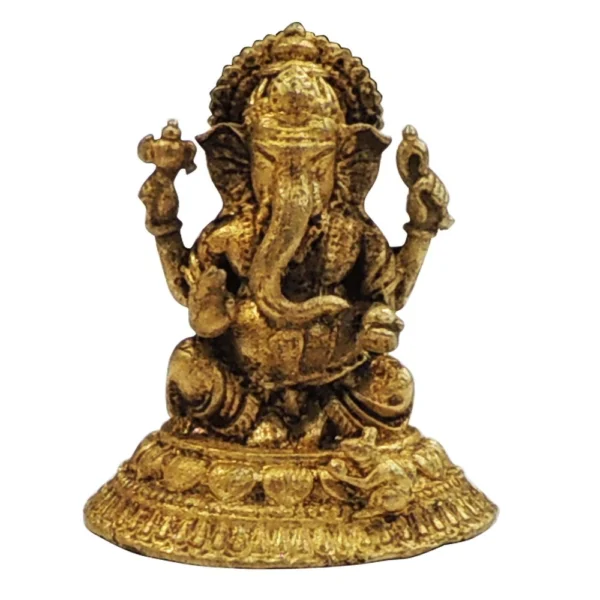
Sand cannot hold the finest lines. So the eyes, lips, fingers, jewellery and the folds of cloth are sharpened by hand with small chisels and punches. This is chasing. On engraved pieces, patterns are cut into the surface as well, the work known in Moradabad as nakkashi. This step takes the most skill, and it is where two idols from the same pattern end up looking different.
Polishing, antique finish and lacquer
The idol is polished on buffing wheels to bring up the gold colour. It may be left bright. It may be darkened and rubbed back for an antique finish. It may get stone or colour work. Lacquer, a clear coat that keeps air off the metal, is optional and is applied last. Lacquered and raw pieces are cared for differently; see lacquered vs raw brass and how to clean brass before Diwali.
What this means when you buy: weight, seam lines, sharpness of detail
| What to check | Which step it reflects | What to look for |
|---|---|---|
| Weight for the height | Mould and core | A heavier idol at the same height has thicker walls or is solid, and uses more brass |
| Seam lines | Fettling | Run your eye down the sides; good finishing files the seam away |
| Face and fingers | Chasing | Crisp eyes, separate fingers, clean ornament lines |
| Surface | Pour and polish | No pits or pinholes on flat areas; even colour |
| Base | Fettling | Sits flat without rocking |
Our catalogue has 1,764 idols. The median weight is about 1 kg and the heaviest is 168 kg, so weight varies a great deal even within one deity. Online, read the weight against the height, then zoom into the face and hands. Start with idols, Ganesha, or the Lakshmi Ganesh pairs for Diwali. For checking the metal itself, see how to identify pure brass.