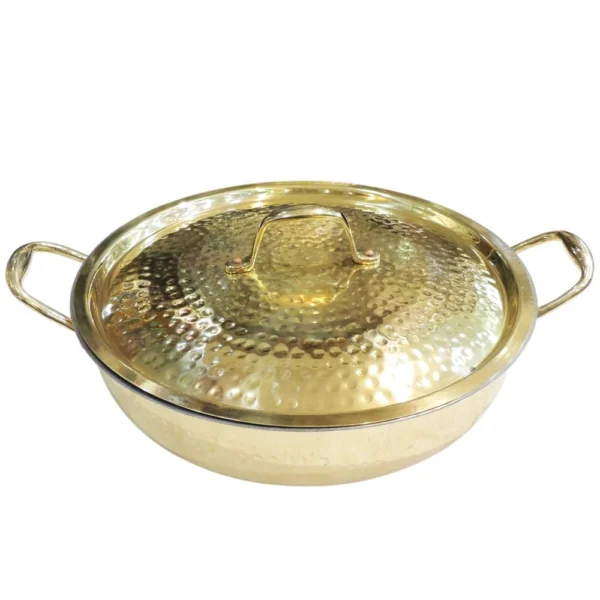
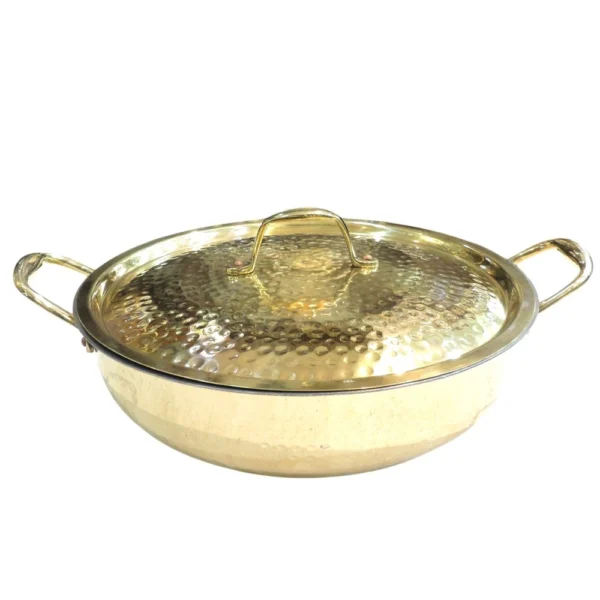
Brass Kadai (Pital ki Kadhai) for Cooking and Frying
pital ki kadhai · brass kadhai · kalai wali kadai · kadai with lid · frying kadai
About this collection
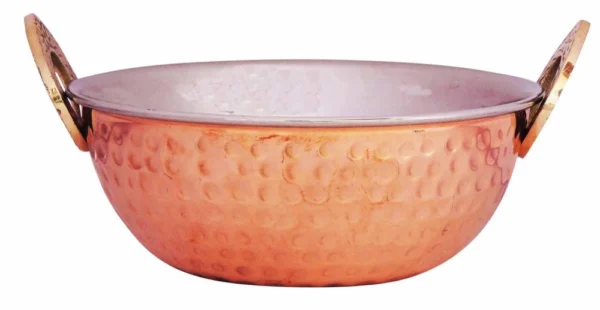
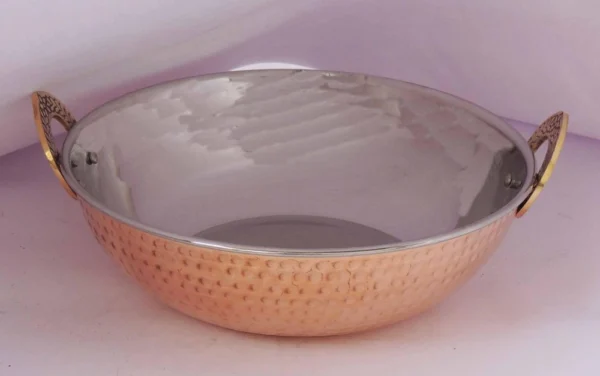
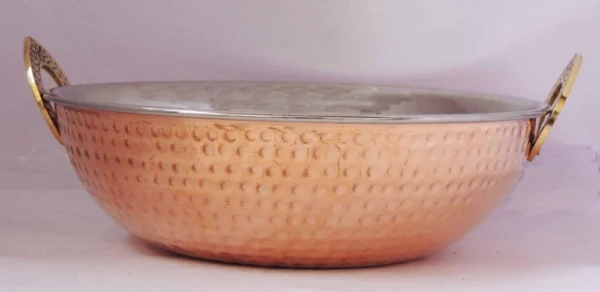
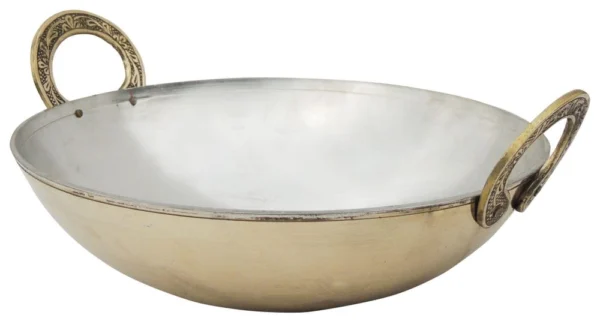
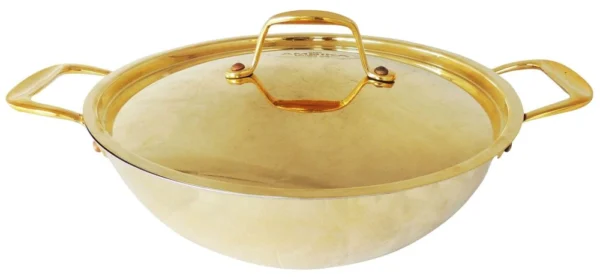
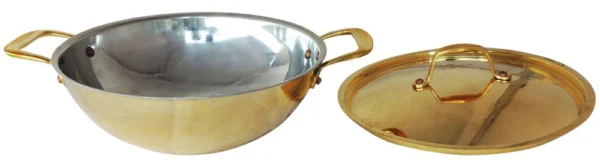
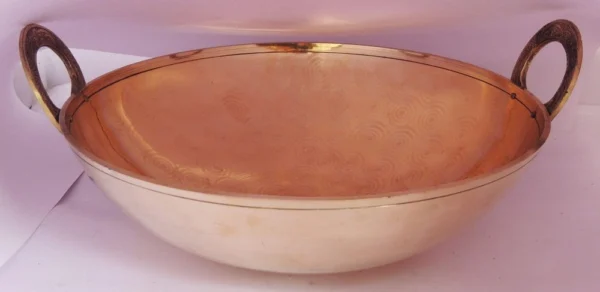
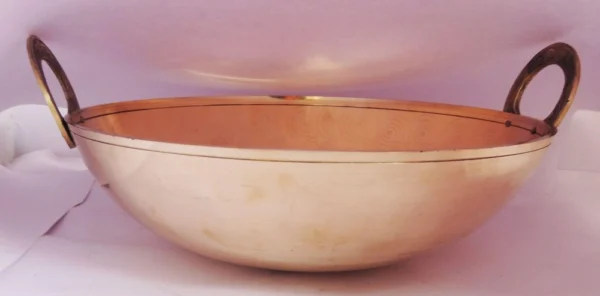
This page holds 20 kadais from ₹780, standing 2.7 to 6.4 inch tall and weighing 320 g to 3.17 kg. Fifteen are pure brass: plain, with a lid, or with kalai, the tin coating on the inside. The other 5 are not brass, so read the material line on the listing before you order.
Choose by capacity first. The listings include small 350 ml serving kadhais that go straight to the table, and cooking sizes of 1.75, 2.25, 3 and 3.5 litre. For a family of four, a kadai of about 2 litres handles a daily sabzi. Then look at weight. A heavier kadai holds heat steadily and does not scorch at the centre, which matters for slow frying and for halwa. The price runs up to ₹8,425 for the heaviest pieces.
One point on brass in the kitchen. Plain brass suits deep frying and dry dishes. For anything sour, such as tomato, tamarind or curd gravies, take a kadai with kalai, and get the coating redone when the yellow metal starts to show through. Wash by hand and dry at once.